 Gift
 Tickets
 Membership
 Contact
 Donate
 Shop
Habitat Heroes Leave their Leaves
Here at the Virginia Zoo, our mission is to engage our community in taking action to save the world’s wildlife and their ecosystems. In 2025, we started encouraging our community to become Habitat Heroes by restoring and protecting native habitat through education, awareness, or direct action, like replacing 20 square feet of lawn with native plant species. But what happens in the fall when your backyard pollinator gardens are no longer in bloom? It is time to leave the leaves. Read on to learn more about how simply leaving your leaves can benefit you and local wildlife this winter.
While it may seem like leaf litter is a nuisance in your yard, it actually provides critical habitat for countless species. Insects, like bees, butterflies, and moths, use leaf litter as a safe space to wait out the winter. Did you know that of the more than 20,000 bee species in the world, approximately 70% build their nests underground? Leaf litter over their nests provides insulation from cooler temperatures. Mourning cloak butterflies also hibernate in leaf litter during the winter, because layers of leaves help maintain stable microclimates. In fact, this species can face temperatures as low as -76 degrees Fahrenheit when protected by leaf cover. Red-banded hairstreak butterflies even time their lifecycle to coincide with falling leaves. Unlike most caterpillars, red-banded hairstreak caterpillars feed on decaying leaves from sumac and oak trees. Luna moths create their cocoons from a combination of silk and fallen leaves which provides a safe, camouflaged place for them to metamorphose. Without fallen leaves, these insects do not have the resources they need to survive harsher winter weather conditions.
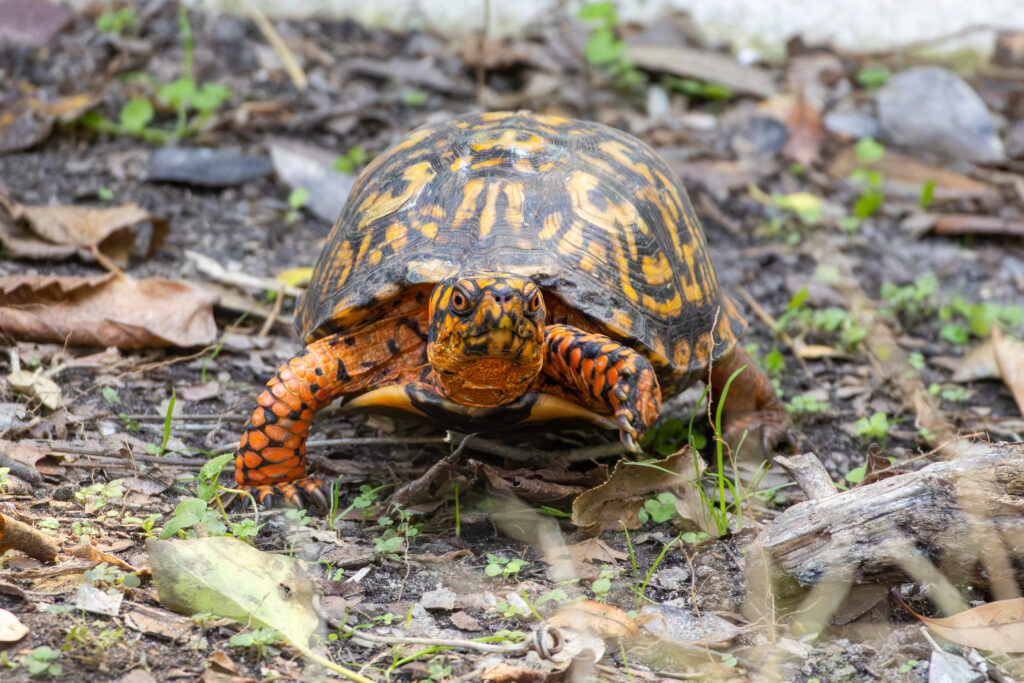
Eastern box turtle in the leaf litter in Turtle Oasis.
Vertebrate animals, including frogs, turtles, and mammals also rely on leaf litter during the winter. Many terrestrial frog species, including American toads and eastern spadefoots, move away from aquatic habitats and into nearby forest areas to weather the winter beneath the frost line. Leaf litter provides shelter from predators, insulates them from the cold, and attracts insects for the frogs to eat. Similarly, turtle species, like eastern box turtles, survive the winter by burying themselves underground. Eastern red bats hibernate during the winter using leaf litter for cover unlike other bat species which tend to migrate or roost in enclosed spaces. Leaving the leaves clearly benefits local wildlife, but how can it benefit us?
Not only does leaf litter provide insulation for animals under the soil, but it also protects perennial plants from freezing, too! This means that your pollinator-friendly species, like black-eyed susans and coneflowers are more likely to bloom again the following year. Plus, as leaves decompose, they add nutrients back into your soil, reducing the need for fertilizers. Ground cover from leaf litter supresses the growth of undesirable weeds by blocking light! You can also use fallen leaves as “brown material” for at-home compost.
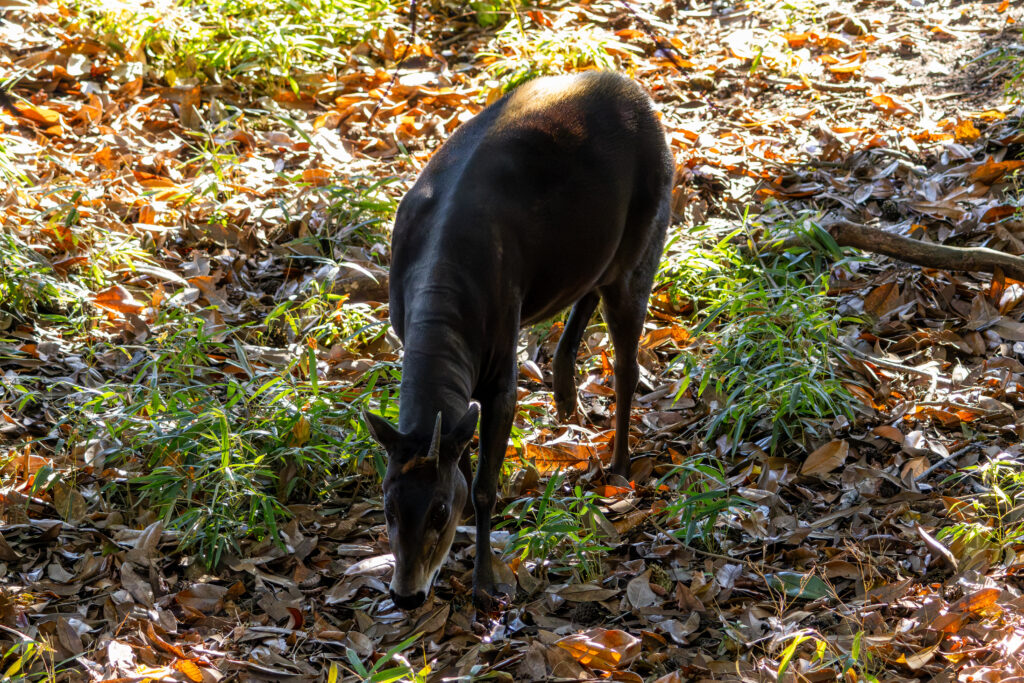
Dot the yellow-backed duiker foraging in leaves along the African Safari Trail.
Habitat Heroes can support native wildlife this fall by taking the following steps:
1) Leaving a thin layer of leaves over grassy areas.
A thin layer of leaves will provide enough nutrients for your grass as they break down, but they will not smother the grass or prevent the grass from growing in the spring.
2) Gently moving leaves to your garden beds or around the base of trees using a rake.
Many native trees host caterpillars that look for a leaf layer to overwinter in. Adding the leaves to the base of the tree makes their journey just a bit easier! Mammals and birds in the trees will also enjoy eating those invertebrates throughout the winter.
Raking the leaves minimizes the disturbance to wildlife, since it is much quieter and does not pollute their environment like a gas-powered leaf blower.
3) Waiting to clean up remaining leaves until the late spring (around May).
In the late spring, most wildlife will have emerged and there will be other food sources available for herbivorous invertebrates to eat.
Here at the Virginia Zoo, our Horticulture team models these actions by intentionally leaving as many leaves as possible in our different garden beds. Check out our Pollinator Garden, across from Asia: Trail of the Tiger to see what this looks like in practice this winter!