 Gift
Gift Tickets
 Membership
 Contact
 Donate
 Shop
ShopVirginia Zoo Keeper Explores Nepal with the Red Panda Network
The Virginia Zoo is celebrating International Red Panda Day, honored annually on September 19, by sharing details from Lead Keeper Kristin Cruise’s Ecotrip in Nepal with the Red Panda Network! Read on to learn more about Kristin’s adventures, which included observing red pandas in the wild in their native habitat.
The Virginia Zoo Conservation and Research Grant offers staff the opportunity to engage in field conservation projects and community science initiatives to further their personal and professional advancement. Kristin Cruise, Lead Keeper of Asia: Trail of the Tiger, received this funding to go on an Eco Zoo Trip (designed for zoo staff and conservation experts) with the Red Panda Network (RPN) in December 2025.
The RPN is a nonprofit organization dedicated to conserving wild red pandas and their habitat through the education and empowerment of local communities. One of the ways that RPN works towards these goals is by hosting ecotrips! These ecotrips offer guests the opportunity to explore the Himalayas, experience Nepalese culture, and see red pandas in the wild, all while financially supporting local conservation efforts. Furthermore, these trips inspire visitors to continue taking action to protect red pandas and temperate mountain forests across the Eastern Himalayas well beyond their visit!
Forest Guardians® Program
RPN works to conserve red pandas and their habitat, but they also recognize that this would not be possible without involving local communities. That’s why they created their Forest Guardian program! Forest Guardians are local people who are paid by the RPN to monitor and protect red panda habitat and educate communities about conservation. These jobs provide sustainable income to families in Nepal and encourage environmental stewardship. Over 150 Forest Guardians work across RPN’s project areas throughout Nepal, and over 75 community forests are monitored by the Forest Guardians.
Kristin spent hours of her ecotrip hiking and tracking red pandas with the RPN’s Forest Guardians. The Forest Guardians tracked where red panda nests were located, the health of individuals (based on appearance), environmental conditions where they found red pandas, and scat. This information helps the RPN identify areas where red pandas are choosing to stay, so they can recreate these conditions in areas that experienced habitat loss. Historically, there was significant deforestation in Nepal, so red pandas chose to move into neighboring India’s protected national forests to avoid disturbance. RPN is working diligently with the government of Nepal and local communities to reverse this trend.
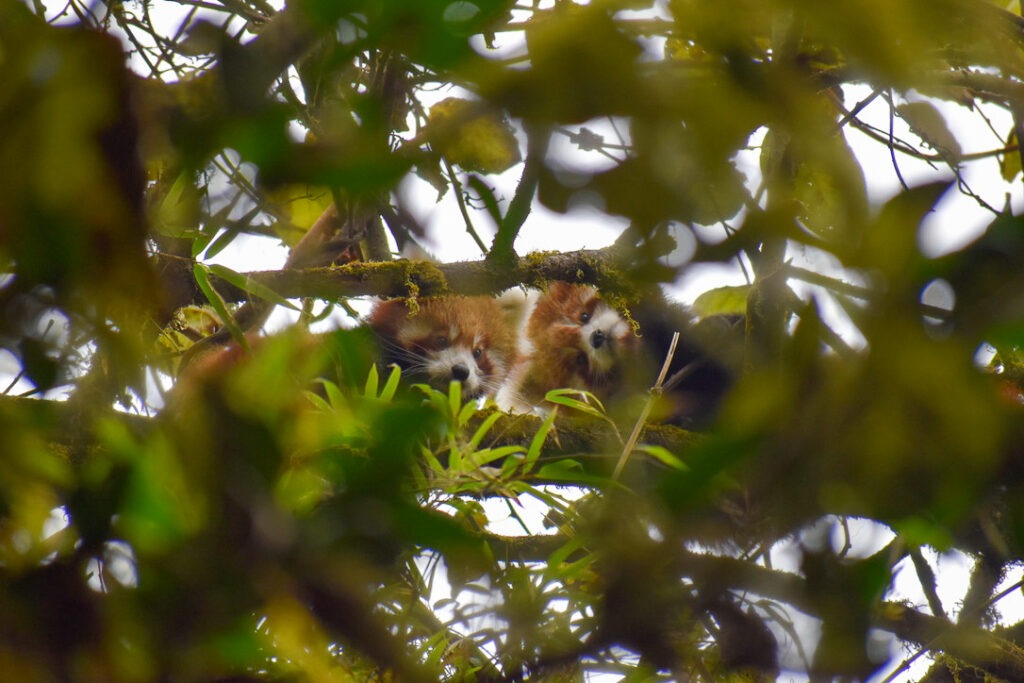
Red panda cubs photographed by Kristin in Nepal.
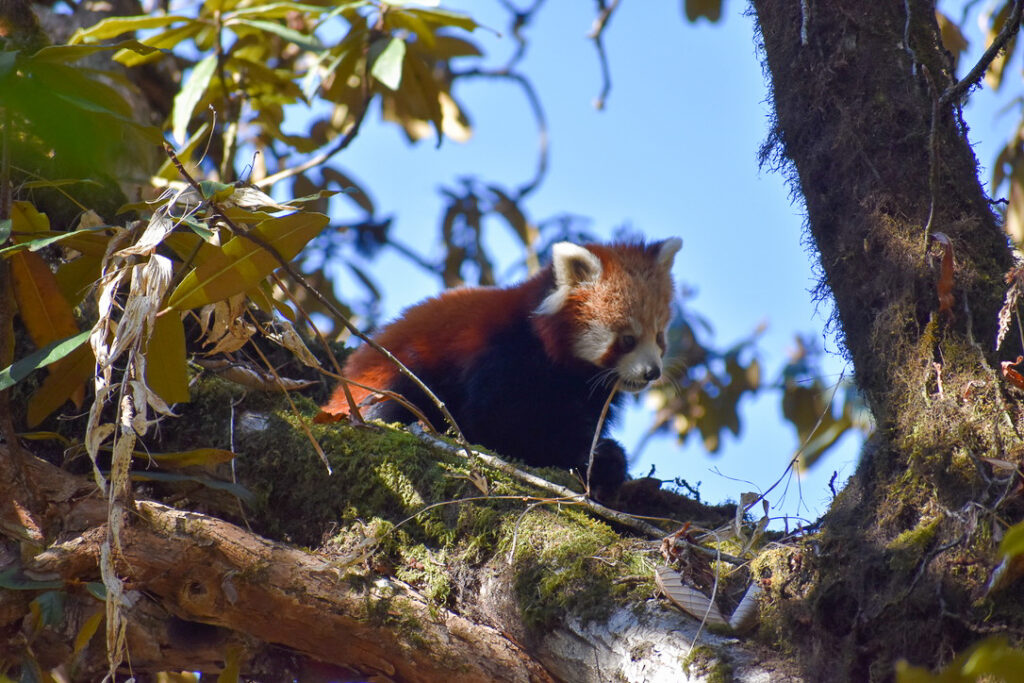
Young red panda photographed by Kristin in Nepal.
To minimize stress for the red pandas, the Forest Guardians ensured that the ecotrip group spent no more than 30 minutes observing individuals. Guests also maintained a greater distance when cubs were less than six months old.
In total, Kristin’s group observed eight red pandas, which nearly broke the RPN’s record number of sightings on an ecotrip of nine red pandas! On average, guests may only see about one to three red pandas during their whole trip. Kristin even had the chance to see Bhumo, the red panda that she tracks using the Fahlo app!
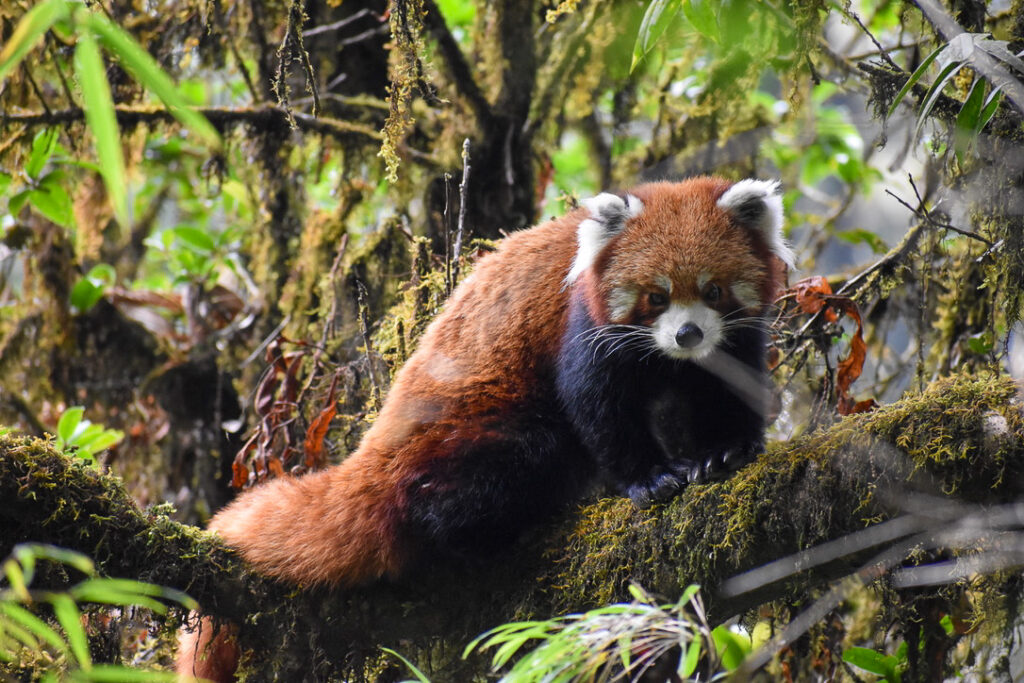
Adult red panda photographed by Kristin in Nepal.
Habitat Restoration Projects
Habitat loss is the single greatest threat to red pandas in Nepal. Human encroachment, overuse of forest resources, and unsustainable livestock practices have all led to extensive loss and fragmentation of Nepal’s forest into 400 disjointed parts. RPN is addressing these concerns by planting trees — their goal is to reach 1 million trees planted in Nepal by 2026! So far, over 956,000 trees have been planted in red panda habitat.
One of the stops on Kristin’s ecotrip was Jaubari, a critical restoration site in the RPN’s Plant a Red Panda Home campaign. While in Jaubari, her group visited a Forest Conservation Nursery where seedlings of native trees are cultivated for future restoration projects. Through years of trial and error and assistance from the RPN’s experts, the success rate of trees from nurseries growing in the wild has increased from less than 30% to over 60%!
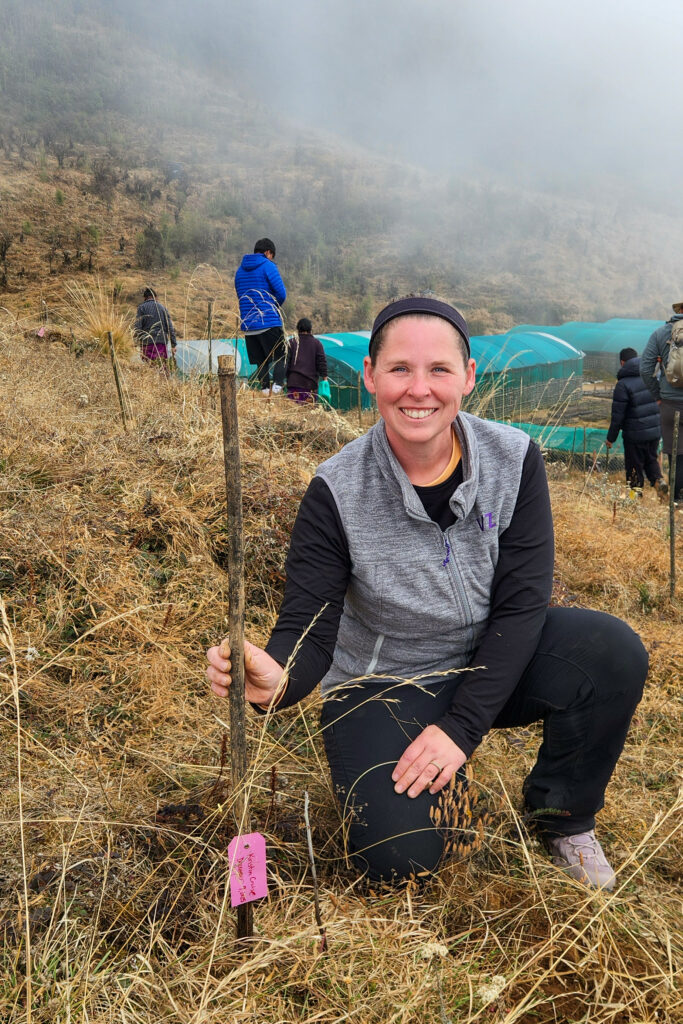
Kristin with her dedicated tree.
Local Nepali people in the surrounding community run RPN’s nurseries, and anyone who participates in plantings is paid a wage by the RPN. Typically, trees are planted in June or July, but Kristin and other participants in her ecotrip were able to plant their own trees to participate in reforestation efforts. Kristin planted a tinga tree in her name, because this tree is one of the red pandas’ favorites to spend time in!
By visiting a Forest Conservation Nursery in Nepal, Kristin was able to bring back knowledge about the specific types of trees that red pandas prefer in the wild, like rhododendron, tinga trees, banjh oak, and malingo bamboo. She shared this information with our horticulture team to determine if any of these preferred species, or their close relatives, could grow in Virginia to provide our red pandas with more naturalistic browse in their diet!
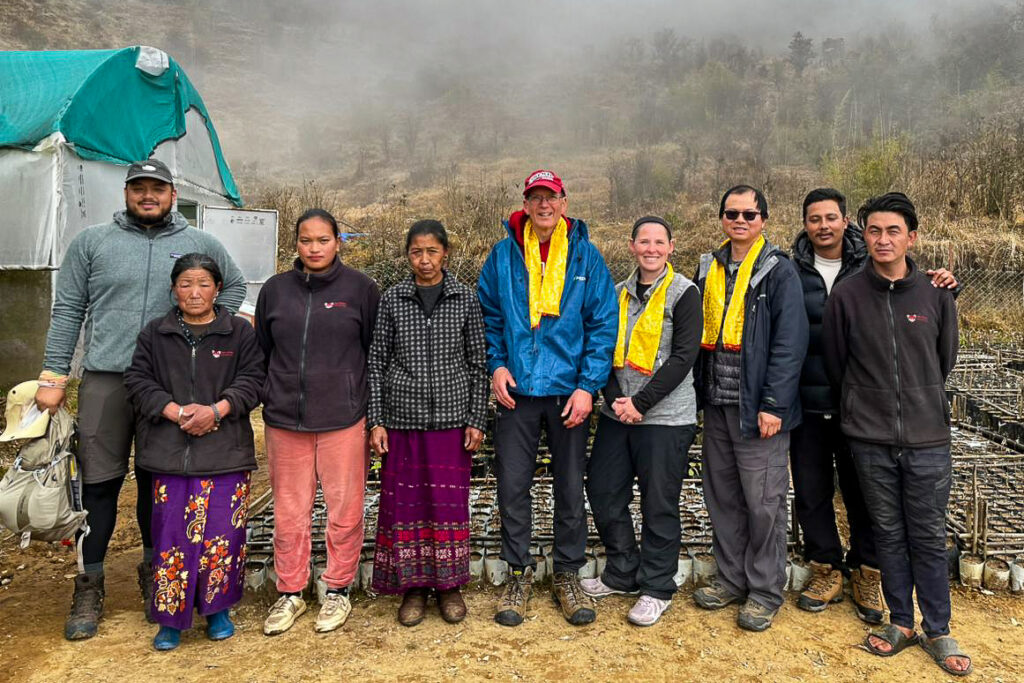
Kristin and RPN Forest Conservation Nursery staff.
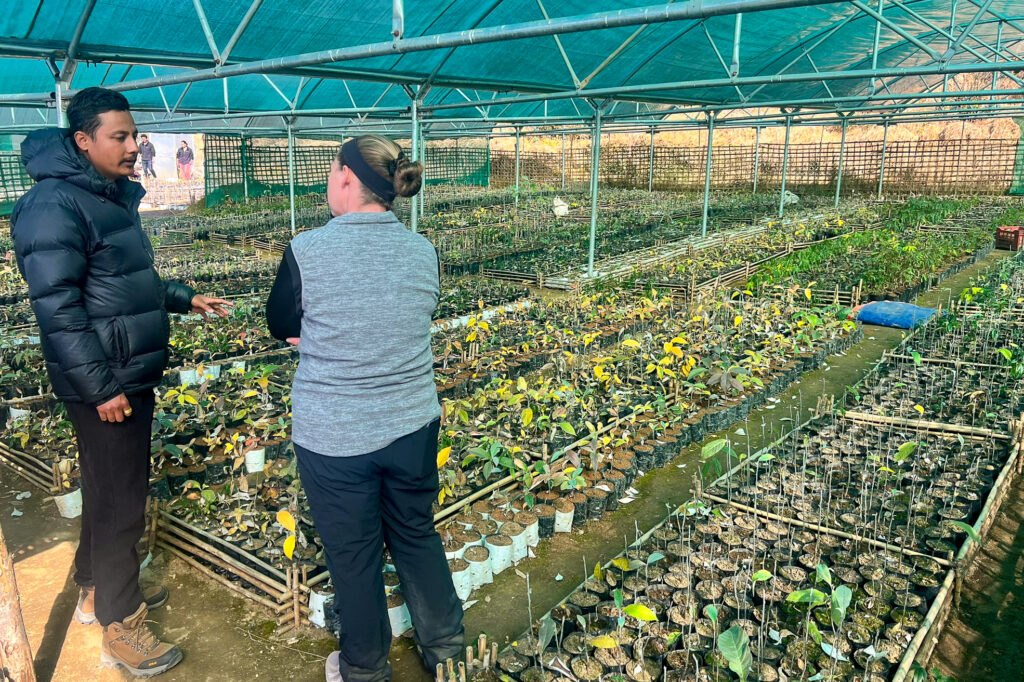
Forest Conservation Nursery in Nepal.
Women’s Economic Empowerment
Due to gender inequality in Nepal, women oftentimes do not work formal paid jobs; they may help with local agriculture or perform unpaid household roles like child-rearing. Consequently, Nepali women are the primary users of the resources in red pandas’ habitat in efforts to provide for their families. They collect firewood and fodder to feed domestic animals and practice subsistence agriculture using cleared forest areas. The RPN aims to engage women in efforts to conserve red panda habitats by reducing the cultural barriers to education, economic, and leadership advancement.
One way that RPN assists women is by providing skill development training opportunities that equip women with valuable skills, like rug weaving. During Kristin’s ecotrip, she visited Ilam Bazar and was invited into the homes of local women who craft hand-knotted rugs to earn an income from the RPN. The RPN provides all materials, pays the women a fair wage for their time, and purchases the completed rugs from them. With training and experience, one rug is completed in about a week’s time. Rugs are then sold at a slightly higher price than the cost, so the profits can be used to further red panda conservation efforts. You can support women in Nepal and the RPN’s conservation work by purchasing a handmade rug online here.
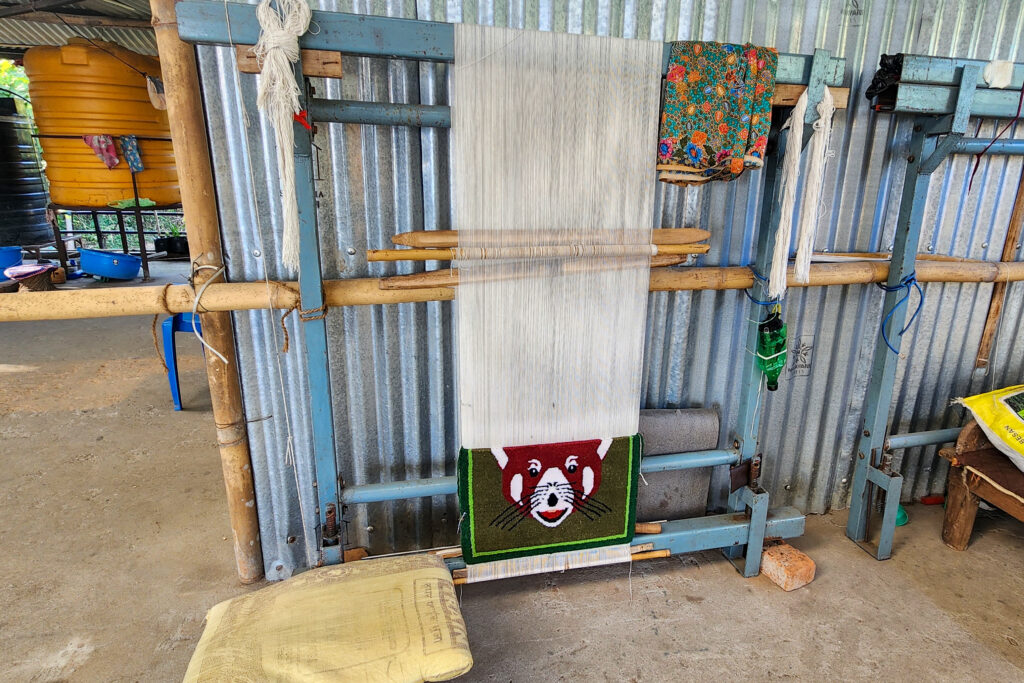
Hand-knotted Red Panda Network rug photographed by Kristin.
The Virginia Zoo is proud to celebrate International Red Panda Day 2026 by sharing the incredible work of our conservation partners, the Red Panda Network!
Are you interested in supporting the Virginia Zoo’s conservation efforts? Donate to our Conservation Fund here or visit us! A portion of every Virginia Zoo ticket and membership sold is donated back to conservation efforts locally and around the world, including the efforts of conservation partners like the RPN. In 2025, the Virginia Zoo donated $10,000 towards the RPN’s Home for Habre Campaign to fund tree plantings and habitat creation. We hope to continue supporting this organization’s work into the future with the help of our Hampton Roads community!