 Gift
Gift Tickets
 Membership
 Contact
 Donate
 Shop
ShopNew Birds in the Virginia Zoo Flock
The Virginia Zoo recently introduced three new bird species to our growing collection of feathered friends. Read on to learn more about these new species and the individuals who now call the Zoo home!
Azure-Winged Magpie
Azure-winged magpies, Cyanopica cyanus, are songbirds named for their striking blue-gray wing and tail feathers. These birds are found in coniferous and broadleaf forests in East Asia, including China, Korea, Taiwan, Japan, Mongolia, and Russia. As omnivores, they eat nuts, seeds (especially acorns), insects, and other birds’ eggs. As members of family Corvidae, alongside ravens and crows, azure-winged magpies are highly intelligent and social. They often forage for food in small family groups and congregate in large flocks during the breeding season.
The International Union for the Conservation of Nature (IUCN) Red List of Threatened Species currently lists azure-winged magpie populations as Least Concern. However, their populations are decreasing due to habitat loss.
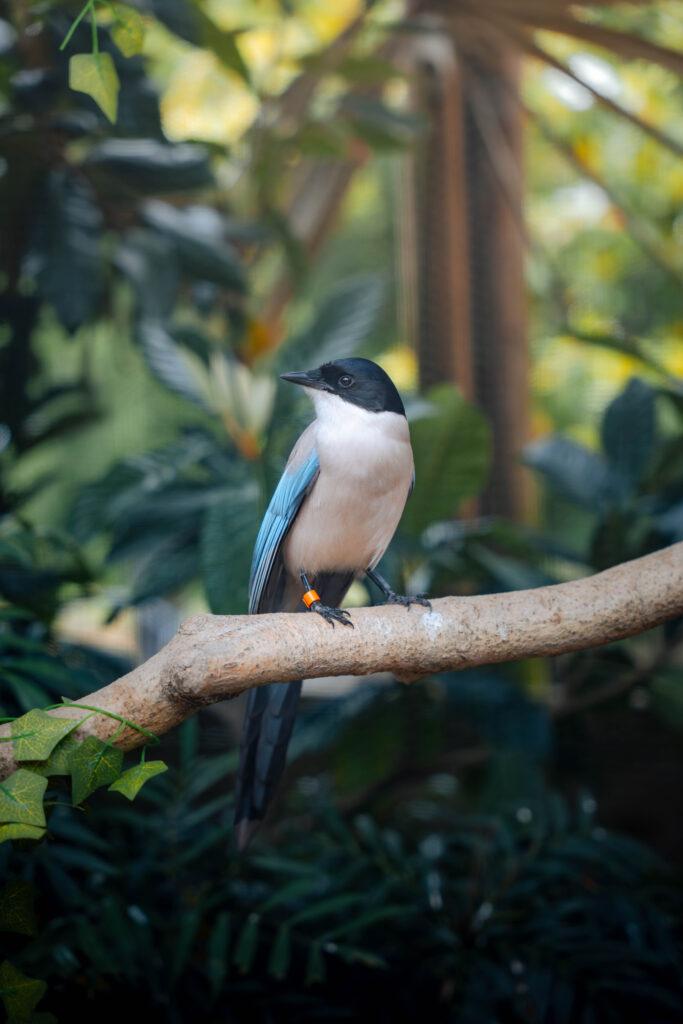
Mango the azure-winged magpie
In May 2026, the Virginia Zoo welcomed two male azure-winged magpies to Asia: Trail of the Tiger named Mango and Shepard. Mango is twelve years old and has an orange band on his right leg. Shepard is eight years old and has a blue band on his right leg. Mango is the more social of our two azure-winged magpies, and he can often be seen interacting with guests on the branches closest to the boardwalk!
Don’t forget to say hello to Mango and Shepard on your next visit to our Asia: Trail of the Tiger Aviary! They can be found sharing the former tawny frogmouth space with our Temminck’s tragopans.
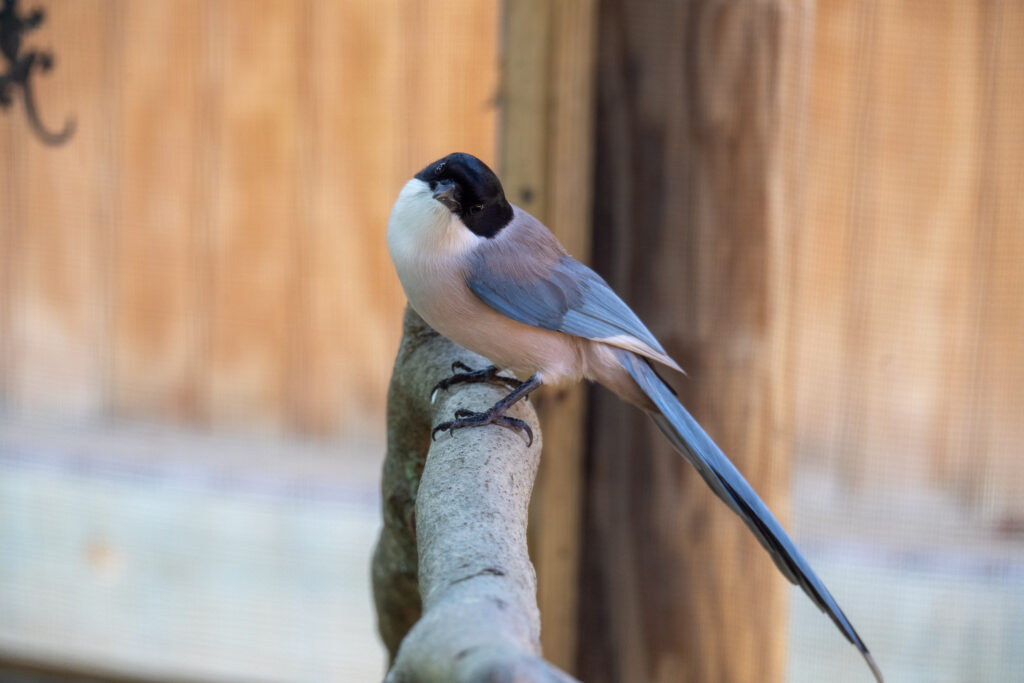
Shepard the azure-winged magpie
Temminck’s Tragopan
Temminck’s tragopans, Tragopan temmincii, are one of only five species of tragopan pheasants, and they are often regarded as one of the most beautiful. Males of this species have deep orange feathers with white spots covering their bodies and vibrant blue facial plumage. Males also have an inflatable wattle, or lappet, with red and blue markings used to attract the attention of females. Female Temminck’s tragopans have grayish brown feathers with white spots.
This species is native to damp evergreen forests throughout China, India, Myanmar, and Vietnam with dense stands of rhododendron and bamboo. In the wild, this species eats berries, grasses, and other plant material. Unlike many other pheasants, these birds are described as quite shy and will nest in trees rather than on the ground. In the Himalayan portion of their range, Temminck’s tragopans are known to change their elevation to adapt to seasonal temperature changes.
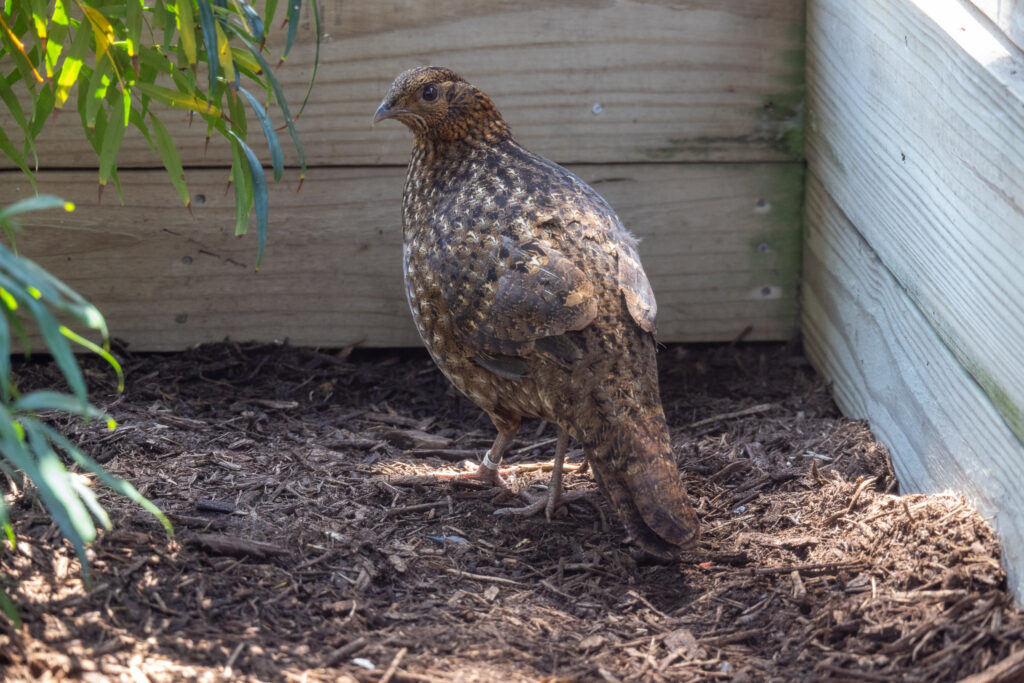
Stevie the Temminck’s tragopan
The IUCN currently lists Temminck’s tragopan populations as Least Concern, but habitat loss, hunting, and capture for the pet trade all contribute to their decreasing populations.
The Virginia Zoo recently welcomed two female Temminck’s tragopans named Stevie and Nix. Stevie has a white band on her left leg, and Nix has a blue-gray band on her left leg. These lovely ladies just turned one year old on May 15, so be sure to wish them a happy belated birthday on your next visit to our Asia: Trail of the Tiger Aviary! They can be found sharing the former tawny frogmouth space with our azure-winged magpies.
The Virginia Zoo is open daily from 9:30am to 4pm, so make sure to give our new birds a warm welcome on your next trip to the Zoo!