 Gift
Gift Tickets
 Membership
 Contact
 Donate
 Shop
ShopVirginia Zoo Welcomes New Chicks to their Flock
The Virginia Zoo is thrilled to announce that one green oropendola chick and two Kenya crested guineafowl keets recently hatched! The female green oropendola chick hatched on May 8, and the Kenya crested guineafowl keets hatched on June 28 and July 4, respectively.
The new green oropendola chick marks an important milestone in Virginia Zoo history as the first of her species to ever hatch at the Virginia Zoo. This is even more remarkable, because she is also the first chick to both of her parents, Arnold (M) and Cayenne (F), who arrived at the Virginia Zoo in 2019.
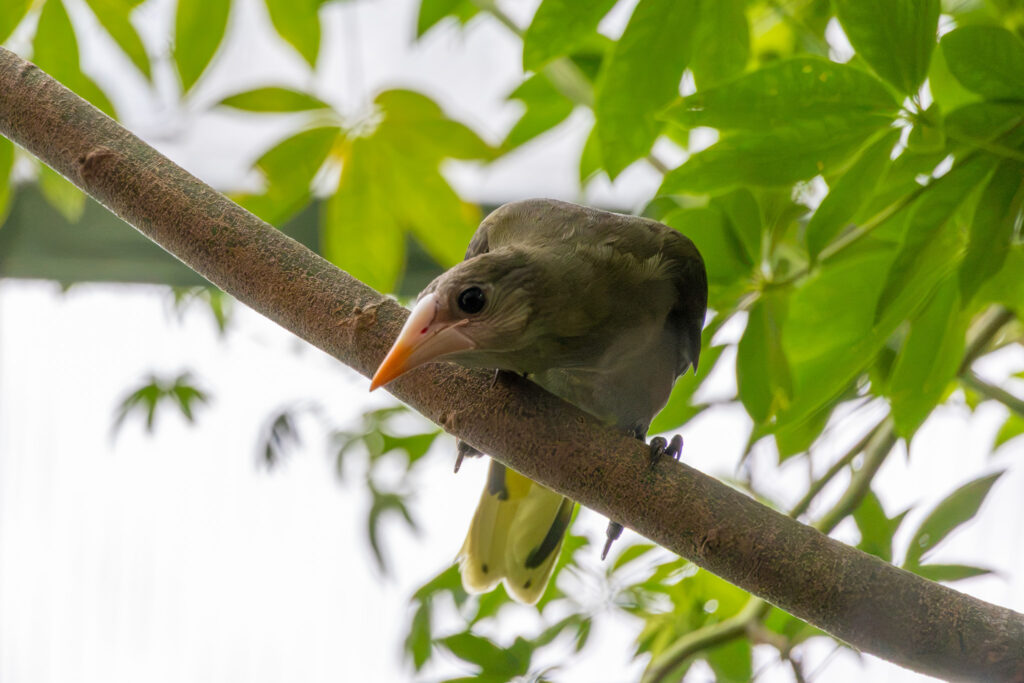
Female green oropendola chick in the World of Reptiles Conservatory.
Green oropendolas are not currently managed by an Association of Zoos and Aquariums (AZA) Species Survival Plan (SSP). SSPs are breeding and population management programs which evaluate the genetics and temperament of individuals to maintain genetically diverse, demographically varied, and biologically sound populations of animals in human care. Once at least 15 AZA-accredited facilities house a species, the association can develop an SSP to plan for the long-term management of these animals. This chick’s hatching also represents an increase in her species’ population in human care which could result in a greater focus on a breeding program for them in the future.
Keepers report that Cayenne has been an attentive mother. In fact, she continues to feed her chick, even though she is no longer in the nest and can forage in the World of Reptiles Conservatory on her own. Male green oropendolas do not participate in chick rearing in the wild, but they do protect their nests. Arnold dutifully defended the nest as Cayenne incubated their egg and raised their chick.
The two Kenya crested guineafowl keets are Ernie (11M) and Jewels’ (1F) first offspring together, and they emerged from some of the first eggs Jewels laid. At less than two years old, this is Jewels’ first breeding season, so it is very exciting that she has already been so successful. Furthermore, Jewels is officially the youngest dam (female parent) at first reproduction. The previous record was held by a female who was 2.08 years old. Jewels arrived at the Virginia Zoo in June 2025 upon a breeding recommendation from AZA, so the Zoo hopes to see more future offspring from this pair.
In about three to four weeks since the keets hatched, they have already grown to more than six times their hatch weight — from about 25 grams to over 150 grams. Genetic testing recently showed that one keet is a male and the other keet is a female. They do not have names yet; stay tuned on the Virginia Zoo’s social media for an announcement soon!
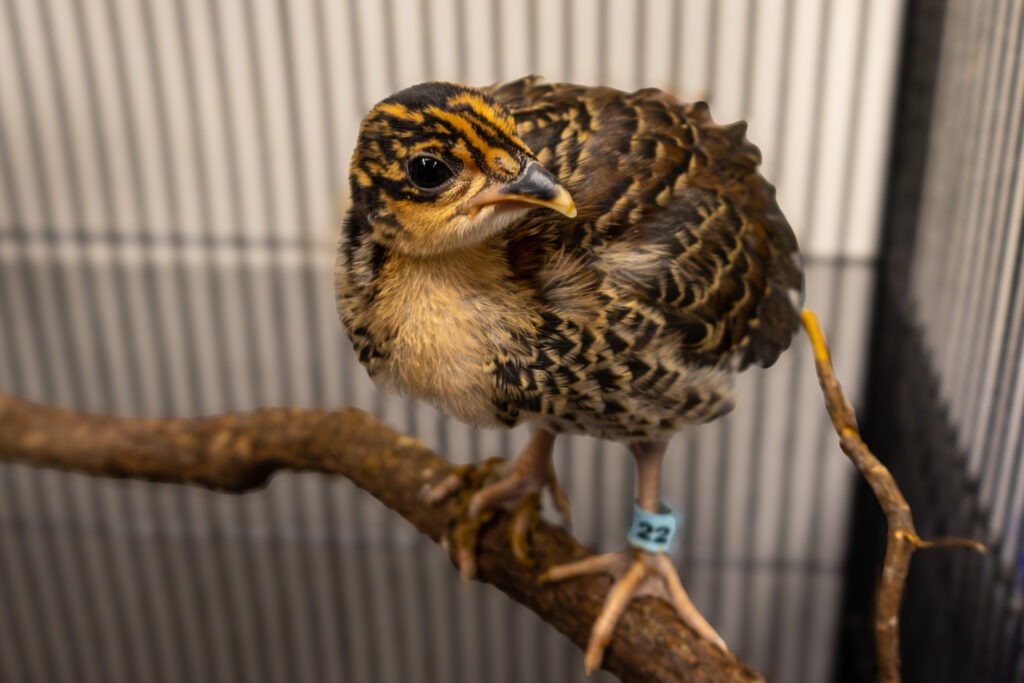
Kenya crested guineafowl keet behind the scenes.
Guests can see the green oropendola chick in the World of Reptiles Conservatory. She is distinguishable from the adult green oropendolas in that her eyes are a dark brown, while the adults have bright blue eyes. The Kenya crested guineafowl keets are currently being hand-reared behind the scenes, as they are too small to be outdoors consistently.
The Zoo is overjoyed to share this exciting news, and we will continue to provide updates from the animal care team on their social media channels.
About Green Oropendolas
Green oropendolas, Psarocolius viridis, are native to humid primary forests in the Amazon Basin, including Bolivia, Brazil, Colombia, Ecuador, French Guiana, Guyana, Peru, Suriname, and Venezuela. According to the International Union for the Conservation of Nature (IUCN) Red List, green oropendola populations are considered to be of least concern, but they are decreasing in number due to deforestation in their natural habitat.
About Kenya Crested Guineafowl
Kenya crested guineafowl, Guttera pucherani, are one of several subspecies of crested guineafowl found throughout sub-Saharan Africa. Since crested guineafowl are vocal birds, farmers often include them in their flocks to protect chickens from birds of prey and other predators. According to the International Union for the Conservation of Nature (IUCN) Red List, crested guineafowl populations are considered to be of least concern, but they are decreasing in number due to trade for farming and sustenance as well as habitat loss.