 Gift
 Tickets
 Membership
 Contact
 Donate
 Shop
Temmick’s Tragopan
Description
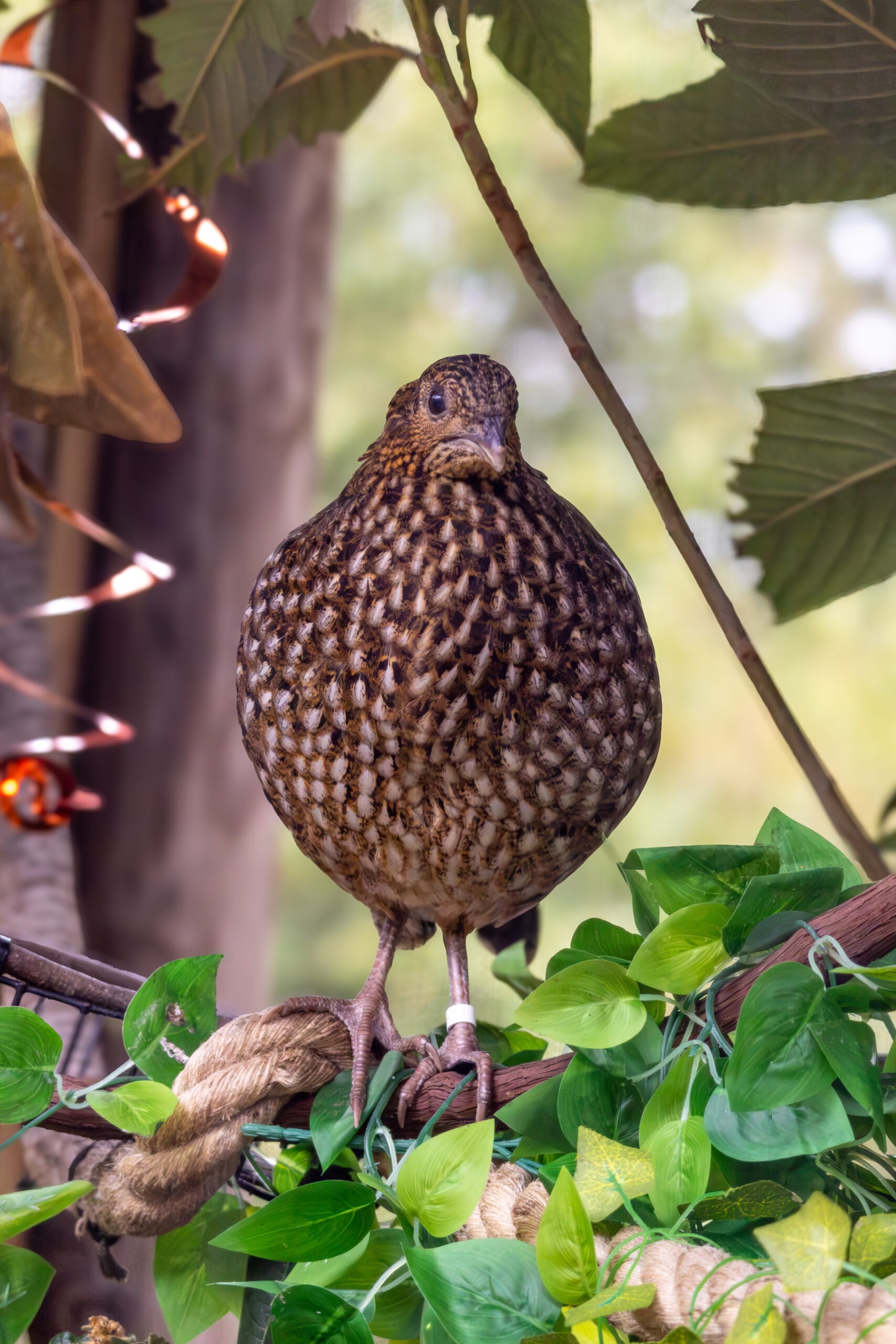
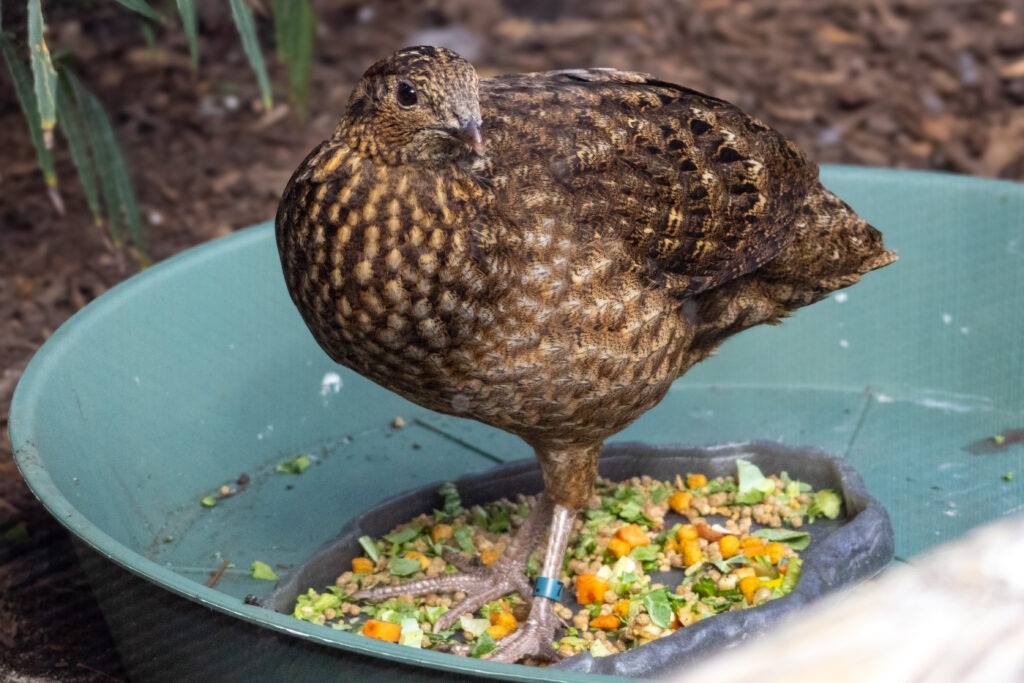
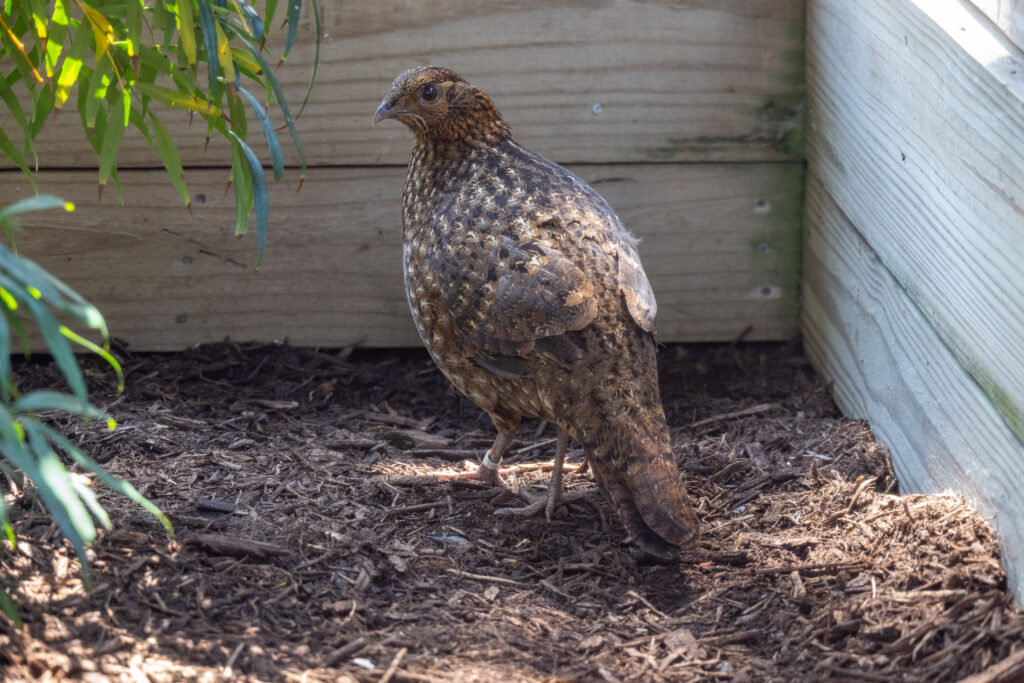
Temminck’s tragopans are medium-sized pheasants that exhibit sexual dimorphism. Males of this species have deep orange feathers with white spots covering their bodies and vibrant blue facial plumage. Males also have an inflatable wattle, or lappet, with red and blue markings used to attract the attention of females. Female Temminck’s tragopans have grayish brown feathers with white spots.
Range & Habitat
Temminck’s tragopans are native to damp evergreen forests in China, India, Myanmar, and Vietnam with dense stands of rhododendron and bamboo.
At the Virginia Zoo, this species can be found in the Asia: Trail of the Tiger Aviary. They share their habitat with azure-winged magpies.
Behavior
Male Temminck’s tragopans court females using their lappet, a red fleshy structure below their neck.
Unlike other pheasant species, Temminck’s tragopans are considered shy, and they prefer to nest in trees rather than on the ground. In the Himalayan portion of their range, this species is known to change their elevation to adapt to seasonal temperature changes.
Temminck’s tragopans typically lay their eggs in early May and incubate them for 26 – 30 days after hatching. Within 24 hour of hatching, the chicks can run, and after three days, they can fly.
Diet
Temminck’s tragopans are herbivores. Their diet primarily consists of berries, grass, and other plants.
Conservation
Temminck’s tragopan populations are considered to be of least concern by the International Union for the Conservation of Nature (IUCN), but habitat loss, hunting, and capture for the pet trade all contribute to their decreasing populations.
Fun Facts
- This species was named for Dutch zoologist Coenraad Jacob Temminck.
Virginia Zoo Animals
Females: Stevie & Nix (5/15/2025)
Scientific Name
Tragopan temminckii
IUCN Conservation Status
Least Concern
Size
Length: 23 – 25 inches
Weight: 2 – 4 pounds
Life Expectancy
Up to 20 years in human care
Nix
Stevie