Gift
 Tickets
 Membership
 Contact
 Donate
 Shop
Venezuelan Troupial
Description
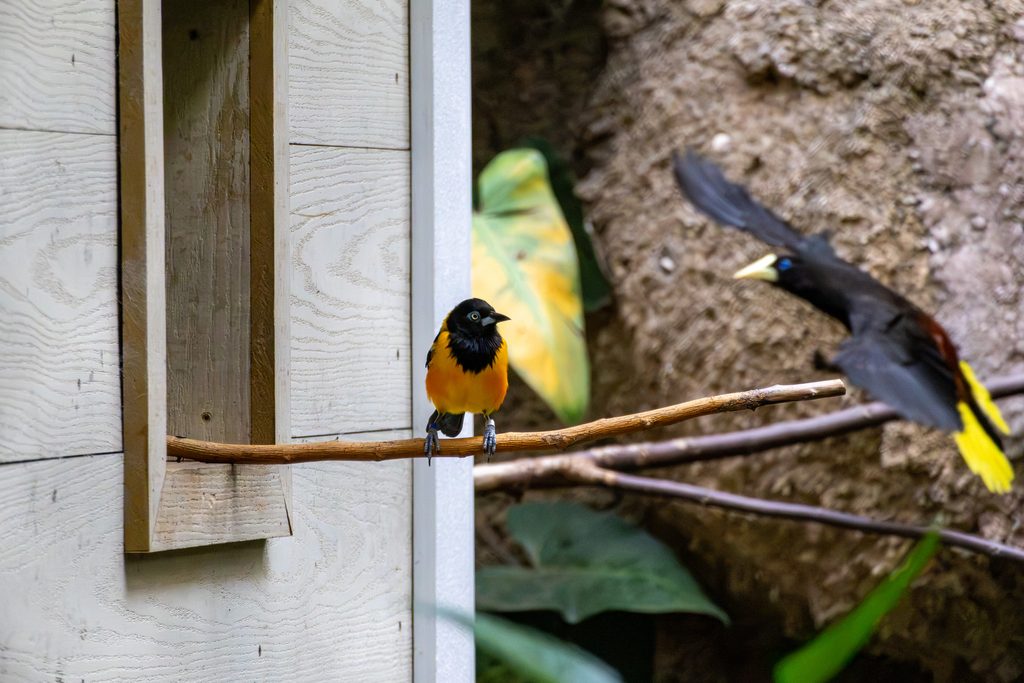
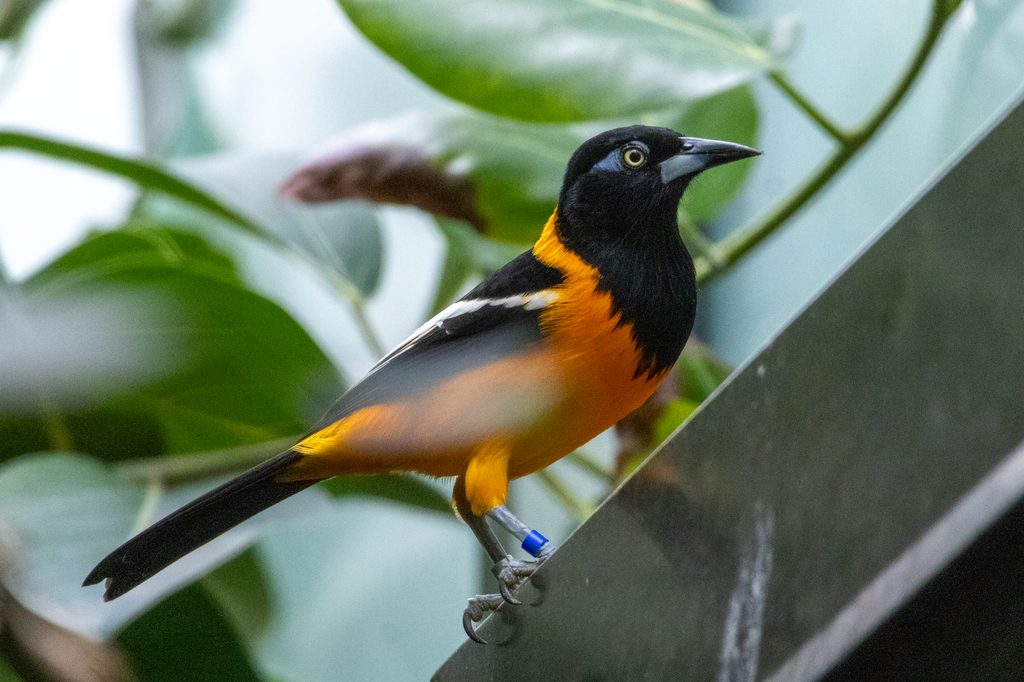
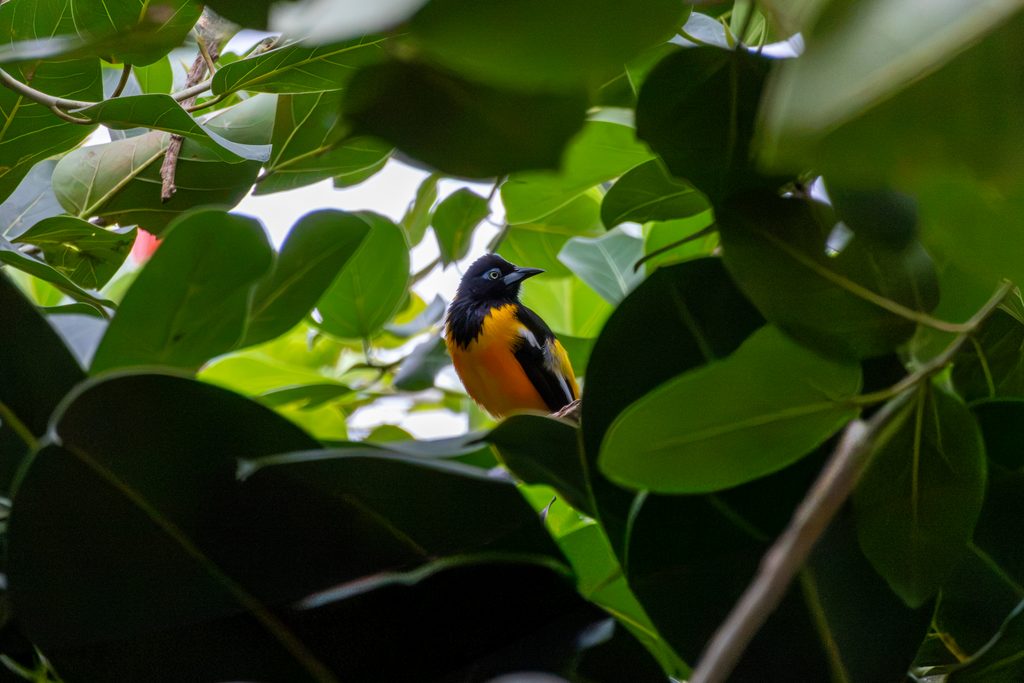
Venezuelan troupials have black, white and yellow-orange plumage. Their head, wing, back, and tail feathers are primarily black with a white stripe across each wing. Their underside is yellow-orange in color. These birds also have a blue, teardrop-shaped patch of skin around their eyes.
Range & Habitat
As their name suggests, the Venezuelan troupial is primarily found throughout Venezuela. The species’ range also includes Colombia, Isla Margarita, Aruba, and Curaçao. Venezuelan troupials primarily live in desert scrublands, dry woodlands, or farmland with scattered trees.
Behavior
Venezuelan troupials do not construct long, hanging nests like their close relatives. Instead, these birds tend to reuse the abandoned nests of other bird species, or they steal nests from breeding pairs of other species. Venezuelan troupials prefer nests with roofs like those of kiskadees.
Diet
Venezuelan troupials are omnivores. Their diet consists of fruit, insects, and occasionally smaller birds or the eggs of other birds.
Conservation
Though Venezuelan troupial populations are considered to be of Least Concern by the International Union for the Conservation of Nature, these birds are still a target of the wildlife trade. Their striking plumage, beautiful songs, and ability to mimic other birds have made them a target for people who collect caged birds.
Fun Facts
- Venezuelan troupials are the national bird of Venezuela.
- Historically, the Venezuelan troupial, orange-backed troupial (Icterus croconotus) and Campo troupial (Icterus jamacaii) were all classified as a single species.
Virginia Zoo Animals
Female: Sassafras
Scientific Name
Icterus icterus
IUCN Conservation Status
Least Concern
Size
Length: 9-10 inches
Weight: Less than 1 pound
Life Expectancy
10-15 years