 Gift
 Tickets
 Membership
 Contact
 Donate
 Shop
Bearded Emperor Tamarin
Description
Bearded emperor tamarins are small monkeys with long, white whiskers that look like mustaches. They have dark fur on their faces and ears, and their bodies are gray with small gold, white, and red patches.
Range & Habitat
Bearded tamarins are native to lowland tropical forest habitats in Bolivia, Brazil, and Peru.
At the Virginia Zoo, bearded emperor tamarins can be seen in the World of Reptiles Conservatory. They share a habitat with our white-faced sakis and peacocks.
Behavior
Bearded emperor tamarins are highly social and may live in family groups of up to 15 individuals. In the wild, they have often been observed living in mixed-species groups with other tamarins species, like the saddleback tamarin. Mixed-species groups are thought to provide more protection from predators.
Family groups of bearded emperor tamarins often consist of a dominant female and two mature males plus their offspring. The dominant female breeds with all adult males in the group, and since they do not know which male is the father, all males help care for the young. Typically, females give birth to twins after a gestation period of 140-145 days, but single births and triplets may also occur. Parents carry young bearded emperor tamarins until they are about 70 days old. At this time, the young can start to find their own food.
Diet
Bearded tamarins are omnivores. They feed on plants, tree sap, vegetables, fruits, insects, and eggs.
Conservation
Bearded emperor tamarin populations are considered to be of least concern. However, they are threatened by the illegal pet trade and habitat loss. Deforestation from logging, construction of roads and highways, and agriculture all contribute to decreasing populations.
Fun Facts
- It is believed that bearded emperor tamarins were named after German emperor Willhelm II.
- There are less than 40 bearded emperor tamarins in Association of Zoos and Aquariums (AZA) accredited facilities throughout the United States. Nacho is the son of Jack and Pepper, a pair of bearded tamarins from England that were brought to the United States to increase genetic diversity of their species in North America.
- To prevent other females in the group from breeding, the dominant female releases pheromones (chemicals) that inhibit the reproductive abilities of other females in the group.
Virginia Zoo Animals
Male: Nacho (9/30/2022)
Female: Killari (3/29/2023)
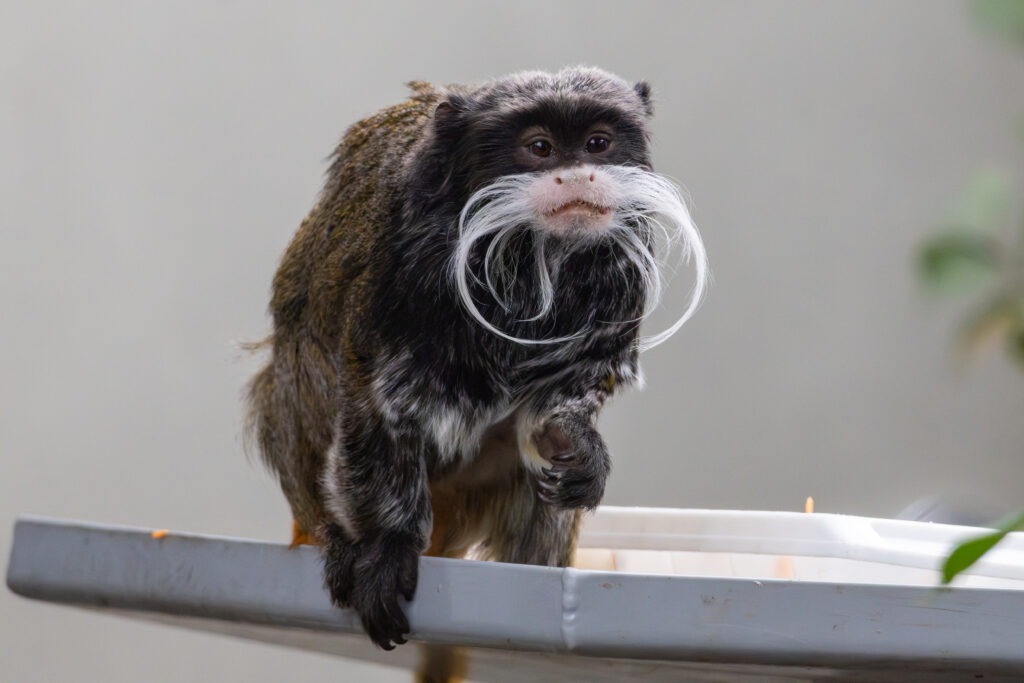
Scientific Name
Tamarinus subgrisescens
IUCN Conservation Status
Least Concern
Size
9.2 – 10.4 inches
10.7 – 14.2 oz.
Median Life Expectancy
8.8 years
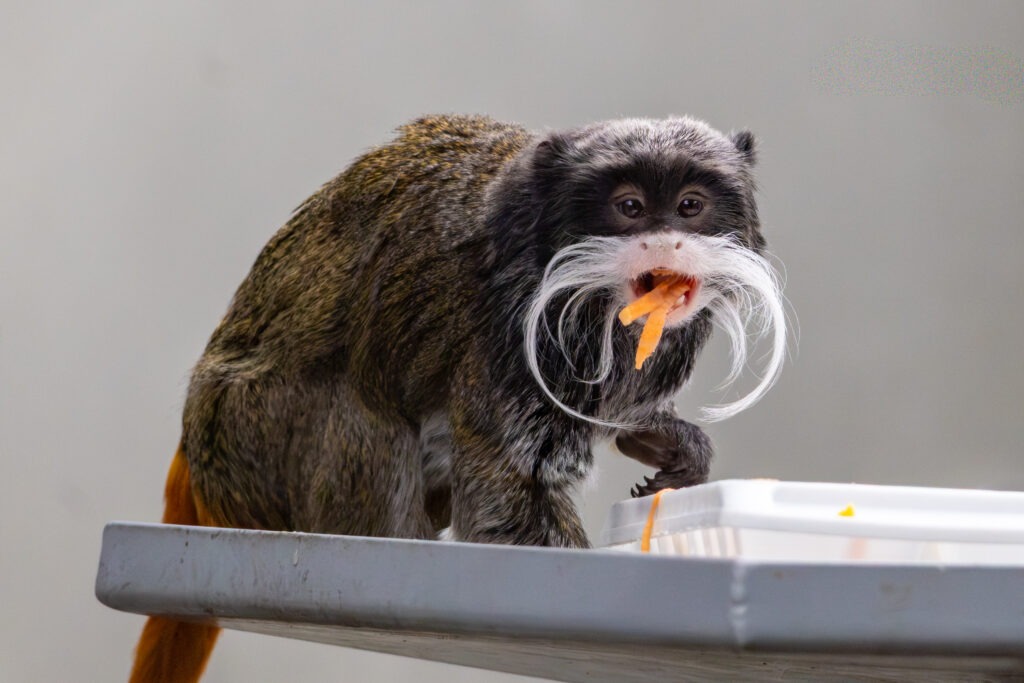
Killari
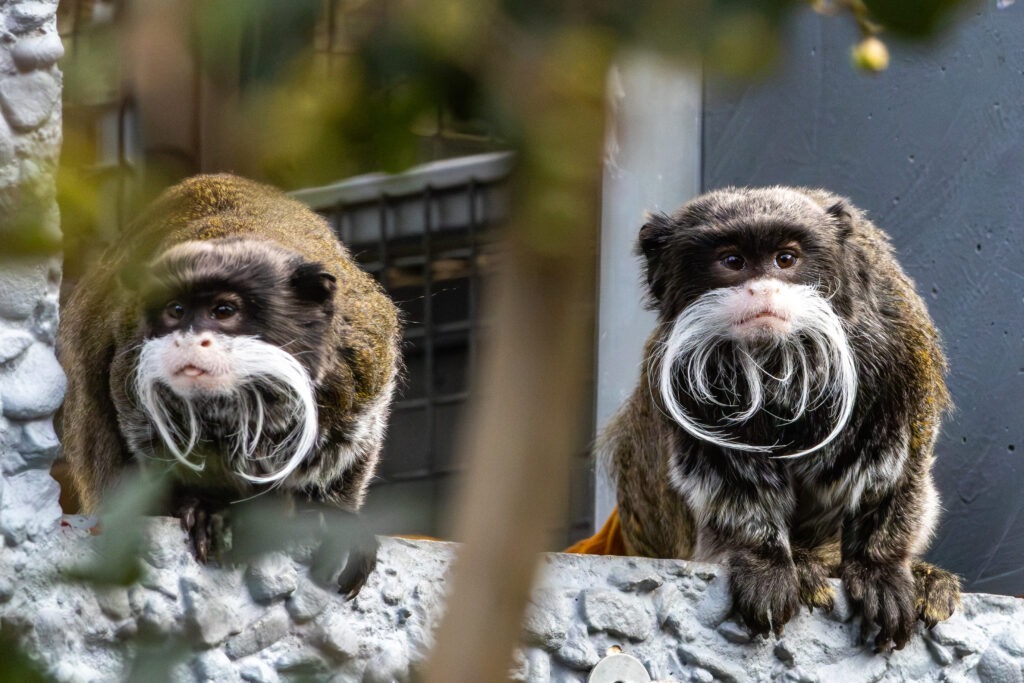
Nacho & Killari
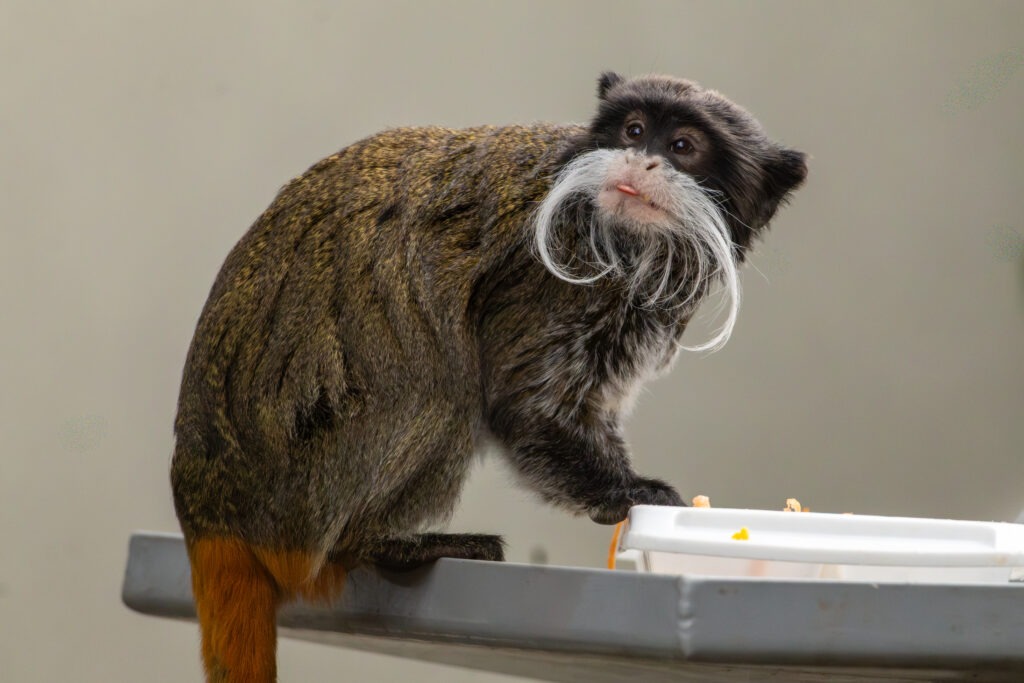
Killari