Gift
Gift Tickets
 Membership
 Contact
 Donate
 Shop
ShopCape Porcupine
Description
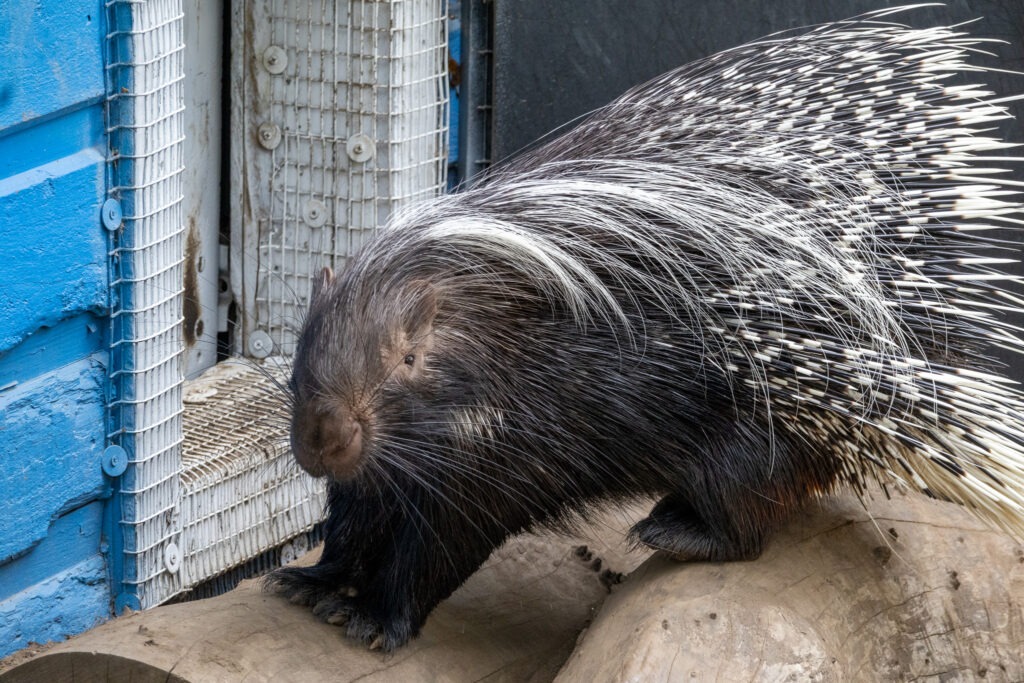
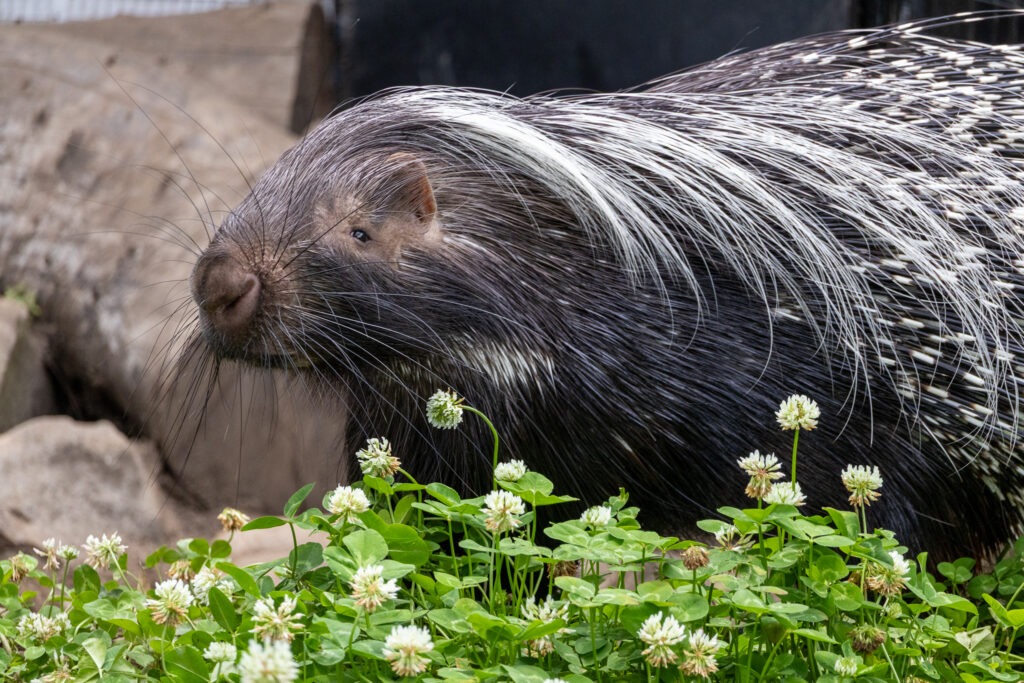
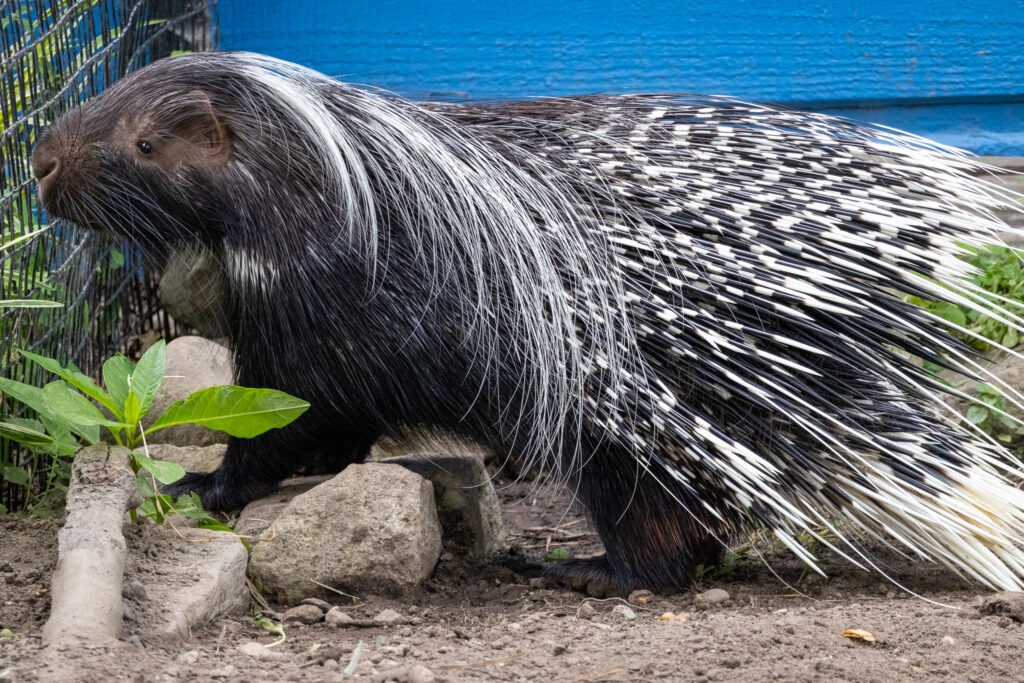
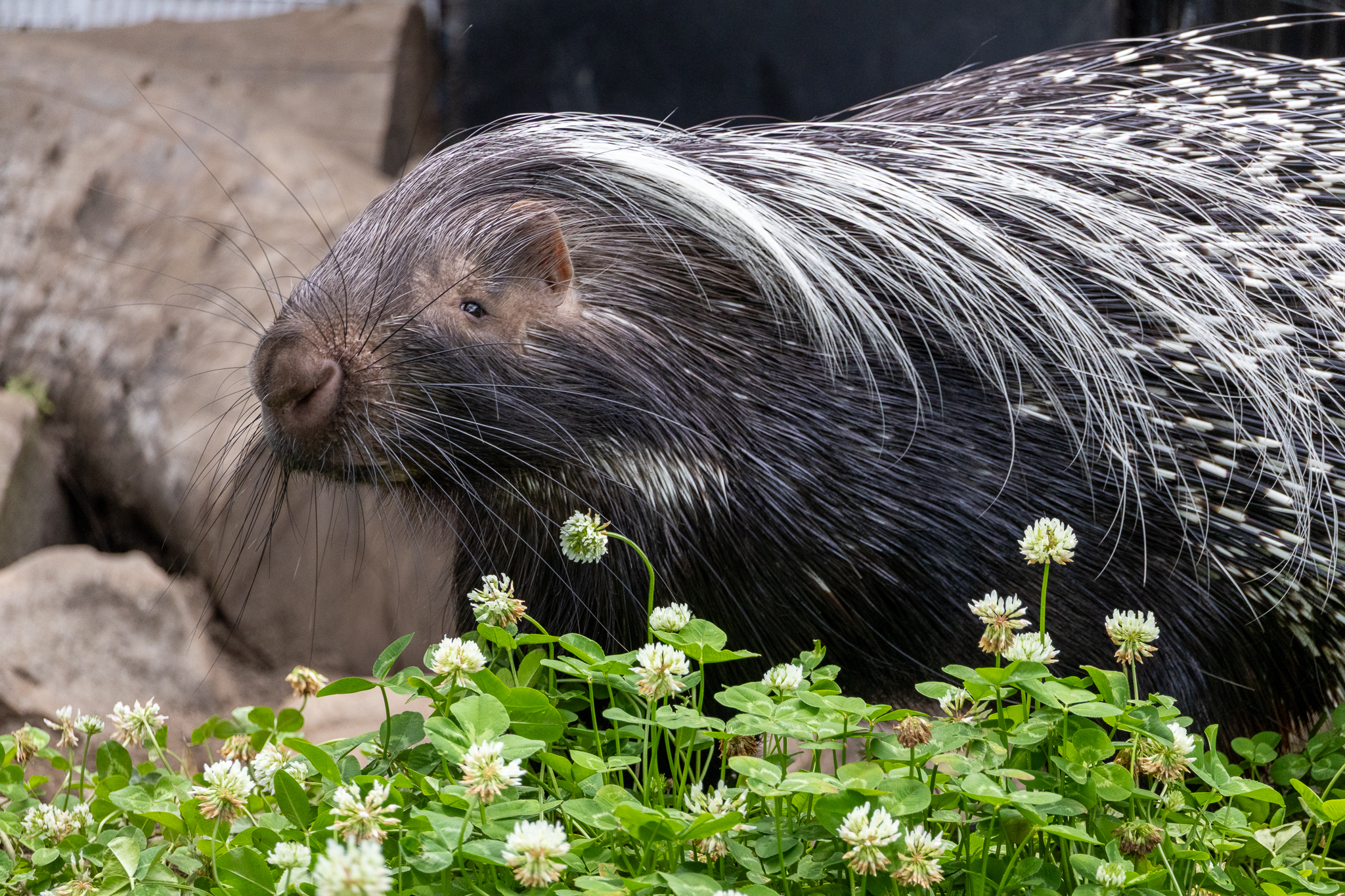
The Cape porcupine is one of the largest porcupine species in the world and one of the largest rodent species. They have dozens of long black and white, hollow quills protruding from their body that are made of keratin (the same material found in human hair and fingernails).
Range & Habitat
Cape porcupines can be found in savanna, shrubland, and grassland areas across central and southern Africa. They prefer open habitats rather than wooded areas, but they seek out rocky crevices and caves for shelter.
At the Virginia Zoo, a Cape porcupine can be found at the Blue Barn in the ZooFarm.
Behavior
To ward off predators, porcupines stomp their feet, make a clicking noise with their teeth, and produce a loud hissing noise, which comes from their quills when rattled.
Cape porcupines are monogamous and live in small family groups consisting of an adult breeding pair and their shared offspring.
Cape porcupines are nocturnal. During the day, this species takes shelter in rock crevices, caves, abandoned aardvark burrows, or underground burrows they’ve created. Families often create an elaborate, inter-connected burrow system.
Diet
These rodents are omnivores and their diet consists mainly of bulbs, roots, and bark. They also eat crops, and occasionally will eat insects, small vertebrates, and some carrion.
Conservation
There are no major threats to this species. Porcupines have benefited from agricultural development. However, they are considered pests in areas where root crops, potatoes, groundnuts, and corn are grown. Porcupines also have a habit of ring-barking trees (removing a strip of bark from a tree around its circumference) which exposes their heartwood and makes them susceptible to fungal infections.
Fun Facts
- Cape porcupines are the largest rodent in Africa.
- Porcupines cannot shoot their quills at predators. Instead, they turn their body around, spread their quills and charge backward toward predators. The quills easily embed into skin, and fall out once the predator has been stuck.
- The name porcupine comes from the French word ‘porc espin’, meaning spined pig.
Virginia Zoo Animals
Male: Enzi (born: 1/7/2023)
Scientific Name
Hystrix africaeaustralis
IUCN Conservation Status
Least Concern
Size
Length: 1.5-3 feet long Weight: 20-65 pounds
Life Expectancy
12-15 years