 Gift
Gift Tickets
 Membership
 Contact
 Donate
 Shop
ShopNational Pollinator Week is the Bee’s Knees
We’re buzzing with excitement for the Pollinator Partnership’s National Pollinator Week hosted from June 22 to June 28, 2026! Celebrated during the last full week of June every year since 2007, this week raises awareness of the important role of pollinators and how we can work together to protect them.
What are pollinators?
Pollinators are animals, including insects, birds, and bats, that move pollen from the male part of a flower to the female part of a flower. This process fertilizes female flowers, so they produce seeds and fruits!
While we often only think about honeybees as pollinators, thousands of species are responsible for pollinating different plants around the world. There are an estimated 20,000 species of bees found worldwide, and over 4,000 of them are native to the United States. All bees feed on a mixture of pollen and nectar, making them excellent pollinators for a wide variety of plant species. There are also nearly 2,000 species of pollinating birds worldwide, including hummingbirds, honeycreepers, honeyeaters, brush-tongued parrots, and sunbirds. Globally, nearly 50 different bat species are nectarivores with specialized adaptations for pollinating flowers as they drink nectar. In fact, over 500 species of flowers worldwide rely on bats as their pollinators.
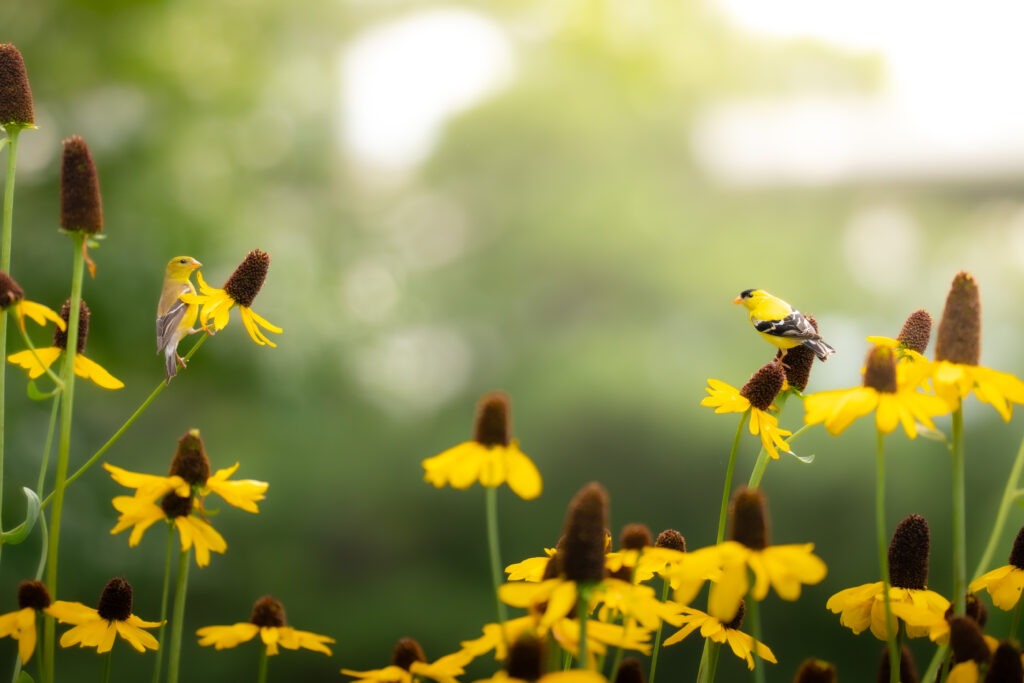
American goldfinches can be incidental pollinators as they travel between flowers in search of seeds to eat.
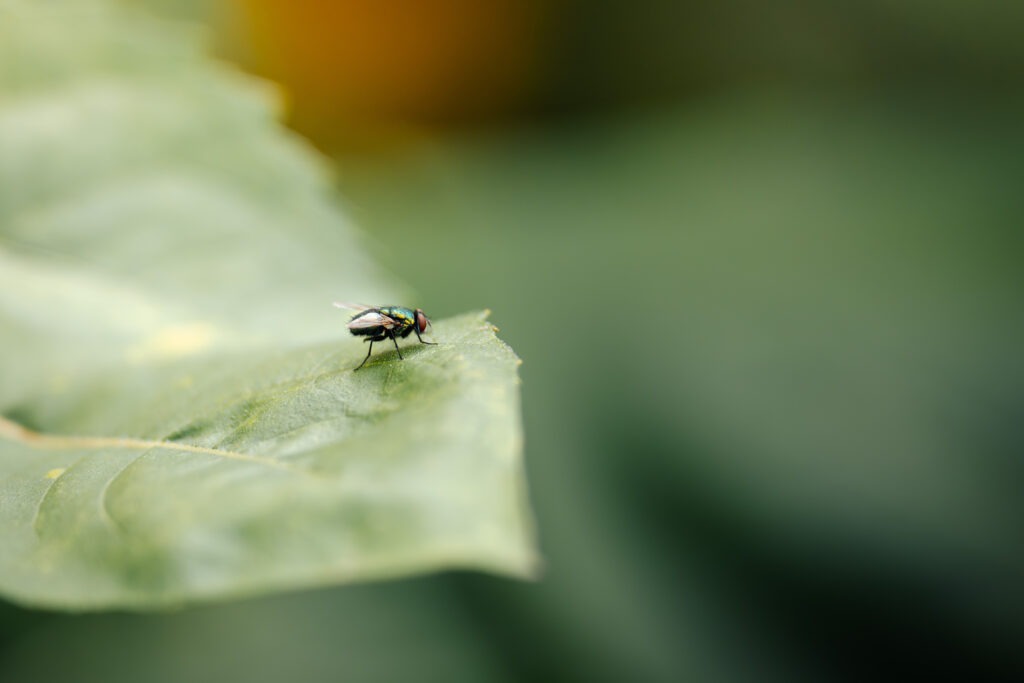
Flies are the second most important pollinators after bees, because they thrive in alpine and subarctic environments where other pollinators are less abundant.
Why are pollinators important?
According to the United States Department of Agriculture (USDA), bees pollinate about 75% of the fruits, vegetables, and nuts grown domestically. Plus, one in every four bites of food people take can be attributed to pollination by bees. In total, pollinators provide an estimated $34 billion in economic value to agricultural crops in the United States each year. Now that’s something to buzz about!
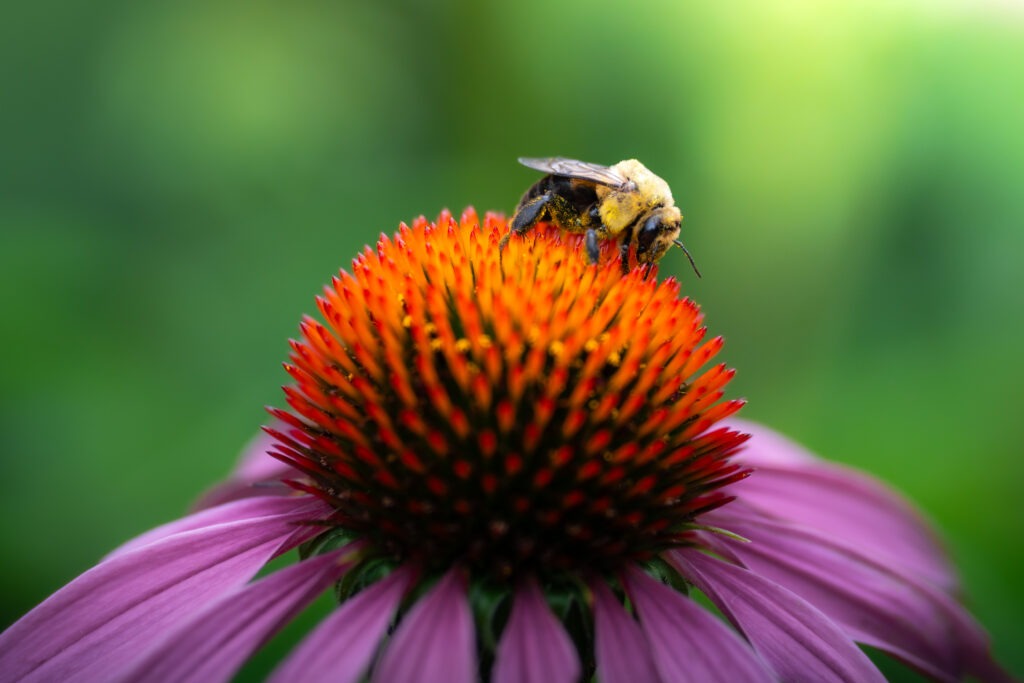
Bees are most attracted to blue, purple, violet, white, and yellow flowers.
What are the threats to pollinators?
One of the greatest threats to pollinators is habitat loss. Pollinators have lost substantial available habitat as land has been repurposed for agriculture or human development. Lawns, for example, typically only consist of a few species of grass. They are significantly less diverse than natural habitats composed of native weeds, grasses, and flowers. This decreased diversity could make it more difficult for pollinators to find food, or they may have to travel farther distances to find the food they need. Plus, ornamental varieties of plants can be different colors than what would occur naturally, so pollinators may not recognize the flowers as a food source, or ornamental flowers may be sterile (not contain pollen).
Pollinators are also threatened by climate change, overuse of pesticides, pathogens, parasites, and invasive species. Visit the Pollinator Partnership website here to learn more about threats to pollinators.
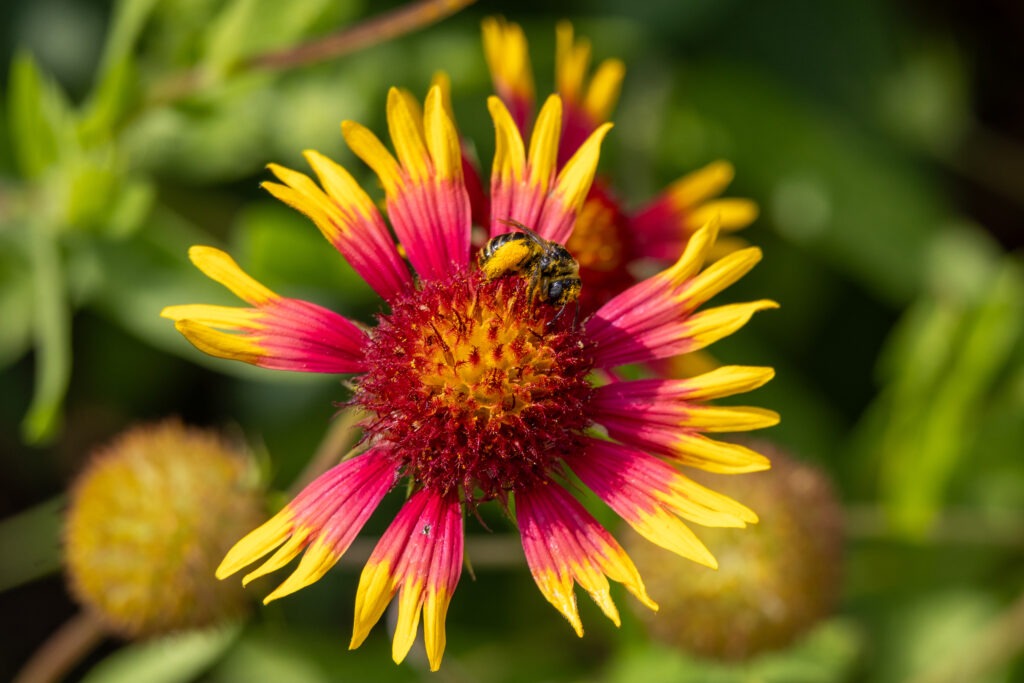
The Virginia Zoo supports pollinators by planting diverse gardens across our 53 acres.
How can I protect pollinators?
1) Become a Habitat Hero!
A Habitat Hero is someone who protects and restores native habitat through education, awareness, or direct action. You can become a Habitat Hero by participating in a Native Plant Workshop at the Zoo, taught by Southern Branch Nursery, or by attending a plant giveaway in the Hampton Roads community!
The Virginia Zoo’s Habitat Heroes program is an education, awareness, and behavior change campaign asking homeowners to replace 20 square feet of lawn with native wildlife habitat. Not sure what 20 square feet of pollinator habitat looks like? Visit one of the demonstration gardens at the Virginia Zoo!
To learn more about this program, visit our Habitat Heroes page here.
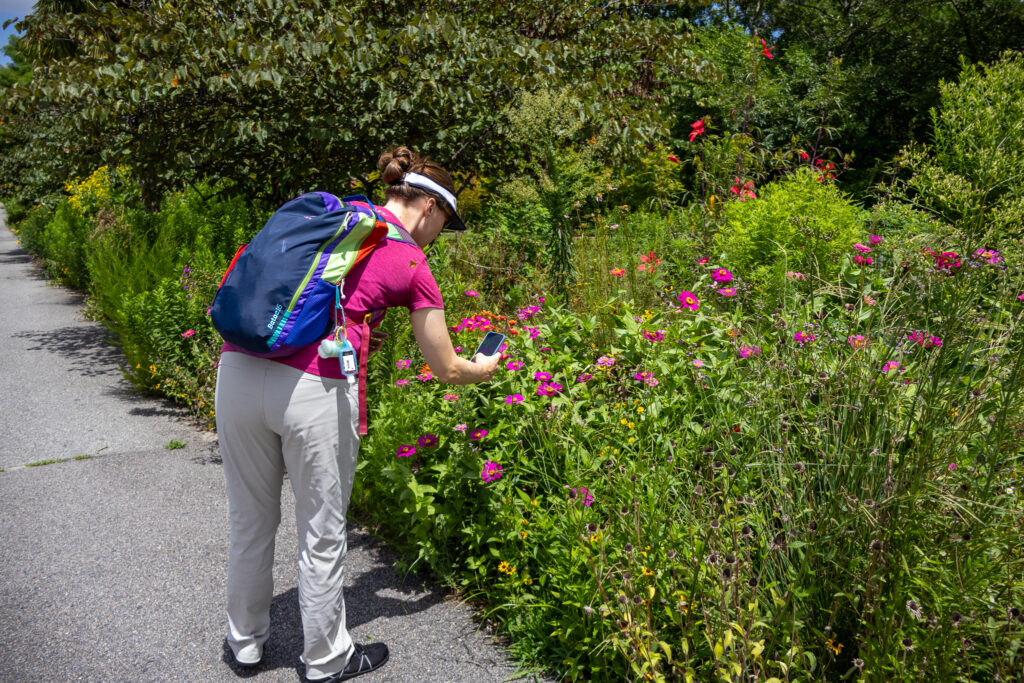
Don’t forget to explore our Pollinator Garden across from the entrance to Asia: Trail of the Tiger on your next visit!
2) Save the date for the Monarch Mile at the Virginia Zoo!
Every spring, monarch butterflies east of the Rocky Mountains migrate from Mexico to their summer breeding grounds in the United States and Canada. In the fall, they journey nearly 3,000 miles back down south to weather the winter. This migration is becoming increasingly difficult due to habitat loss in their breeding and overwintering grounds, increased pesticide use, climate change, and other factors. In fact, according to the Xerces Society for Invertebrate Conservation, in the 1990s, nearly 700 million monarchs overwintered in the oyamel fir forests north of Mexico City. Just thirty years later, monarch populations have declined by more than 80%.
On September 20, 2026, the Virginia Zoo is scheduled to host our third annual Monarch Mile event. Attendees walk, run, or flutter through the Zoo, and we add up the total number of miles to see how many monarch migrations our guests can do together. All ticket sale proceeds go directly towards monarch butterfly conservation, and your ticket includes the chance to enjoy a full day exploring the Zoo trails! Tickets for the Monarch Mile will go on sale to Virginia Zoo Members on July 31 and to the general public on August 7.

Guests completing the Monarch Mile in 2025.
3) Donate to the Virginia Zoo Conservation Fund!
Since 2013, the Virginia Zoo’s Conservation Fund has accepted funds to support research, education, and protection for endangered animals. Generous donations from the Virginia Zoological Society, Zoo Members, guests, and donors help us conserve wildlife and wild places at home and around the world through scientific research, education, breeding programs, anti-poaching efforts, and other programs.
In 2025, the Virginia Zoo’s Conservation Committee donated $16,500 from our Conservation Fund to the Association of Zoos and Aquariums’ (AZA) SAFE North American Monarchs program. Our donations even helped establish a grant program encouraging habitat creation for monarchs!
4) Volunteer at the Virginia Zoo!
Virginia Zoo volunteers can be trained to participate in community science initiatives, like Caterpillars Count or Monarch Watch, to monitor pollinator populations.
Community science is a form of research in which everyone, regardless of their background, can contribute meaningful data to advance scientific understanding of our shared world. Participation in conservation-focused community science brings individuals closer to wildlife and their habitats, fostering stewardship and interest in environmental education, while also allowing scientists to access more data covering wider geographic areas for longer periods of time!
Caterpillars Count! is a community science project aimed at measuring the seasonal variation, or phenology, and abundance of arthropods, like caterpillars, beetles, and spiders, found on the foliage of trees and shrubs. The data collected here on Zoo grounds helps scientists at North Carolina State University conduct research on the effects of climate change on plants, insects, and birds. The Virginia Zoo’s Mission Engagement team collects data from gardens on site from March through October.
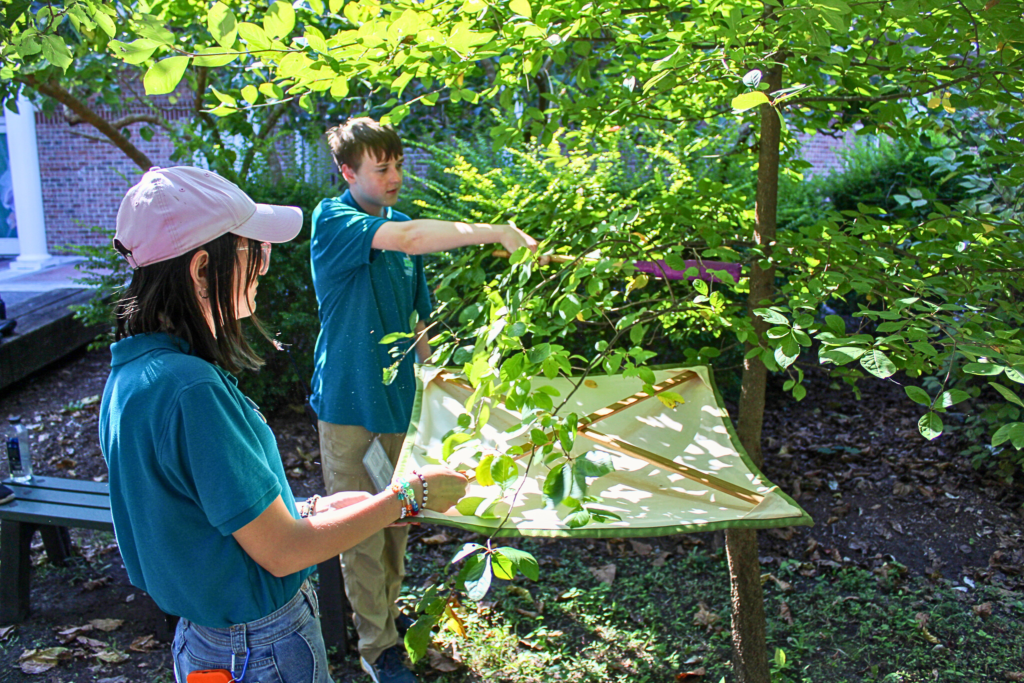
Conservation Youth Team volunteers surveying arthropods for Caterpillars Count!
Monarch Watch is an education, conservation, and research program focused on studying the monarch butterfly, its habitat, and its fall migration. This community science initiative provides multiple ways for anyone interested to get involved, from tagging individual butterflies to creating suitable monarch habitat. Here at the Virginia Zoo, staff and volunteers track monarch butterfly sightings in late September and early October as they travel south for overwintering.
We hope this inspires you to take action this National Pollinator Week!