Gift
Gift Tickets
 Membership
 Contact
 Donate
 Shop
ShopAxolotl
*This page is under renovation and all information may not be up-to-date or complete*
Description
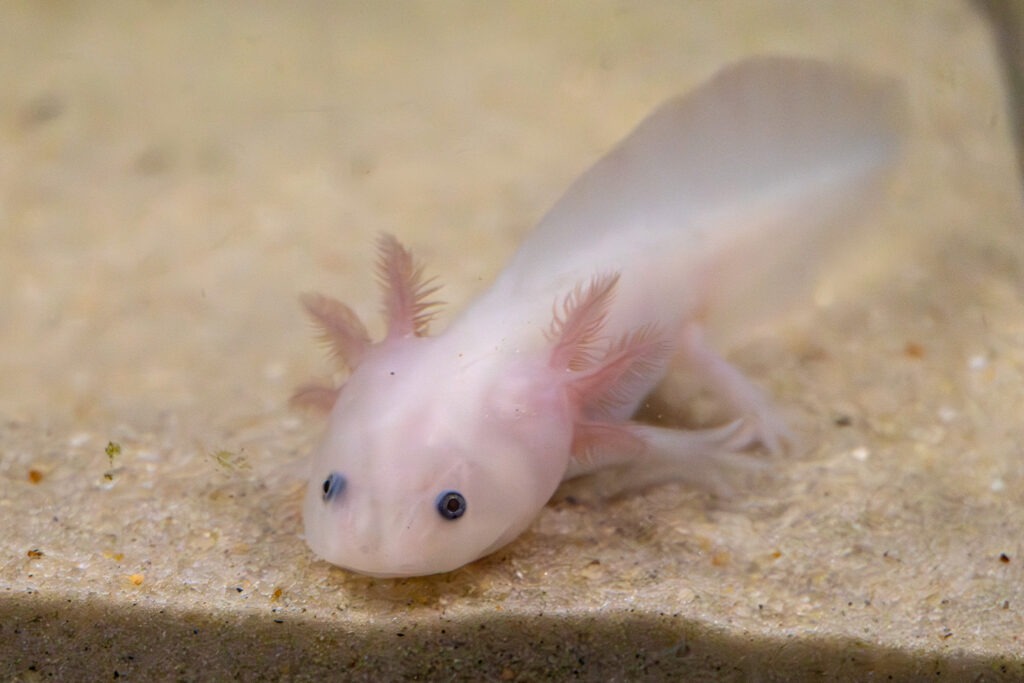
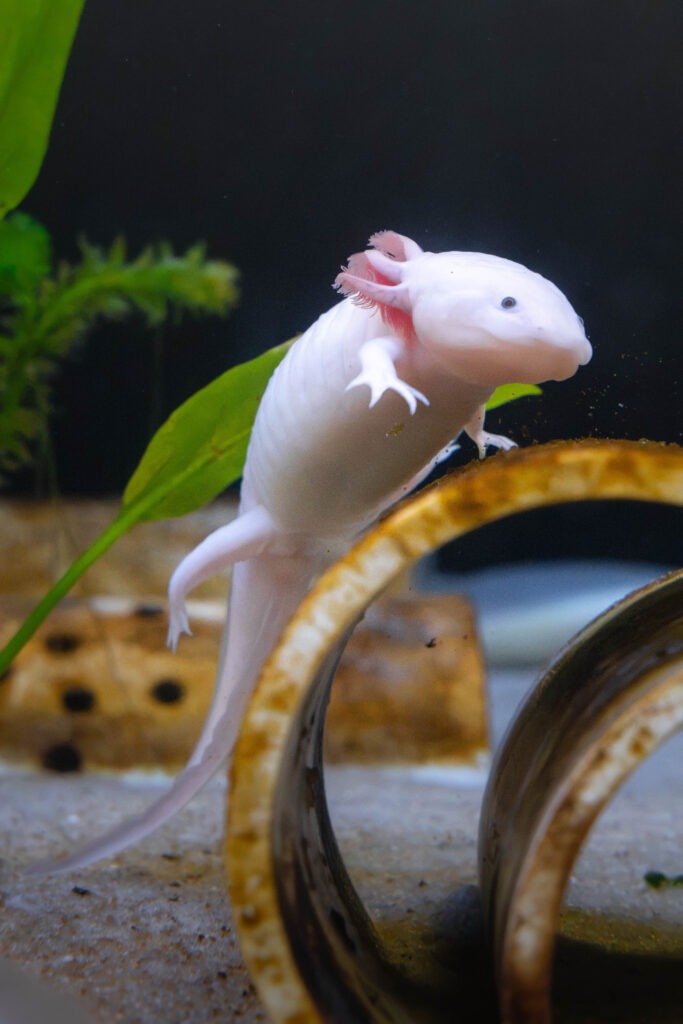
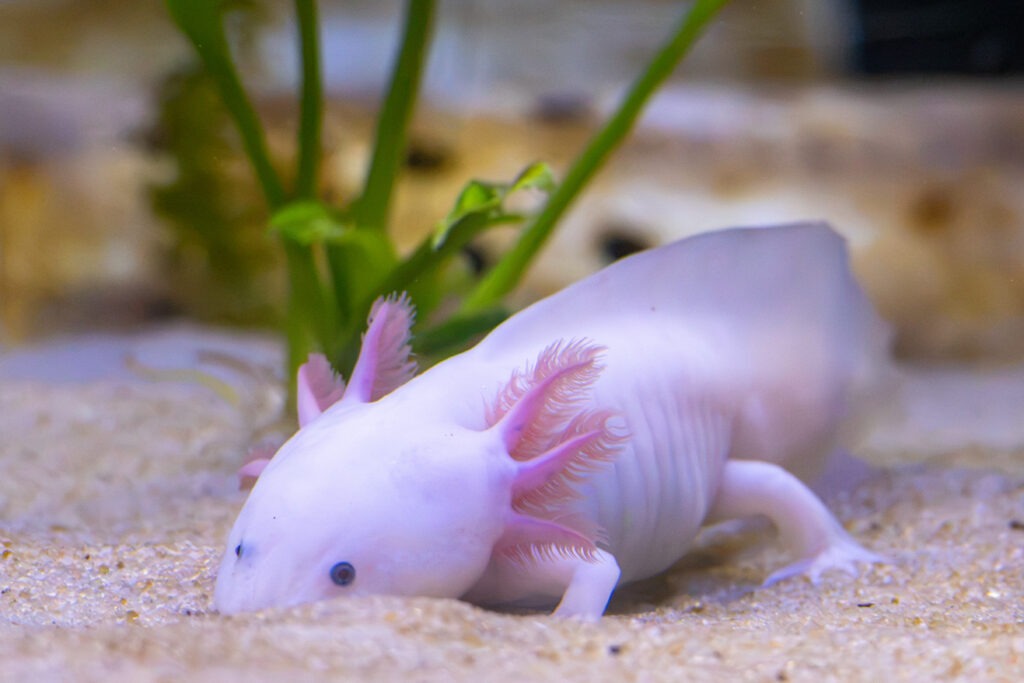
Axolotls are neotenic salamanders. This means that unlike other salamander species, they retain juvenile traits into adulthood. For example, axolotls retain external gills, a tadpole-like tail, and their body fin, and they lack movable eyelids.
In the wild, axolotls are typically dark brown or black in color to camouflage in their muddy lake habitat. However, in human care, there are other color morphs, such as copper, golden, or multicolored. Pink individuals with dark eyes, like the axolotls at the Virginia Zoo, have leucism. This condition is very similar to albinism, but instead of a total loss of melanin, leucisim refers to a partial absence of melanin.
Range & Habitat
Axolotls are native to still-water lakes in Mexico. Historically, axolotls ranged approximately 77 square miles across the Xochimilco-Chalco basin. However, when drainage projects were completed to preserve Mexico City’s landmass about 85 years ago, this significantly reduced the axolotl’s available habitat.
Behavior
During the day, axolotls typically burrow in aquatic vegetation and mud to avoid predators. At night, axolotls hunt their prey.
Axolotls primarily use their gills to breathe underwater, but they do occasionally surface to gulp air into their lungs.
Diet
Axolotls are carnivores. Their diet consists of insects, worms, mollusks, crustaceans, insect larvae, and even small fish. Sometimes, axolotls also inhale gravel to help them grind up their food for easier digestion.
Conservation
Axolotls have a very small home range in still-water lakes and canals in and around Mexico City. Due to the high human population in the area, the axolotl’s habitat is highly polluted and includes non-native species. As amphibians, axolotls have permeable skin, so they are sensitive to chemicals dissolved in the water. Furthermore, since axolotls have exposed gills, dissolved toxins can easily enter their bodies. Axolotls may also be eaten by non-native species, like carp and tilapia, which were introduced to the canals as an affordable food source for residents of Mexico City.
Conservationists are addressing these threats to axolotls by installing water filters in Lake Xochimilco’s canals and excluding non-native species. Nearby farmers are also being educated about the importance of reducing the use of pesticides and fertilizers to minimize chemical runoff into the canals.
The International Union for the Conservation of Nature (IUCN) Red List considers axolotls to be critically endangered. Only an estimated 50-1,000 mature adults remain in the wild.
Fun Facts
- Axolotls can regenerate their limbs, lungs, hearts, jaws, spines, and even parts of their brain.
- The name axolotl comes from the Nahuatl language of the Aztecs and translates to “water dog.”
- Axolotls belong to a group of animals called mole salamanders. Their closest relative is the tiger salamander, Ambystoma tigrinum, which is native to Virginia.
Scientific Name
Ambystoma mexicanum
IUCN Conservation Status
Critically Endangered
Size
8-12 inches
Life Expectancy
10-15 years