 Gift
Gift Tickets
 Membership
 Contact
 Donate
 Shop
ShopBlast into the Virginia Zoo’s Past: Celebrating 125 Wild Years
In 1892, the City of Norfolk purchased 65 acres of land which were officially designated as Lafayette Park in 1899. Throughout 1900, Lafayette Park began to bring in mammals, birds, and reptiles to exhibit. In 1901, Lafayette Park became the Lafayette Zoological Park and housed over 200 individual animals. Today, the area is now known as Virginia Zoo and spans 53 acres adjacent to Lafayette Park, housing over 700 individual animals representing more than 150 species.
This year (2026) marks the celebration of 125 years of Virginia Zoo history. Read below to learn more about the Zoo’s incredible transformations over the years and 10 key events that shaped our past, present, and future!
1923: Visiting the Baltimore Zoo to modernize
In 1923, a zookeeper and Norfolk’s superintendent of parks were sent to the Baltimore Zoo (now The Maryland Zoo) to inspect their animals’ living quarters to see how to modernize and improve the Zoo at Lafayette Park. This visit resulted in the City allotting $5,000 (valued at $95,000 in 2026) for improving animal living spaces to allow Zoo residents fresh air and exercise. Today, animal care standards are vastly different and based on constantly advancing research. Most species require much more space than previously thought, and zoos now have a greater understanding of healthy social groupings for different species.
1954: New stone dwelling area and sea lion pool
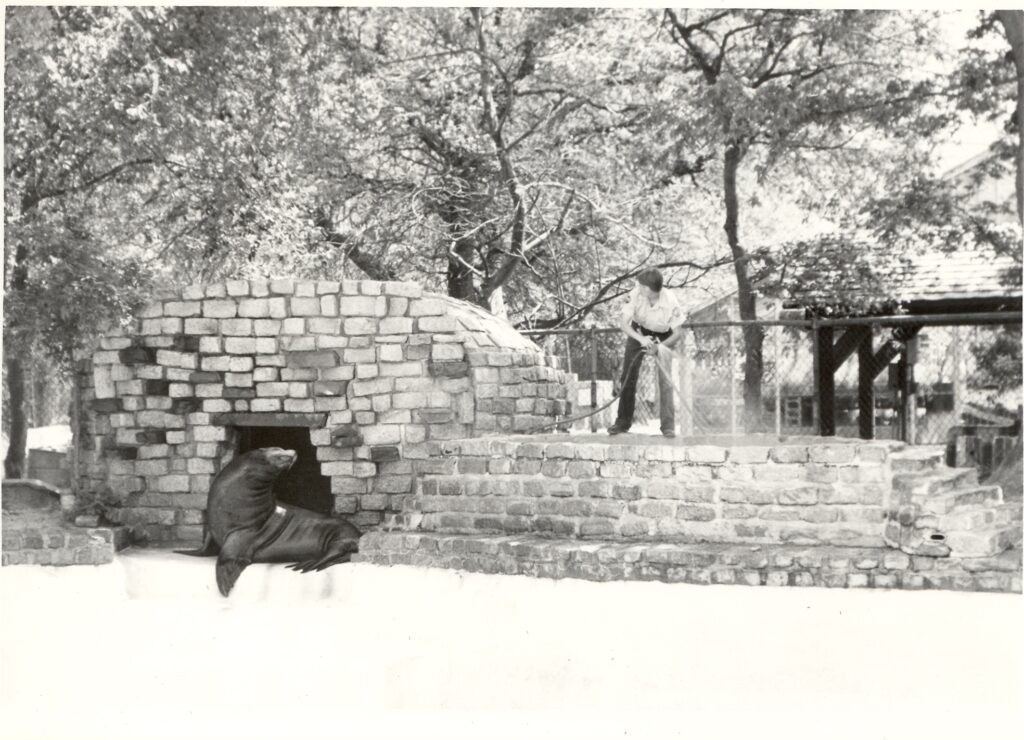
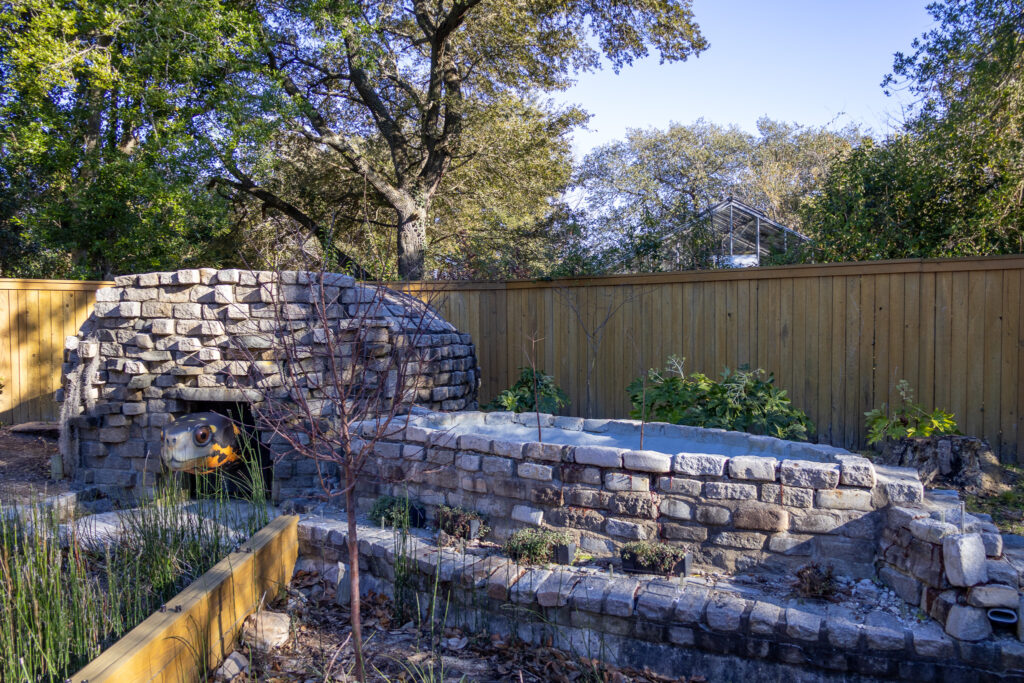
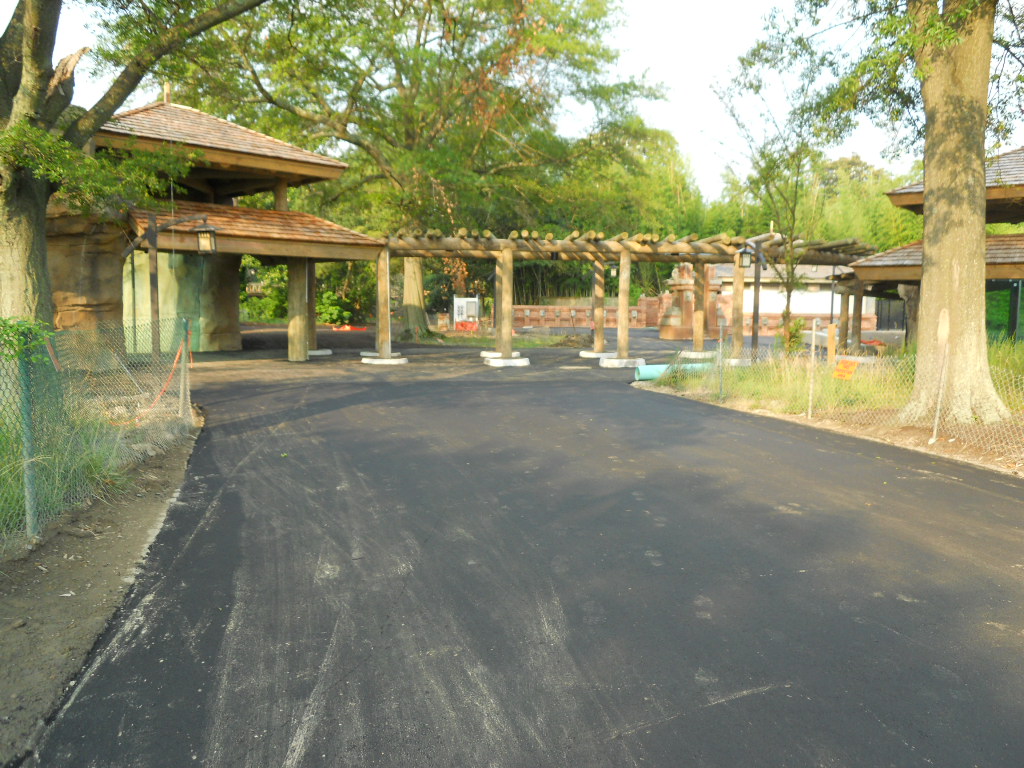
The Virginia Zoo was once home to several California sea lions. These animals require large pools with plenty of space, but they also bask in the sun on land. In 1954, the Zoo constructed a stone dwelling for the sea lion residents of the time to enjoy. Today, this iconic feature remains, largely unchanged, and now is an aesthetic focal point in Turtle Oasis, which opened in 2023. Turtle Oasis is home to several confiscated and rescued turtles, serving an important role in educating guests on native species, illegal pet trade, and responsible pet ownership.
Check out a side-by-side comparison of the sea lion habitat and what the stone dwelling looks like today.
1978: Friends of the Virginia Zoo is established
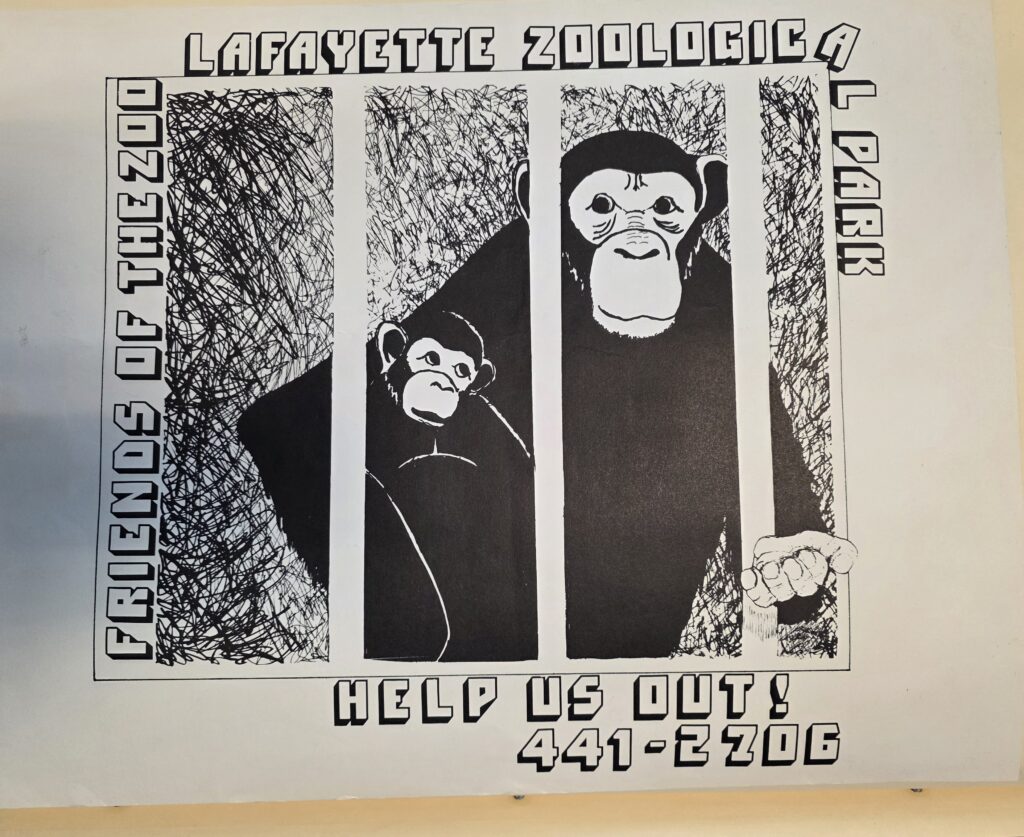
In 1978, Hampton Roads locals formed a non-stock corporation called Friends of the Zoo to act as an advisory support society to the City of Norfolk in the development of Lafayette Zoological Park. Friends of the Zoo was later renamed the Virginia Zoological Society. Today, the Virginia Zoo functions as a hybrid operation through the joint efforts of the Virginia Zoological Society (VZS) and the Virginia Zoological Park (VZP) which is owned by the City of Norfolk. VZS staff operate the Gift Shop, African Village Restaurant and concessions, education programs, special events, private parties, marketing, fundraising, and membership. VZP maintains all animal exhibits, provides animal husbandry and veterinary care, maintains our lush gardens, and oversees building maintenance and repairs. Both entities share the responsibility of guest experience and admissions.
1981: Beginnings of Zoo Crew
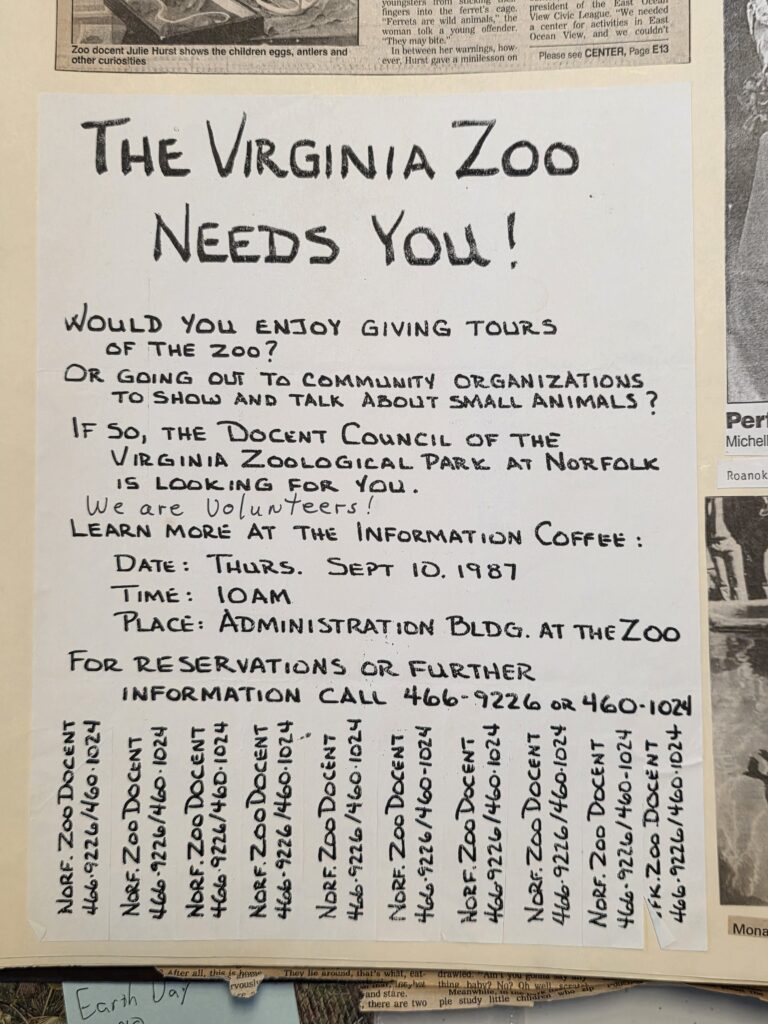
In 1981, the Virginia Zoo started a Dr. Doolittle Brigade program for people interested in becoming docents (volunteer guides) at the Zoo. Throughout the 1980s, this program went through different iterations with opportunities for teenage and adult volunteers to assist with animal care, to give tours of the Zoo, to handle Animal Ambassadors, or to represent the Zoo at community events. Today, adults aged 18+ can join our Zoo Crew, and high schoolers can participate in our Conservation Youth Team program to make their own mark on Virginia Zoo history!
Click here to learn more about how you can volunteer at the Virginia Zoo.
1987: The Virginia Zoo receives our first AZA accreditation
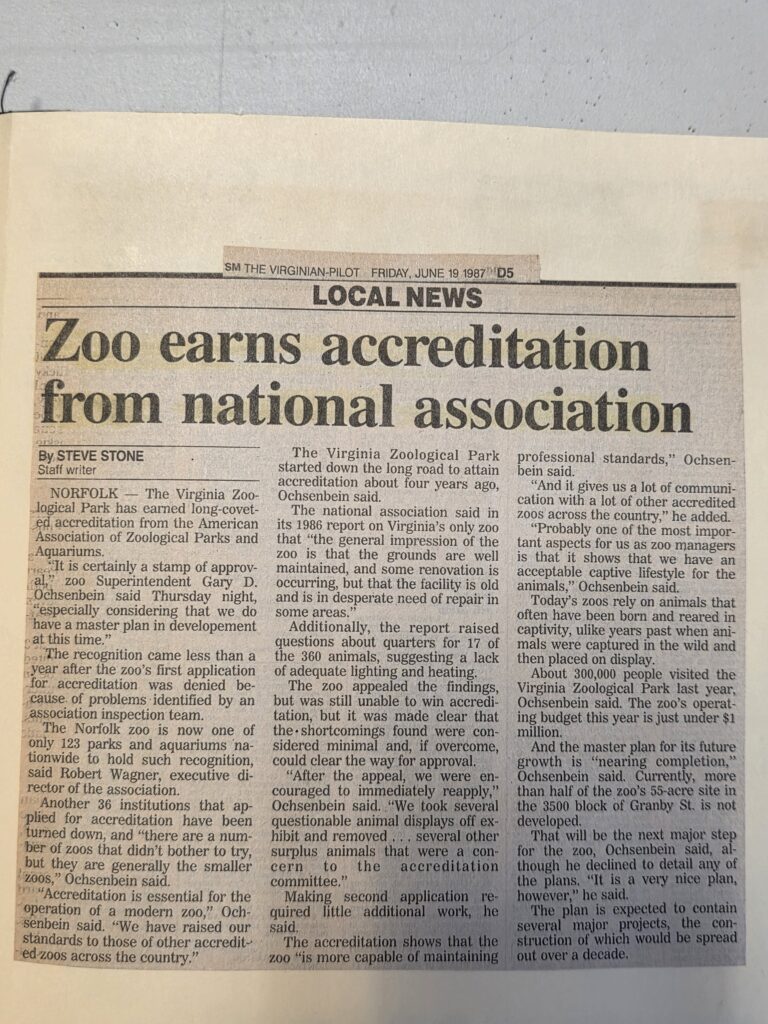
The Association of Zoos and Aquariums (AZA) is a non-profit organization dedicated to advancing the conservation, education, science, and recreation initiatives of zoos and aquariums. AZA-accredited facilities meet the highest standards of animal care and welfare while providing fun, educational experiences for families. The Virginia Zoo received our first AZA accreditation in 1987, and this past September, our accreditation was renewed through September 2029. Out of approximately 2,800 animal facilities licensed by the United States Department of Agriculture (USDA), less than 10% receive this prestigious honor! We are excited to be in our 38th year of consecutive accreditation and are dedicated to continuously evolving to maintain these high standards in the future.
2002: Africa – Okavanga Delta trail and the Admin Building open
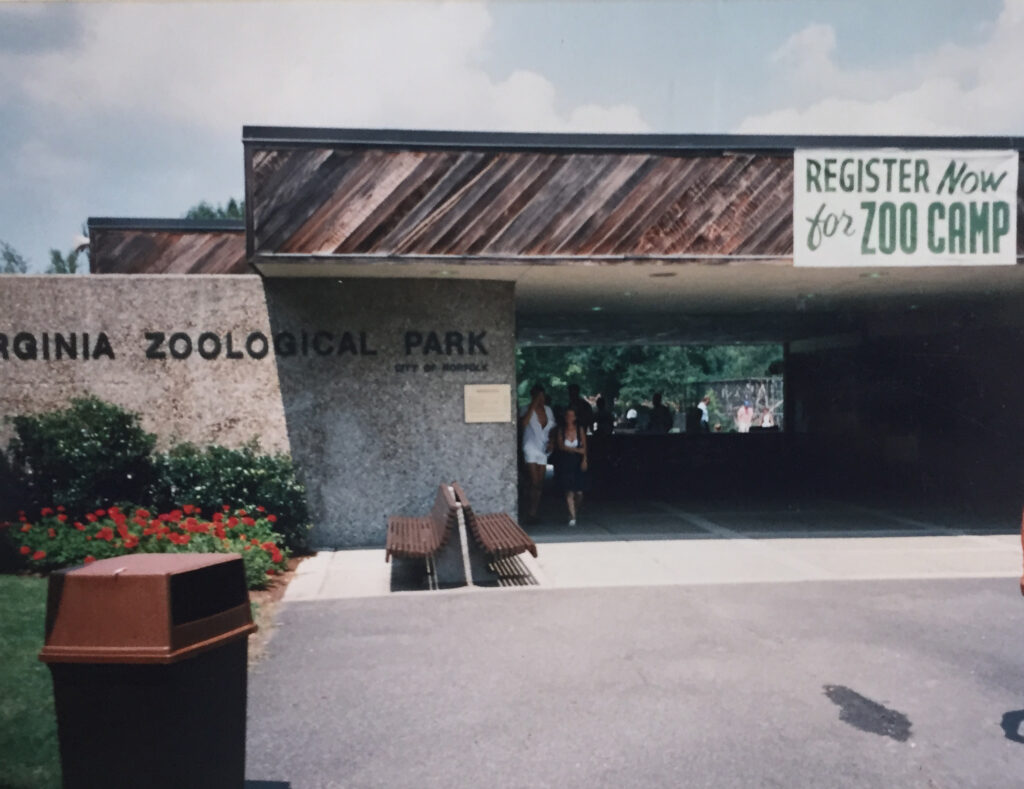
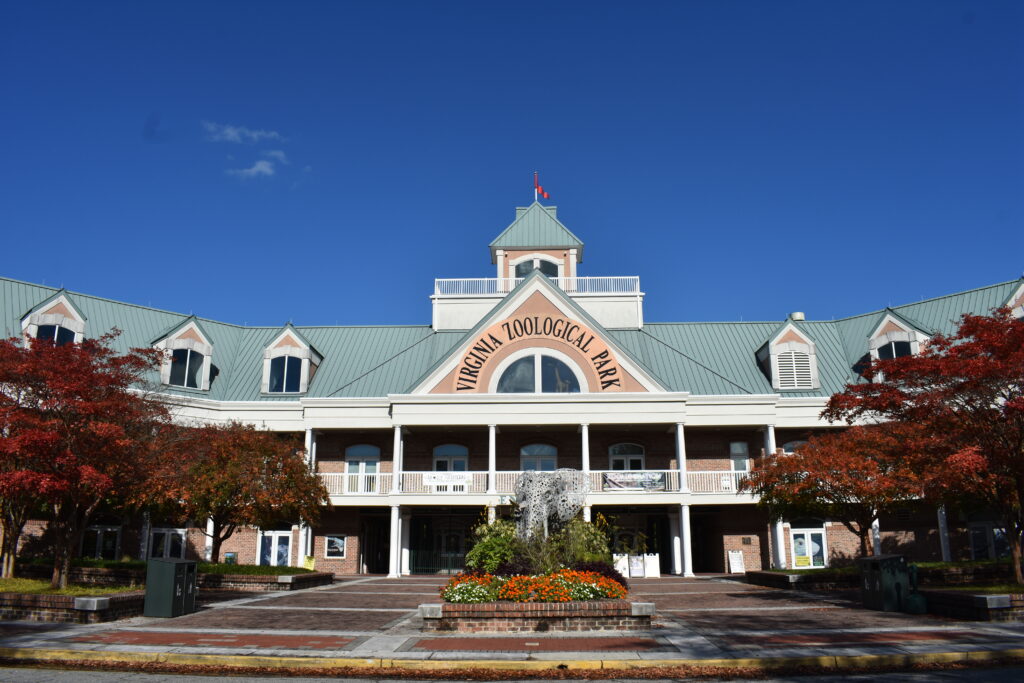
To honor the 100th anniversary of Lafayette Park (now separate, Lafayette Park and the Virginia Zoo), Africa – Okavanga Delta (now the African Safari Trail) partially opened. Our African Village, including the African Village Restaurant and the Africa Classroom, were unveiled to the public. Shortly after, in 2002, the African Safari trail opened, featuring large habitats with free-roaming animals, including Hartmann’s mountain zebras, Masai giraffes, African lions, African elephants, Southern white rhinos, slender-tailed meerkats, several smaller mammal species, birds, and reptiles!
Check out this side-by-side of the 1990 Zoo entrance, compared to today!
2011: Asia: Trail of the Tiger opens
In 2011, the Virginia Zoo’s Asia: Trail of the Tiger opened, doubling the number of large animal residents. With the opening of this new trail, the Zoo became home to Malayan tigers, siamangs, Malayan tapirs, binturongs, and several new bird species. Plus, this new trail allowed visitors to get an unobstructed, eye-level view of many of their favorite residents, like the red pandas!
2015: New Animal Wellness Campus
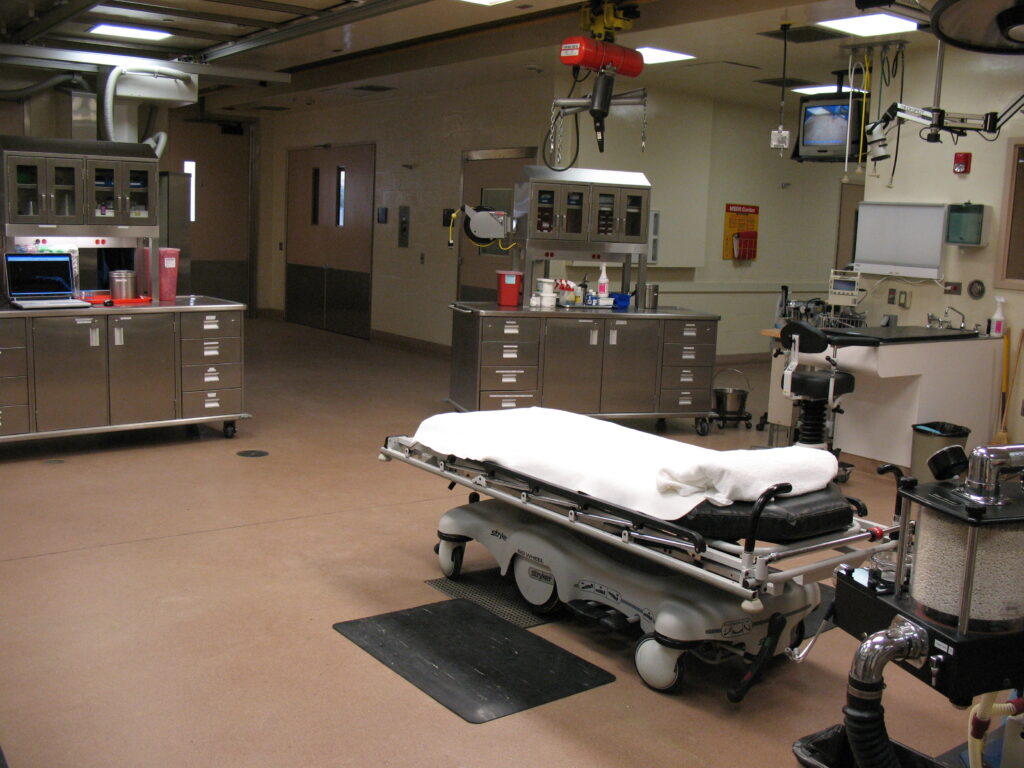
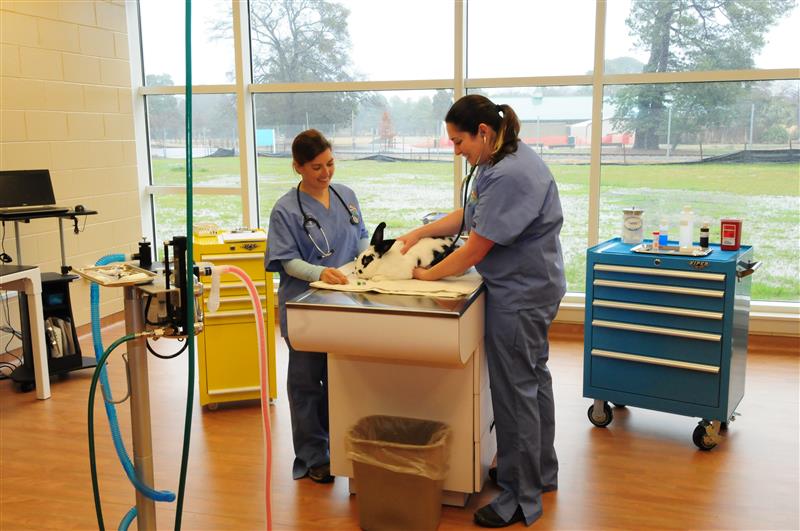
The Virginia Zoo’s Animal Wellness Campus (AWC) debuted to the public in 2015 after an incredible remodeling project. Our current Animal Wellness Campus includes a state-of-the-art Veterinary Hospital, Diet Kitchen, the ZooLive! Stage, and gardens with edible plants. The Veterinary Hospital is an 8,000 square foot building equipped with animal holding facilities, a surgery suite, microbiology lab, intensive care unit, and pharmacy where our veterinary team cares for more than 700 individual animals of over 150 species. The Diet Kitchen is a 2,500 square foot kitchen where keepers prepare specialized, nutritionally-balanced diets for Zoo animals, often incorporating fruits and vegetables grown in the campus gardens. Large windows on each building give guests a behind-the-scenes look at how we provide outstanding care to our animals.
2017: Southern white rhino arrivals
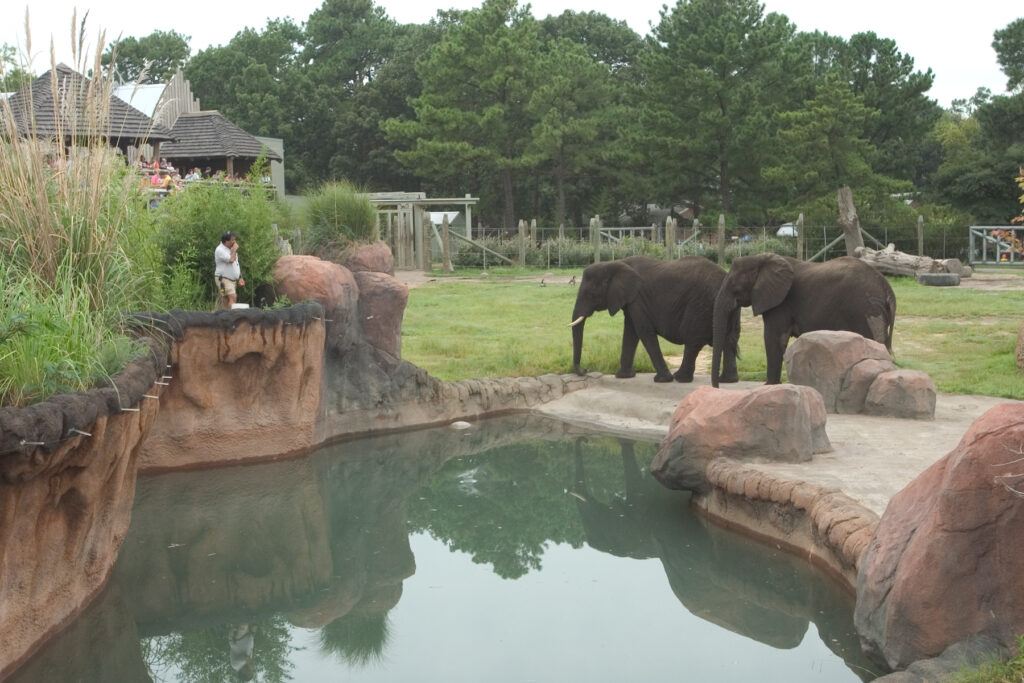
In early 2016, the Virginia Zoo’s last two African elephants were transferred to a larger herd at Zoo Miami. As herd animals, African elephants require large amounts of space with multiple other elephants to live healthy lives. A herd must consist of at least three female elephants together, and they must have at least 3,600 square feet to roam. The Zoo was previously home to three female elephants, but after one passed away in 2016, our animal care team believed that if our elephants were to have the best quality of life possible, then they would need to be at a facility with a larger herd and more space. This important transition allowed us to welcome three genetically-valuable Southern white rhinoceroses to the Zoo in 2017.
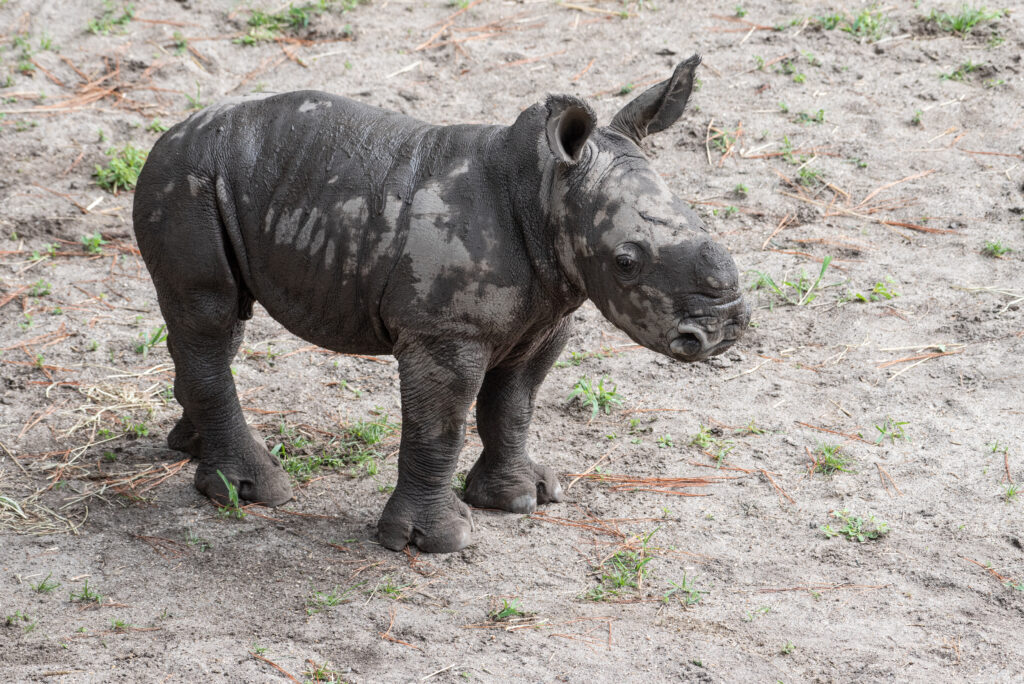
Bora and Zina, our adult female Southern white rhinos, arrived at the Virginia Zoo from Singapore Zoo in early 2017. Later that year, our adult male, Sibindi, arrived from White Oak Conservation Center. Since our females are originally from Asia and Sibindi was born in South Africa, their unique genes were not yet represented in the United States’ population of Southern white rhinos in human care! The births of Mosi and Letti, in 2021 and 2023 respectively, are a testament to our keepers’ outstanding care and represent important conservation success stories.
2023: The Virginia Zoo Express arrives
In 2023, the Virginia Zoo received a brand new electric train called the Virginia Zoo Express. Historically, the Virginia Zoo had trains with internal combustion engine. By transitioning to an electric train, the Virginia Zoo demonstrates our ongoing commitment to enhancing sustainability initiatives on grounds in as many areas as possible! This train offers a smooth ride around our grounds, the chance to learn more about the Zoo, and a peek into some behind-the-scenes areas, including our cinereous vulture habitat. Click here for more information.
As you can see, a lot has happened over the past 125 years of Virginia Zoo history! We can’t wait to see where the next 125 years take us.
Do you have photos of visits past, or maybe a fond memory of the Virginia Zoo? Share them with us! The Zoo wouldn’t be where it is today without our community, so we want to acknowledge YOU as part of our celebration! Fill out this form on our website here for the chance to be featured throughout 2026.