 Gift
Gift Tickets
 Membership
 Contact
 Donate
 Shop
ShopOrange-tailed Skink
*This page is under renovation and all information may not be up-to-date or complete*
Description
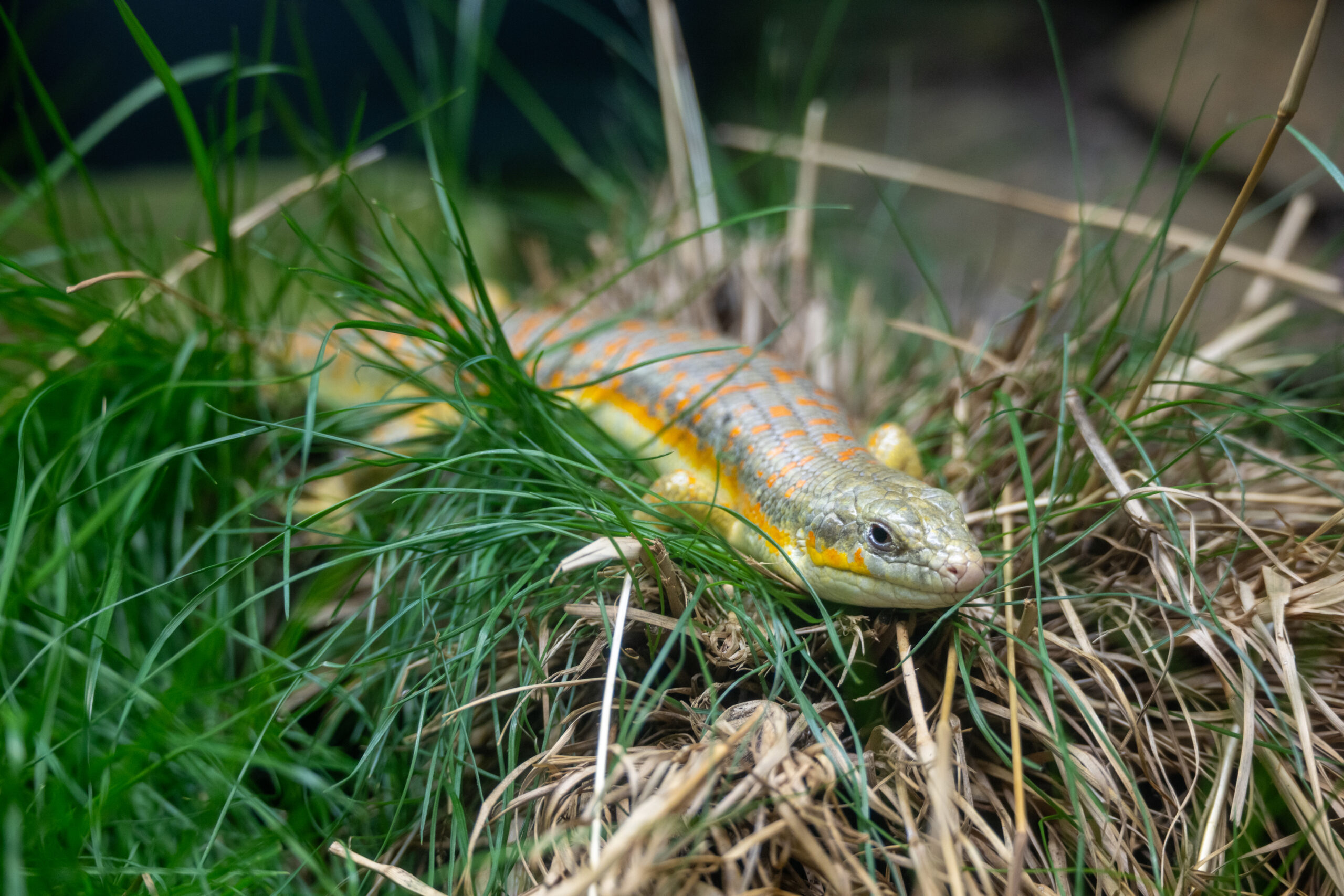
Orange-tailed skinks have smooth, shiny scales with orange dotted across their backs, an elongated body, and short legs.
Range & Habitat
This lizard is found in north Africa to central Asia in sandy, stony soil and scrubby vegetation.
At the Virginia Zoo, our orange-tailed skinks can be found in the World of Reptiles and on the African Safari Trail.
Behavior
Orange-tailed skinks are known to dig and burrow. This species is diurnal, meaning they are most active during the day.
Diet
Orange-tailed skinks are omnivores with a diet consisting of insects and vegetation.
Conservation
Orange-tailed skinks are considered to be of Least Concern with stable populations by the International Union for the Conservation of Nature (IUCN). Their populations were last evaluated in 2016. Habitat loss is one of the biggest threats to this species in some parts of its range.
Fun Facts
- Other names for the orange-tailed skink include Schneider’s skink and the Berber skink.
- This species is monoestrous, meaning they only have one clutch of eggs a year.
Scientific Name
Eumeces schneiderii
IUCN Conservation Status
Least Concern
Size
Adults average about 8-18 inches in length.
Life Expectancy
Up to 18 years