 Gift
Gift Tickets
 Membership
 Contact
 Donate
 Shop
ShopObserving the 3C’s of Conservation in the Mongolian Steppe
The Virginia Zoo Conservation and Research Grant offers staff the opportunity to engage in field conservation projects and community science initiatives to further their personal and professional development. Kristine Werner, Senior Education Specialist, received this funding to assist with population studies of argali, ibex, gazelles, and cinereous vultures in Mongolia in September 2025. Read on to learn more about Kristine’s exciting fieldwork opportunity which perfectly exemplified the Virginia Zoo’s 3 C’s of conservation.
The Virginia Zoo Conservation and Research Grant offers staff the opportunity to engage in field conservation projects and community science initiatives to further their personal and professional development. Kristine Werner, Senior Education Specialist, received this funding to assist with population studies of argali, ibex, gazelles, and cinereous vultures in Mongolia in September 2025. Read on to learn more about Kristine’s exciting fieldwork opportunity which perfectly exemplified the Virginia Zoo’s 3 C’s of conservation.
What are the 3 C’s of Conservation?
The Virginia Zoo’s 3 C’s of conservation are care, connection, and community. The first C, care, refers to the Zoo’s dedication to providing excellent animal care and welfare, from nutritionally balanced diets to expert veterinary medicine. The second C, connection, refers to the Zoo’s efforts to create lasting relationships between guests and wildlife. By sharing stories about the links between wildlife and human activities, we encourage guests to become stewards of the environment in any way they can. The final C, community, refers to the Zoo’s core belief that conservation is a collaborative effort at the individual, local, national, and international levels.
About Ikh Nart Nature Reserve
Kristine visited the Ikh Nart Nature Reserve in the Dornogobi Aimag Province of Mongolia. This nature reserve consists of over 250 square miles of arid grasslands and rocky cliffsides which are home to some of Central Asia’s most well-known wildlife species and 150 nomadic herding families living alongside them.
Even though Mongolia has some of the most remote landscapes in the world due to the country’s extremely low population density, wildlife and their native habitats are still threatened by the commercialization of livestock herds, climate change, and illegal poaching. These threats also harm the nomadic families’ traditional livelihoods. By volunteering with Earthwatch, Kristine and other volunteers contribute to a growing body of scientific research that informs sustainable herding practices and guides conservation policies to protect Ikh Nart Nature Reserve residents’ ways of life.
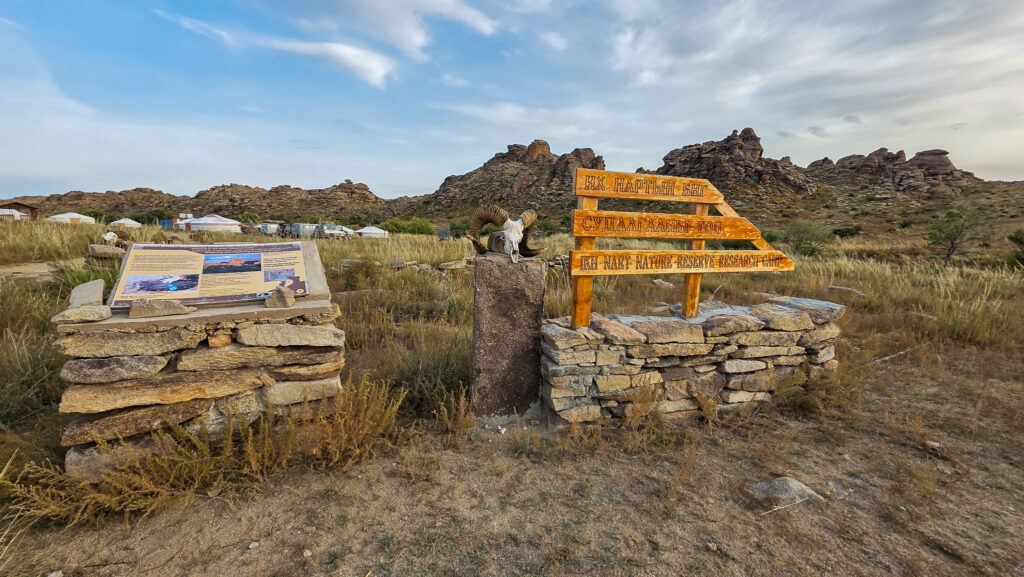
Entrance to Ikh Nart Nature Reserve
Caring for Mongolian Wildlife
Livestock herds are the greatest source of income for families living in the Ikh Nart Nature Reserve. To successfully raise livestock herds, families must move their animals frequently, so they only eat what they need and give the land time to recover from grazing pressure. However, with the increase in larger, commercialized herds in the Mongolian steppes, traditional herding practices are becoming more challenging. The presence of more livestock can increase the transmission of diseases between herds and wild hoofstock. Plus, climate change has increased temperatures and reduced rainfall across the steppes, leaving animals with fewer plants to graze on each year. That’s where local scientists and Earthwatch volunteers come in!
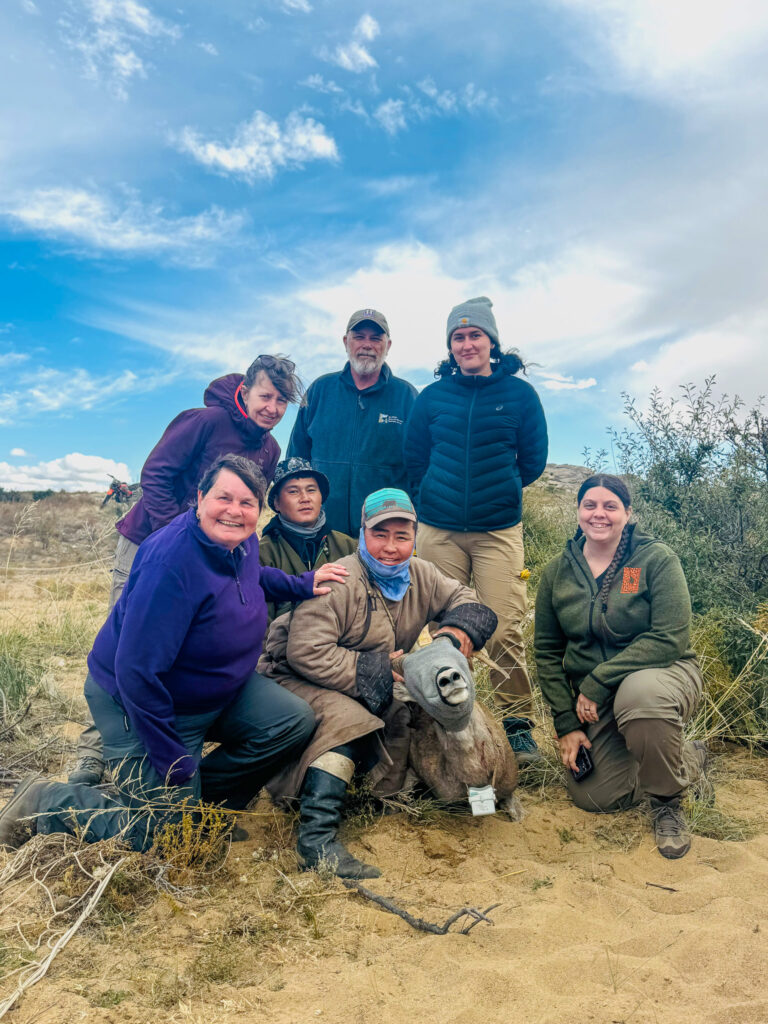
Kristine, fellow volunteers, and her research team with one of the animals they netted. Notice the satellite collar placed around their neck to track future movements through the reserve!
One of the projects Kristine assisted with during her trip involved netting argali, ibex, and goitered gazelles, so researchers could take blood samples from these animals and compare them to those from local livestock. Veterinary PhD students will later use these samples to measure disease transmission between species and to answer questions about whether diseases are originating in livestock and spilling over into wild populations or vice versa. Individual animals that were the right age or appropriate size were also fitted with satellite collars to study their movement through the nature reserve, providing further insight into what parts of the reserve are the most important to conserve for each species.
Kristine also became a steward of the steppes by building one-rock dams (ORDs) for water retention. According to the Climate Reality Project, temperatures across Mongolia have increased 2.1℃ in the last 70 years and may exceed 5℃ by the end of the century under some high emissions scenarios. At the same time, there has been a 7% decrease in rainfall. When coupled with overgrazing, these changes have reduced the available vegetation for animals to eat while simultaneously increasing the frequency and intensity of dust storms that threaten human health.
One-rock dams (ORDs) are a simple way for community members and Earthwatch volunteers to help with soil erosion and water retention. ORDs are created by piling large rocks in areas with visible washout or gulleys. The next time it rains, which is not often in this semi-arid habitat, the water is slowed down and does not flow directly into the valley below. Over successive rains, soil moisture increases and more vegetation can repopulate around the dam. Each new plant further increases water retention and encourages others to grow in the same area, providing animals with more grazing material and reducing the amount of airborne dust in future storms.
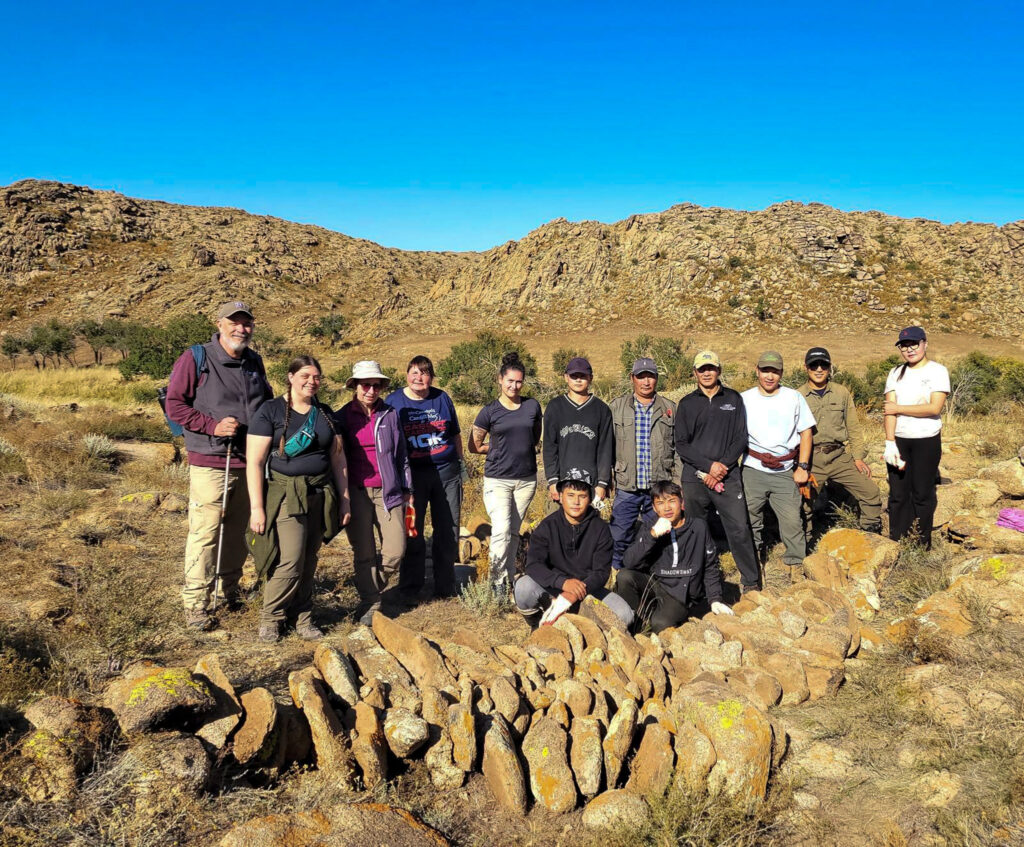
Kristine’s team put this one-rock dam together during her trip!
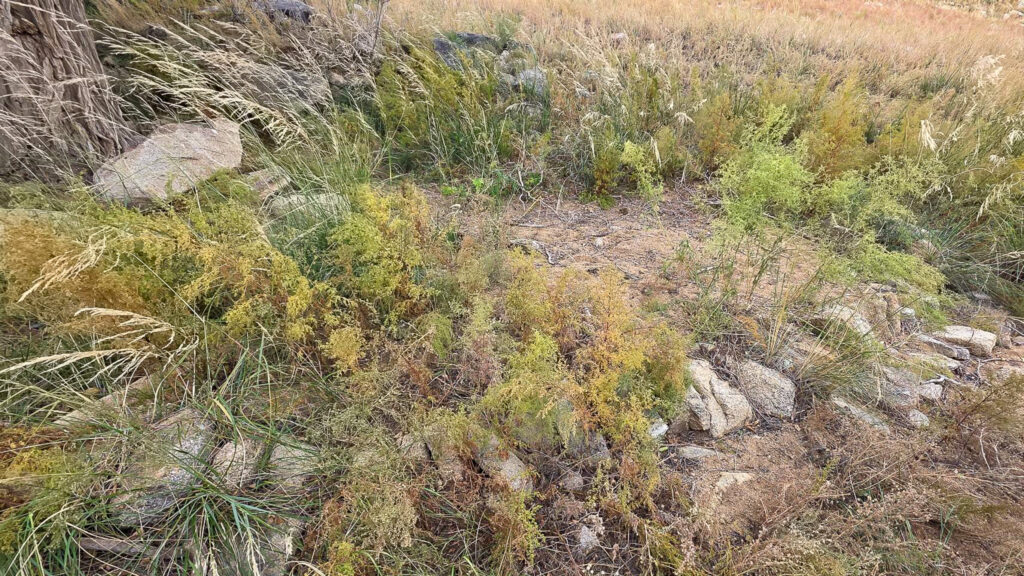
One-rock dam that has been colonized by vegetation.
Connecting to Wildlife at the Zoo and in the Wild
Kristine grew up in Virginia surrounded by wetland ecosystems. But by working at the Virginia Zoo, she formed connections to animals from both native and diverse habitats around the world, such as our cinereous vultures, Eve and J.D. While on her trip to Mongolia, Kristine observed cinereous vulture nests in the wild which strengthened her relationship to the species and provided her with compelling stories to inspire guests.
Cinereous vultures are found broadly across southern Europe and Asia. According to the IUCN Red List, they are considered near threatened with extinction. One of the greatest threats to this species’ long term survival is illegal poisoning. Historically, families in Ikh Nart Nature Reserve and other rural areas considered vultures to be dangers to their herds and thus their livelihoods, so they would poison bait to eliminate them. However, like most vulture species, cinereous vultures are primarily scavengers that feed on carrion, or dead animals, rather than hunting live prey, so they pose a minimal threat to livestock herds. Plus, vultures reduce the spread of disease, as they can safely consume sick animals and microbes on carcasses.
Through conservation education programs, the families in Ikh Nart learned to value the important role vultures play as nature’s cleanup crew. Today, several herdsmen and their families have the coveted responsibility of monitoring the 20 cinereous vulture nests found throughout the reserve! For example, they are responsible for noting the presence of eggs or fledglings and whether a breeding pair returned to their nest site that year.
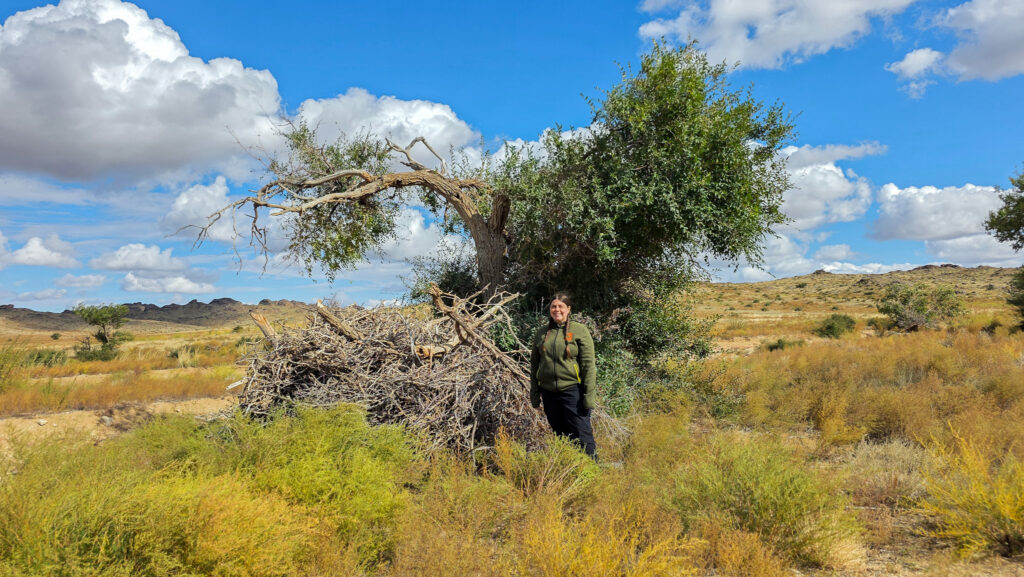
Kristine standing next to a cinereous vulture nest for scale.
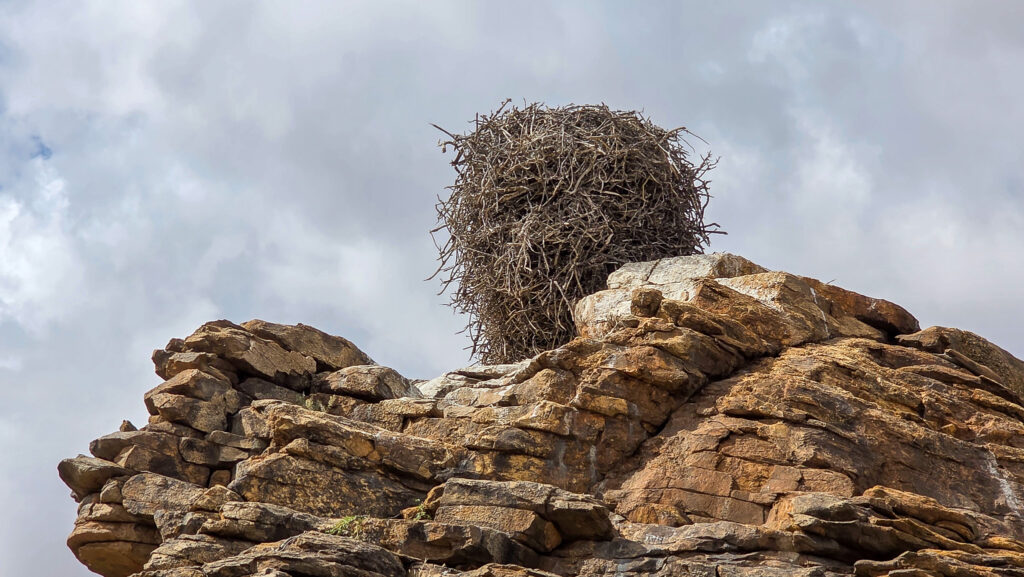
Kristine learned that some cinereous vultures choose to nest on cliffsides instead of in vegetation. Check out this large cliffside nest!
Several children even excitedly approached volunteers at a community day event to tell them about which vulture is their dad’s vulture. Each individual vulture is identified with handmade wing tags designed by volunteers, local school children, or students from the Living Desert Zoo and Gardens. The wing tags provide another means connecting people from around the world to these amazing animals!
Building Community
Kristine’s trip to Mongolia was unique because the goal of her project was not only to conserve wildlife but also to safeguard the Ikh Nart families’ traditional livelihood. Consequently, Earthwatch prioritized immersing volunteers in the local community. Every new volunteer group experienced a community day to meet the researchers and assisting herdsmen. Luckily for Kristine, this community day included an authentic Mongolian barbeque spread!
Beyond building relationships with locals, Kristine also now has shared experiences with volunteers and scientists around the world as well as with the Living Desert Museum and Gardens. Earthwatch has been sending volunteers to assist with the Wildlife of the Mongolian Steppe Project for nearly 20 years, so there are hundreds of people connected to Kristine through this community. Plus, over 100 university students have completed their research through the project! Together, lead scientist Gana Wingard and her research team have produced more than 150 scientific papers which impact the scientific community and locals through policy.
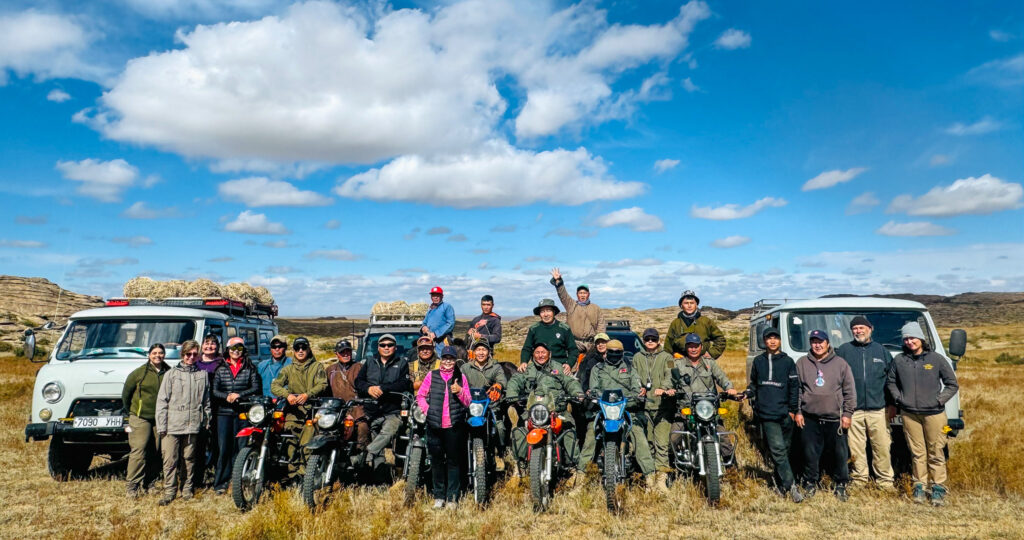
Kristine and her new community!
Kristine also strengthened the Virginia Zoo community by showing all interested staff members that they can play a role in conservation. Most of the Zoo’s other Conservation and Research Grant recipients have been zookeepers interested in visiting the species in their care out in the wild, but all Virginia Zoo staff are encouraged to apply for this opportunity to develop a deeper understanding of our mission.
Are you interested in supporting the Virginia Zoo’s conservation efforts? Donate to our Conservation Fund here!