 Gift
Gift Tickets
 Membership
 Contact
 Donate
 Shop
ShopVirginia Zoo Conservation Youth Team Representatives Attended Conservation Lobby Day
The Virginia Zoo Conservation Youth Team (CYT) program is a high school volunteer and youth development program which gives teens the opportunity to learn more about wildlife, earn community service hours, and spend time at the Zoo. Recently, our CYTs visited our state capitol, Richmond, to participate in Conservation Lobby Day and advocate for environmentally-conscious legislation. Read this guest blog authored by CYT John L’Heureux to hear more about this exciting experience directly from a teen participant!
What is Conservation Lobby Day?
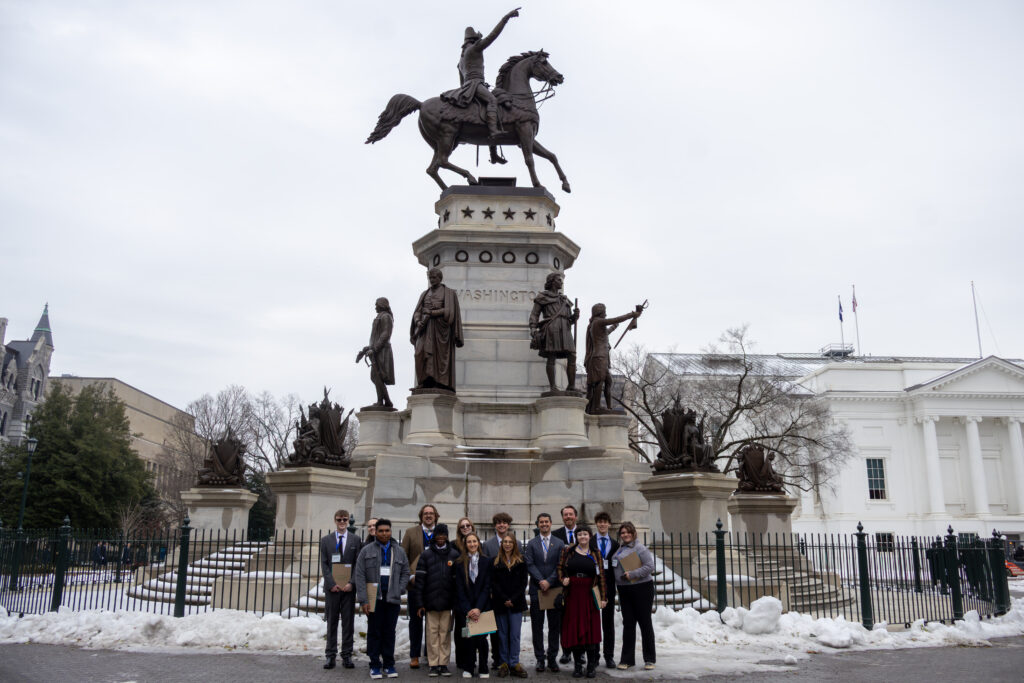
Virginia Zoo Conservation Youth Team and staff at the Washington monument.
Conservation Lobby Day, held this year on February 4, 2026, is an annual event hosted by the Virginia Conservation Network (VCN). Since 1969, VCN has played a key role in the environmental movement in Virginia by uniting over 170 organizations to advocate for important policies in land conservation, clean energy, and water quality.
Conservation Lobby Day occurs during the Virginia General Assembly session and gives dedicated advocates the opportunity to meet in Richmond to lobby their district representatives directly. This direct interaction between representatives and conservationists is helpful for persuading delegates to vote in favor of environmental conservation legislation.
Why did I advocate for CYTs to attend Conservation Lobby Day?
Since I had previously attended Clean Water Lobby Day with the Environmental Studies Program in Virginia Beach City Public Schools last year and had great success in my interactions with Delegates, I thought that my fellow CYTs would be interested in attending Conservation Lobby Day. I wanted to make it possible for my fellow teen volunteers to have this same unique and rewarding opportunity to raise awareness of pressing environmental issues and our CYT program.
One of the CYT program’s goals is to advocate for conservation action, which aligns perfectly with the aim of Conservation Lobby Day. Additionally, the staff that run the CYT program were very excited at the prospect of the trip and have always been incredibly supportive of the teen volunteers’ ideas, especially when it comes to promoting conservation. During our trip, the teen volunteers were accompanied by our phenomenal staff members: Volunteer Coordinator, Geoffrey Eppley; Conservation Engagement Manager, Nick Dzendzel; Conservation Engagement Specialist, Bailey Goebel; Marketing & Digital Specialist, Hayley Fier; and Executive Director, Chris Jenkins.
What bills did the CYTs advocate for and why?
On our trip, we met with the City of Norfolk’s Representatives: Delegate Bonita Anthony, Senator Angelita Williams-Graves, and Delegate Alex Askew’s team. During the meetings, we discussed three pieces of legislation with the Virginia House of Delegates. The first bill, HB1038, aimed to create a program to incentivize the development of environmental literacy standards in school divisions. The second bill, HB1013, focused on creating penalties for individuals who do not attach bycatch reduction devices (BRDs) to crab traps. Using BRDs can save the lives of diamondback terrapins and other native wildlife by preventing them from accidentally entering a crab trap and drowning underwater. Finally, HB597 was written to establish a voluntary grant fund for wildlife corridors that better protect drivers and animals in identified wildlife intersections across Virginia. Wildlife corridors are strips of natural habitat which connect parts of a landscape that might be otherwise be separated by roads.
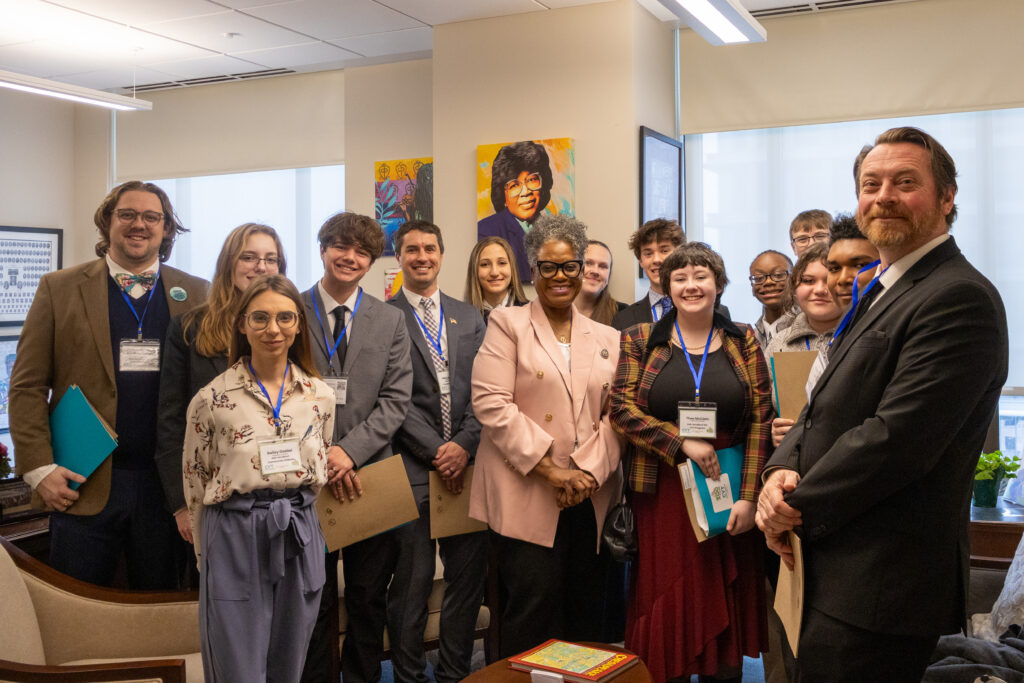
Virginia Zoo team with Delegate Bonita Anthony.
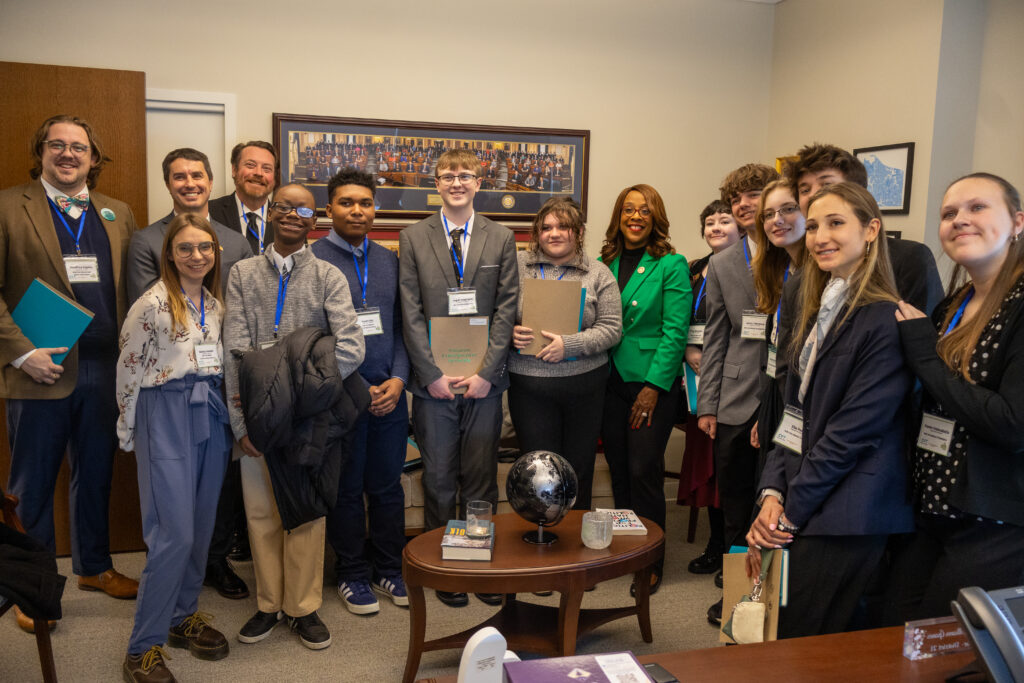
Virginia Zoo team with Senator Angelita Williams-Graves.
To more efficiently advocate for these bills, we split ourselves into three groups of 3-4 individuals. We each added our personal connection and experience with the bills to show our passion for and understanding of the subject and prove to the delegates that it was worth supporting. While lobbying for Environmental Literacy standards, I specifically spoke to my experience as an environmental advocate. Through my involvement with many local conservation organizations, I have witnessed firsthand the impact that environmental education can have on the community and our native wildlife. Incentivizing environmental literacy, especially in schools, fosters the next generation of voters to be informed about pressing climate topics that will take the forefront in the future.
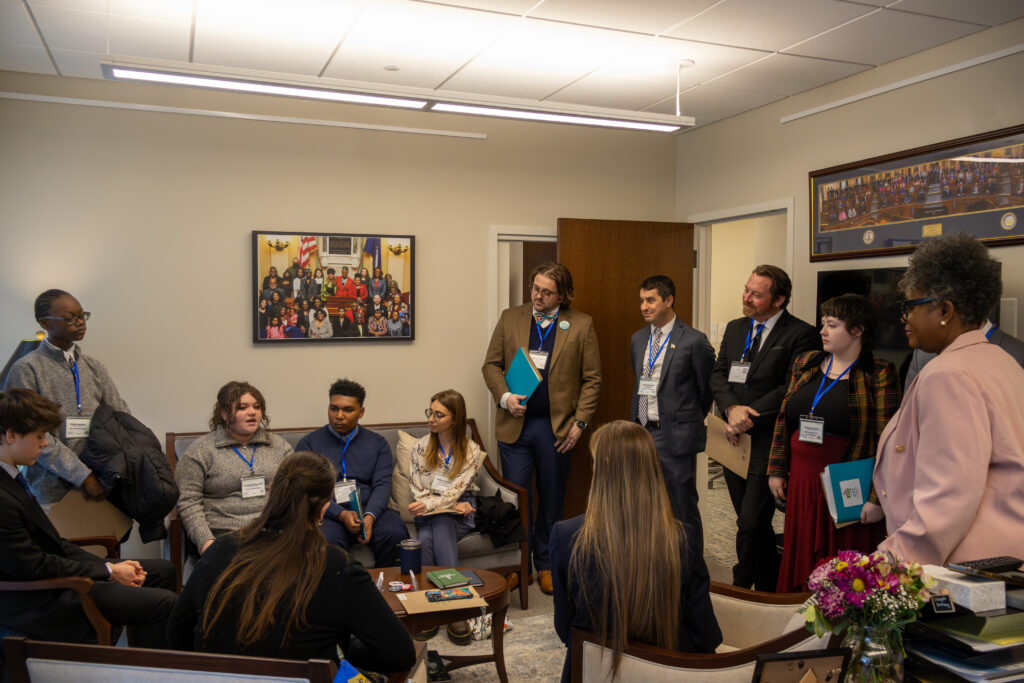
CYTs speaking to Delegate Bonita Anthony.
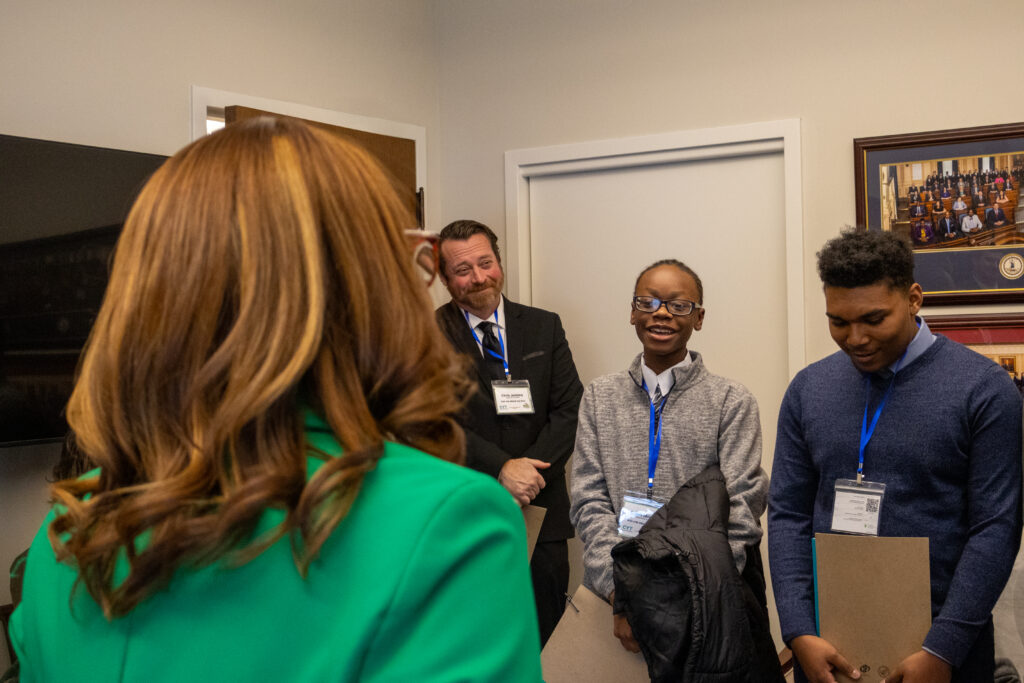
CYTs speaking to Senator Angelita Williams-Graves.
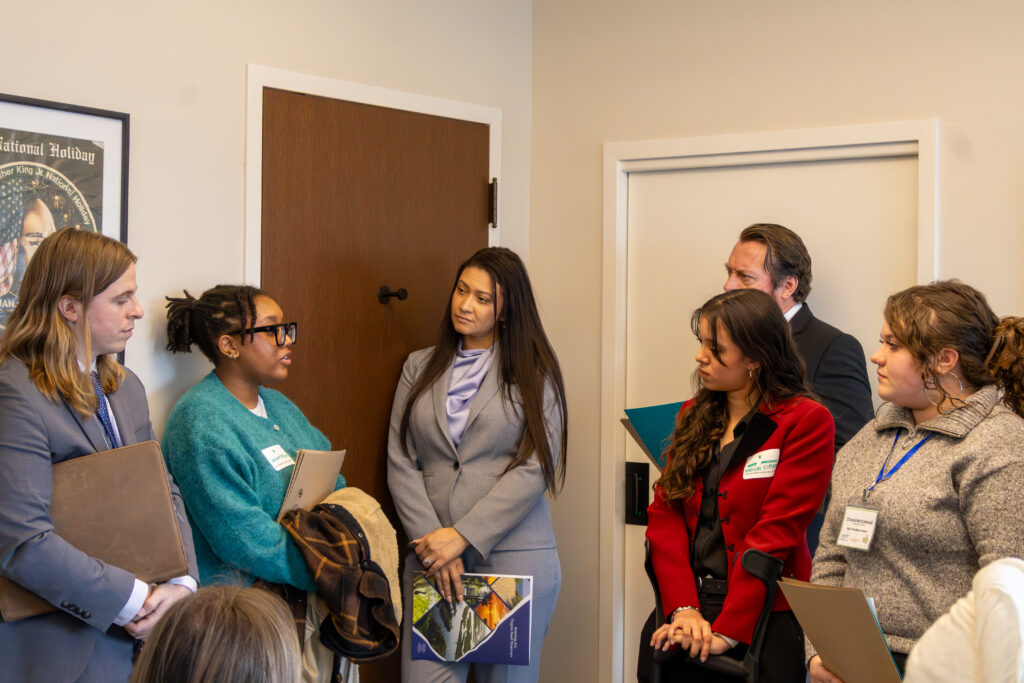
CYTs, representatives from Lynnhaven River NOW, and representatives from the Virginia Aquarium speaking to Delegate Alex Askew’s team.
Another volunteer in the CYT program, Chase, is incredibly passionate about bear conservation, so she focused on advocating for wildlife corridors to protect black bears as they cross roads in Virginia. While with our Delegates, she shared a story about a time when her family was driving to Arlington and they encountered seven bears that had been struck by a vehicle on the highway. Wildlife corridors would protect bears by giving them a safe passageway between parts of a forest, so they did not have to cross a highway. Chase’s personal experiences enhanced our argument and undoubtedly made a significant impact on our Representatives.
By including stories like mine and Chase’s, our teen team members showed how these bills affected native wildlife, the future of conservation in Virginia, and our personal lives. Together, I believe we had a great impact on our Delegates. Overall, this experience was overwhelmingly positive and I am incredibly grateful for the volunteers’ dedication, as well as Nick and Geoffrey for making this trip possible.
What is the legislative status of these bills today?
Recently HB1013, the bill that protects diamondback terrapins, and HB597, which establishes a study for wildlife corridors, passed the Virginia House of Delegates. These conservation wins are an incredible accomplishment that were likely made possible through advocates like our volunteers. Unfortunately, HB 1038, legislation for incentivizing environmental literacy standards, failed. However, the other bills that did pass undoubtedly will make a great impact on our environment.
Update 03/16/2026: HB1013 failed to pass out of the Virginia Senate due to strong resistance from Virginia fishermen and crabbers. The bill was defeated with a vote of 18-22.
The Virginia Zoo is so proud of our Conservation Youth Team (CYT) for participating in Conservation Lobby Day and for all the other hard work they do around the Zoo! Do you know a high schooler that’s passionate about wildlife, conservation, and the environment? Encourage them to check out our Conservation Youth Team program page here.
About the Author | John L’Heureux
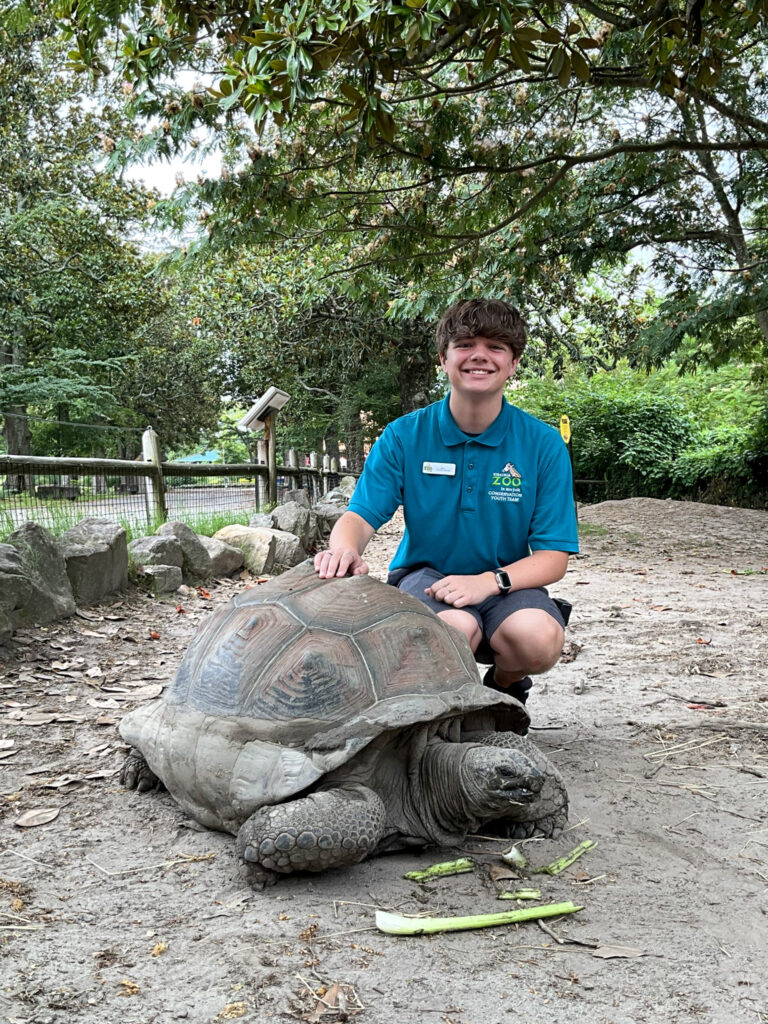
John L’Heureux has been a member of the Virginia Zoo’s Conservation Youth Team for the past four years. In his time as a volunteer, he helped educate Virginia Zoo Safari Camp attendees by assisting with STEM activities and guiding them on educational hikes around the Zoo. He has also been a Peer Coach Captain and organized groups, led conversation topics, collected biofacts, and improved the day to day operations of the CYT program.
Outside of the CYT program, John serves as a student member of the Flood Prevention Bond Referendum Oversight Board for the City Council Commission. In this role, he voices environmental and transparency concerns to the City and represents the largest group in the area that cannot vote: high school students. John also interns with Lynnhaven River Now where he is actively working towards protecting diamondback terrapins and reducing pollution in our waterways. John also serves as the Treasurer of the Friends of Live Oaks Citizen Advocacy Group. This group aims to conserve Virginia Beach’s official city tree, the live oak, to help native species, reduce flooding, and improve local air quality. John is a student in the Environmental Studies Program in Virginia Beach City Public Schools, where he frequently attends advocacy events, conducts ecological studies, and learns how to help our community through conservation.