 Gift
Gift Tickets
 Membership
 Contact
 Donate
 Shop
ShopCommunity Science
Community science is a form of research in which everyone, regardless of their background, can contribute meaningful data to advance scientific understanding of our shared world. Here at the Virginia Zoo, we encourage staff, volunteers, and guests to contribute to community science, because our mission is to engage our community in taking action to save the world’s wildlife and their ecosystems. Participation in conservation-focused community science brings individuals closer to wildlife and their habitats, fostering stewardship and interest in environmental education, while also allowing scientists to access more data covering wider geographic areas for longer periods of time! Below is a list of different community science projects we contribute to at the Zoo.
CATERPILLARS COUNT!
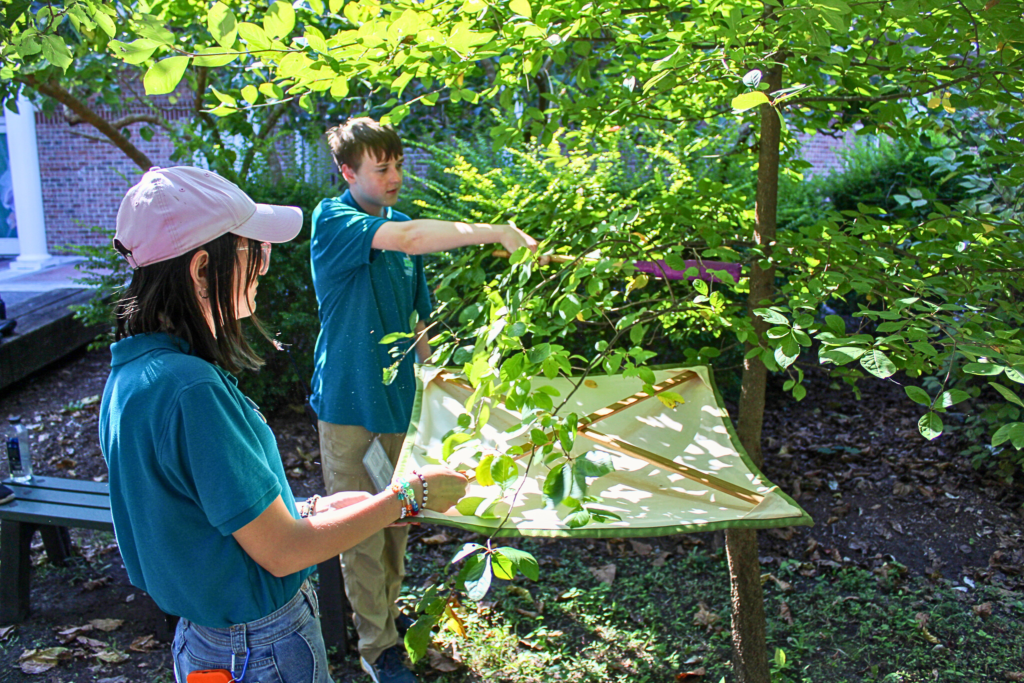
Conservation Youth Team volunteers participating in Caterpillars Count!
Caterpillars Count! is a community science project aimed at measuring the seasonal variation, or phenology, and abundance of arthropods, like caterpillars, beetles, and spiders, found on the foliage of trees and shrubs. Virginia Zoo staff and volunteers began contributing data to this initiative in 2020. The data collected here on Zoo grounds helps scientists at North Carolina State University conduct research on the effects of climate change on plants, insects, and birds. The Virginia Zoo’s Mission Engagement team will continue to participate in 2026 by collecting data from March through October.
Since 2020, the Virginia Zoo has:
- Surveyed 1,446 plant branches,
- Observed 4,631 arthropods, and
- Observed 34 caterpillars.
PROJECT FEEDERWATCH
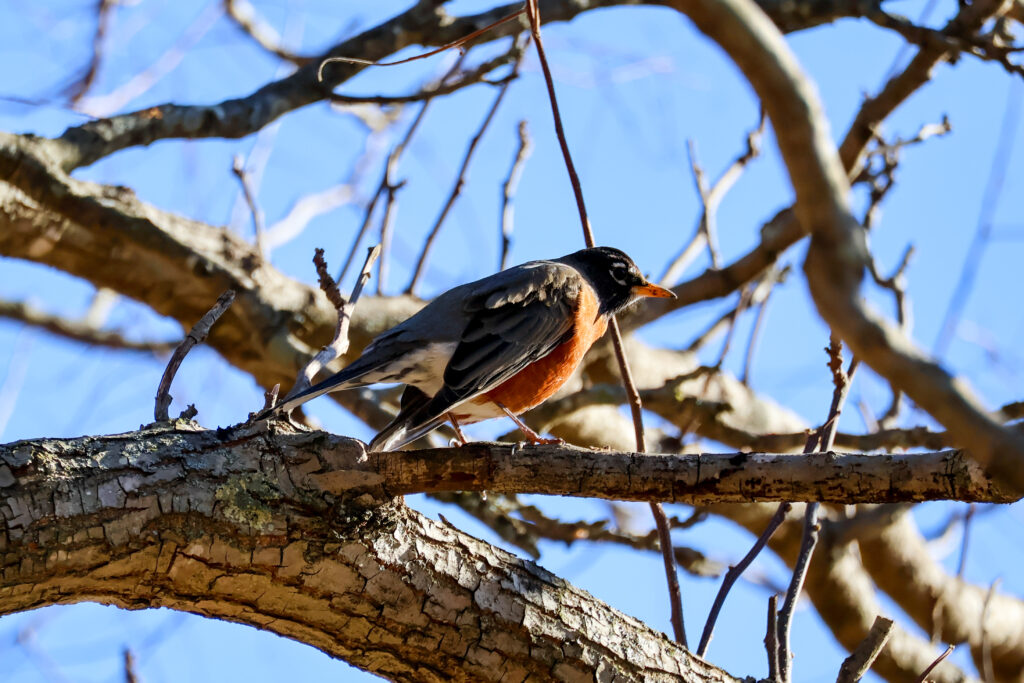
American robin on Zoo grounds in February.
Project FeederWatch is a November-April survey of birds across North America. Most community scientists focus on birds traveling to feeding stations, but participants can record bird sightings from almost anywhere! The Cornell Lab of Ornithology and Birds Canada use the data to monitor weekly changes in bird distribution and abundance across the United States and Canada as well as population trends over time.
At the Virginia Zoo, our staff and volunteers primarily tally native bird sightings near our Pollinator Garden feeding stations. Since November 2025, our team has observed 47 individual birds representing 17 species!
FROG WATCH
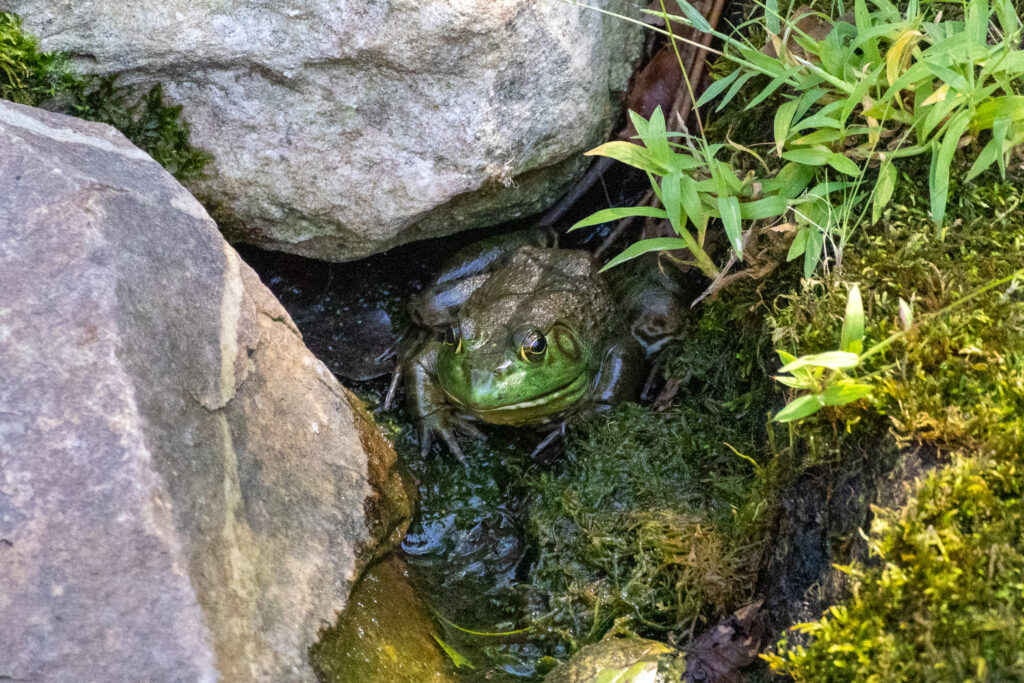
American bullfrog on Zoo grounds.
FrogWatch USA™ is a long-term citizen science monitoring program of frogs and toads. As a volunteer-based monitoring program, FrogWatch gives citizens across the country an opportunity to collect local data and gather information to help combat the global decline of amphibians. The Virginia Zoo’s FrogWatch chapter, active from February through August, has given individuals and families the opportunity to learn about the wetlands in our community and help conserve the future of many amphibians by reporting the calls of local frogs and toads.
MONARCH WATCH
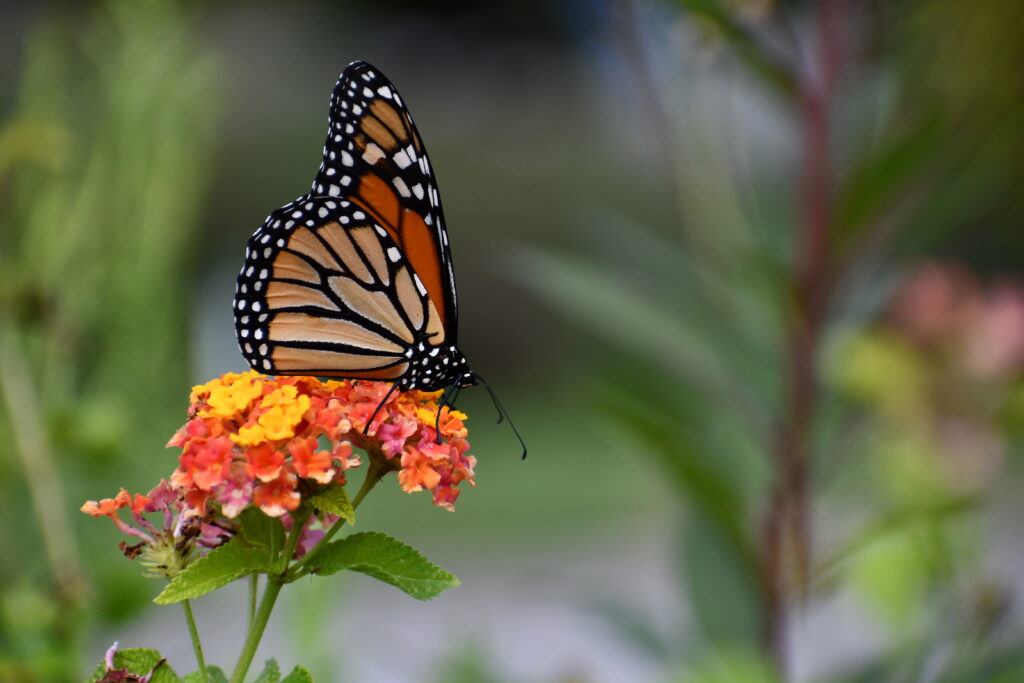
Monarch butterfly on milkweed flowers at the Zoo.
Monarch Watch is an education, conservation, and research program focused on studying the monarch butterfly, its habitat, and its fall migration. This community science initiative provides multiple ways for anyone interested to get involved, from tagging individual butterflies to creating suitable monarch habitat. Here at the Virginia Zoo, staff and volunteers track monarch butterfly sightings in late September and early October as they travel south for overwintering.
OTTER SPOTTER
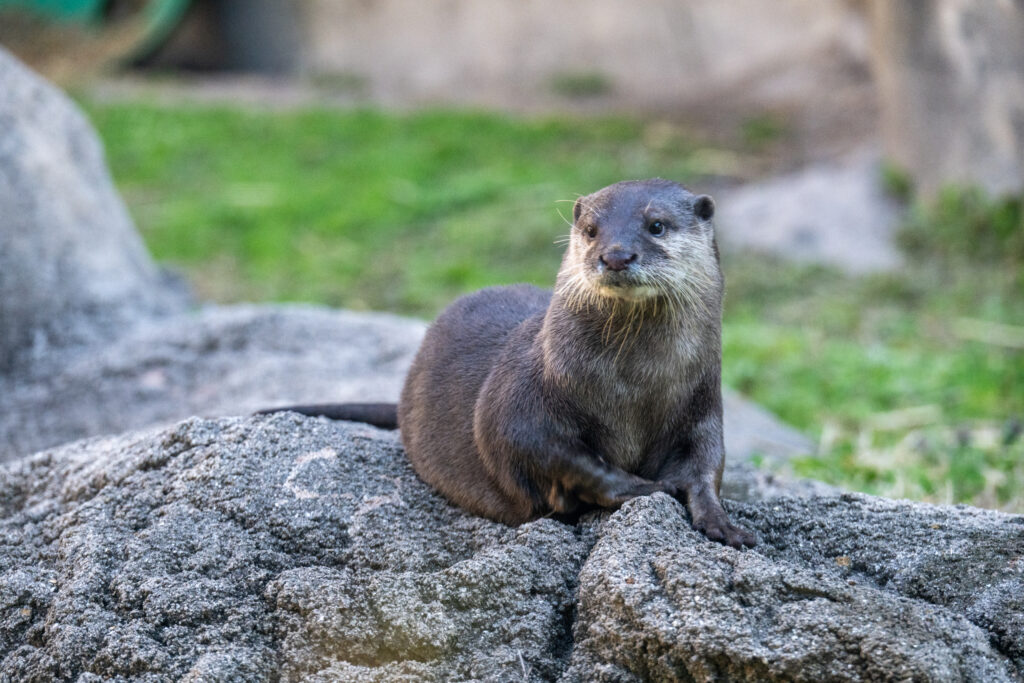
Jilin the Asian small-clawed otter on Asia: Trail of the Tiger.
Seeing North American river otters in our local waters tells us our waterways are healthy. In fact, we’ve even seen wild river otters right here at the Zoo! By reporting otter sightings in your community here, you can help us learn more about how we can keep our waterways healthy for people, otters, and other wildlife. Join us and be part of our community science efforts in collaboration with the Elizabeth River Project and the River Otter Ecology Project.