Gift
Gift Tickets
 Membership
 Contact
 Donate
 Shop
ShopShingleback Skink
*This page is under renovation and all information may not be up-to-date or complete*
Description
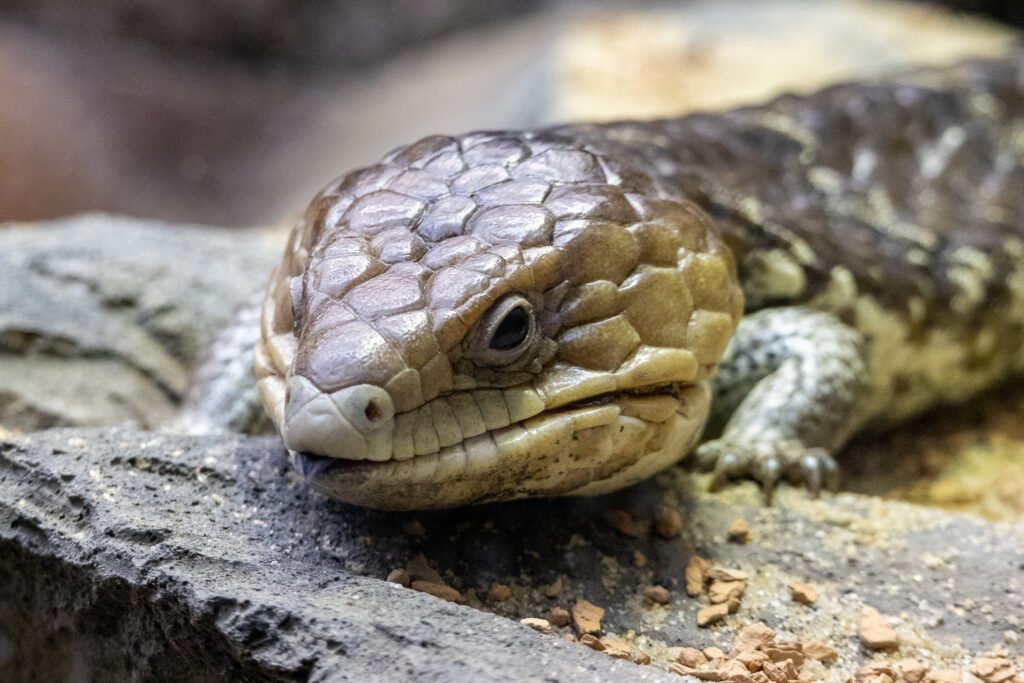
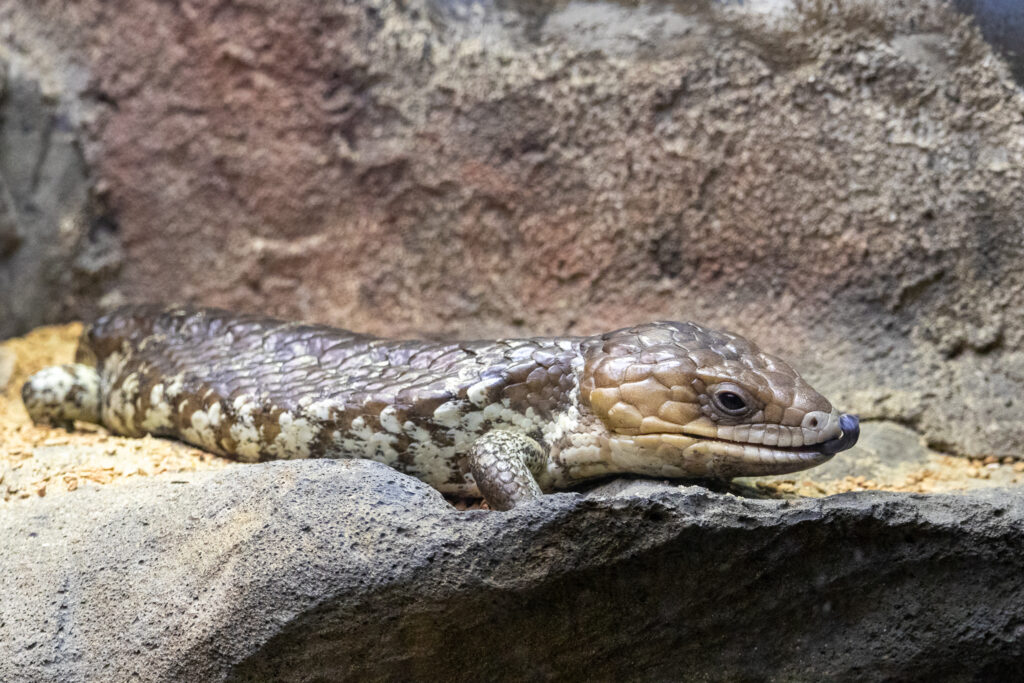
Shingleback skinks are large lizards with elongated bodies and large heads. Their coloration varies from light brown to darker earth tones. They have a stumpy tail that looks quite similar to their head and is used for fat storage. Their scales are similar in appearance to pinecones or overlapping shingles on a roof.
Range & Habitat
Shingleback skinks are native to southern Australia from Western Australia to New South Wales. This species is primarily found in semi-desert ecosystems where they can burrow, but they also may be found in grasslands and shrublands, using leaf litter or logs to hide.
Behavior
Shingleback skinks are typically solitary lizards, coming together in in the spring or winter to breed. However, they do form strong breeding pair bonds. Males and females are known to reunite during each mating season consistently.
In addition to using their tail for fat storage, shingleback skinks use their tail to distract predators. When under threat, the skink will wiggle its tail to draw attention away from their head.
Diet
Shingleback skinks are omnivores, meaning they eat a mixture of plants and other animals to meet their dietary needs. In the wild, they consume a variety of slow-moving animals, like insects or snails, and vegetation, such as flowers or leaves.
Conservation
This species is currently listed as being of Least Concern by the International Union for the Conservation of Nature (IUCN). However, due to their docile nature and large size, shingleback skinks have become popular in the pet trade. Collection for the pet trade is particularly threatening to the Rottnest subspecies.
Fun Facts
- Other common names for the shingleback skink include the pinecone skink, lazy skink, and the stumpy-tailed skink.
- Shingleback skinks have blue tongues, like their close relatives the blue-tongued skinks.
Virginia Zoo Animals
Male: Bandit (born: 9/18/2022)
Female: Chilli (born: 9/9/2022)
Scientific Name
Tiliqua rugosa
IUCN Conservation Status
Least Concern
Size
Length: 12-18 inches long
Life Expectancy
10-20 years