 Gift
Gift Tickets
 Membership
 Contact
 Donate
 Shop
ShopPerentie
*This page is under renovation and all information may not be up-to-date or complete*
Description
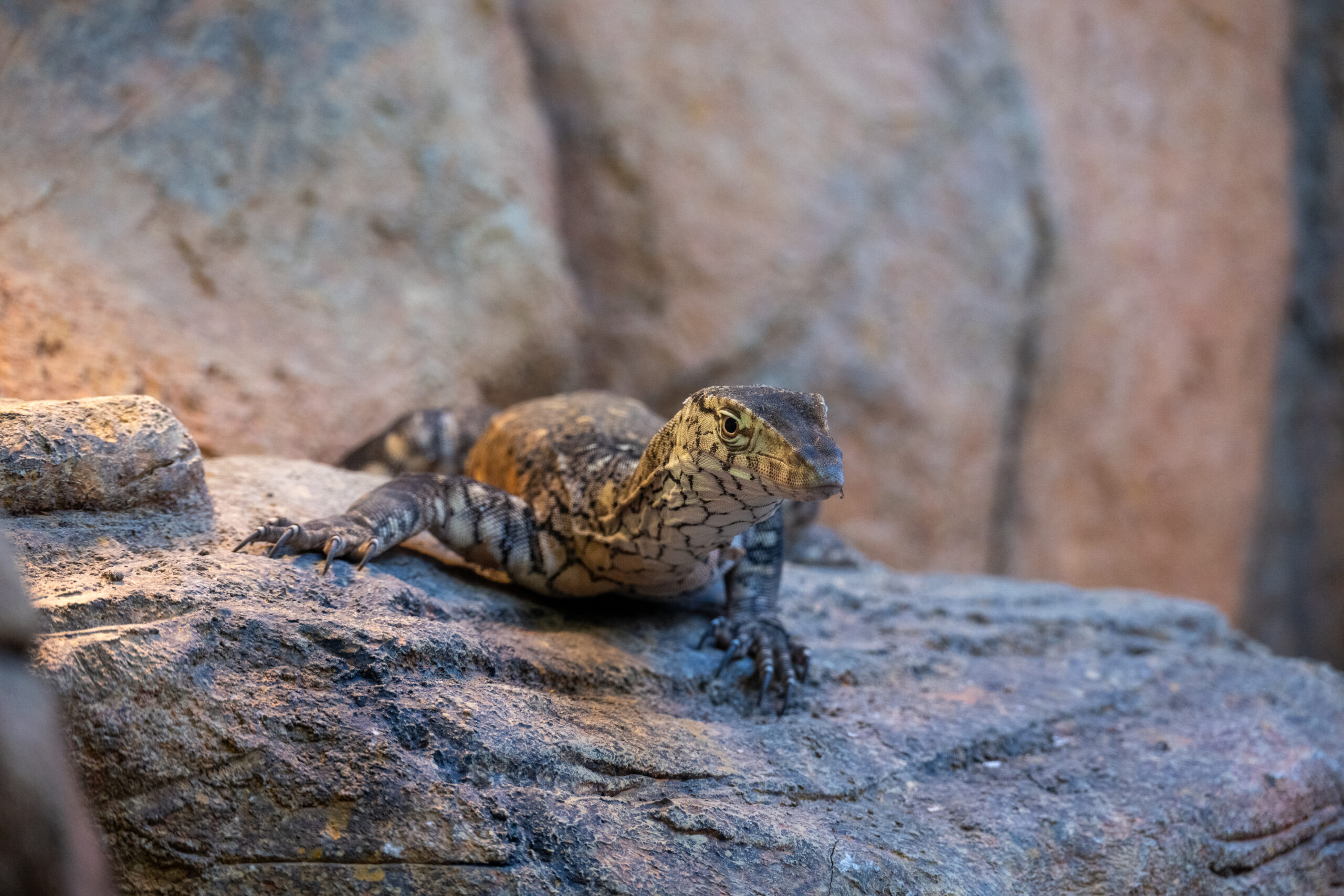
Perentie lizards brown and tan in coloration with large cream or yellow markings. They have a forked tongue and numerous sharp, curved teeth.
Range & Habitat
This monitor lizard is found in central Western Australia and Central Australia in arid grasslands, deserts, burrows, and rocky outcroppings.
At the Virginia Zoo, our perenties can be found in the World of Reptiles Conservatory.
Behavior
When a perentie feels threatened by a predator, they will rise up, their throat swells and they hiss. Perenties can also use their tails in self-defense by coiling them up and then lashing them out like a whip at the predator’s eyes.
Diet
Perentie monitors are carnivores with a diet consisting of birds, reptiles, European rabbits, and marsupials. Younger individuals typically eat insects. Some individuals have been observed eating sea turtle eggs.
Conservation
Perentie lizards are considered to be of Least Concern, according to the International Union for the Conservation of Nature (IUCN). They are protected under laws in each Australian State within their native range, including Queensland, Western Australia, Northern Territory, and South Australia.
Fun Facts
- This species is the largest of 25 monitor lizards in Australia and they are the 4th largest in the world.
Virginia Zoo Animals
Male: Jasper (born: 3/29/2023)
Female: Daphne (born: 2/20/2023)
Scientific Name
Varanus giganteus
IUCN Conservation Status
Least Concern
Size
Length: 8 feet
Weight: 44 pounds
Life Expectancy
15 – 20 years