Gift
Gift Tickets
 Membership
 Contact
 Donate
 Shop
ShopOrnate Uromastyx
*This page is under renovation and all information may not be up-to-date or complete*
Description
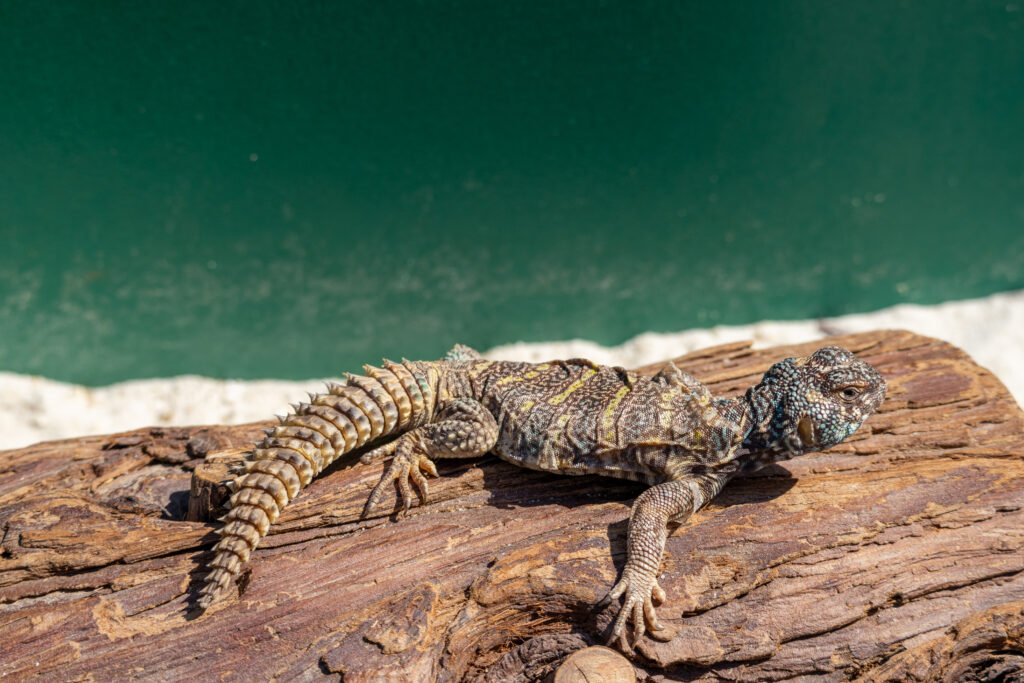
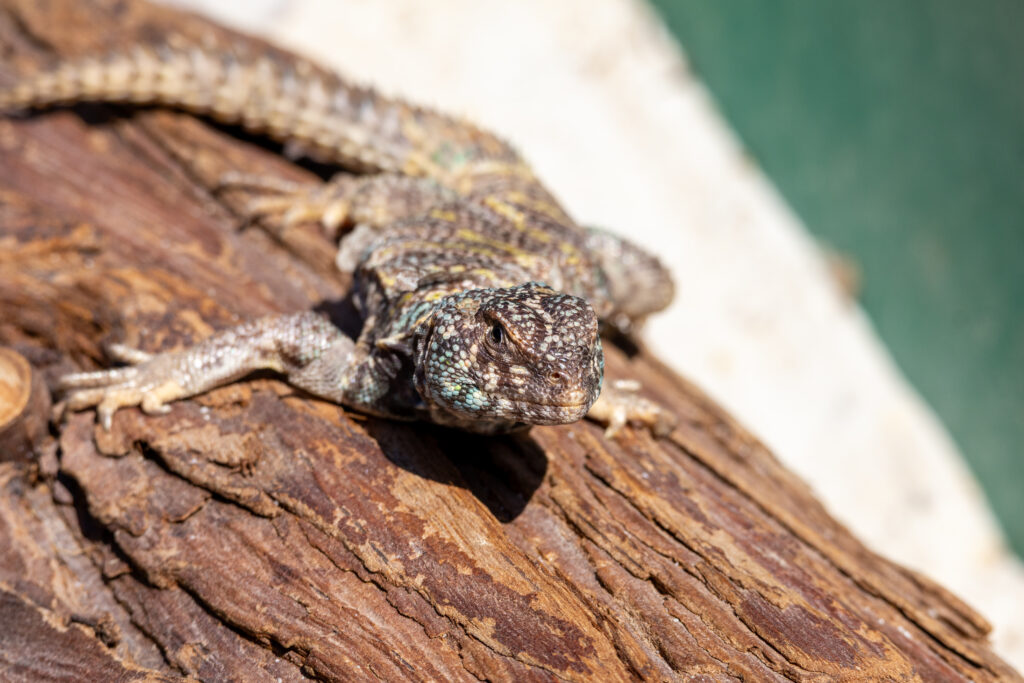
Ornate uromastyx males are typically bright green or blue. They may also be red with a yellow or brown pattern on their backs. Females are more muted in color than males – they are typically light brown with dark brown, yellow, or red spots. Juveniles are cream to light brown in color with a black pattern on their back. Their
Range & Habitat
Ornate uromastyx are found on the southern Sinai Peninsula in Egypt, southern Israel, western Saudi Arabia, and northwestern Yemen. They live in dry, rocky desert habitats with sparse vegetation.
At the Virginia Zoo, our ornate uromastyx is in training to be an Animal Ambassador and lives behind the scenes.
Behavior
Ornate uromastyx are known for being most active during the hottest part of the day. They may be solitary or live in small groups with a dominant male and a few females.
Diet
Ornate uromastyx are generally herbivorous, eating leaves, seeds, and flowers of desert plants. However, they are opportunistic and will occasionally feed on invertebrates like insects.
Conservation
This species is currently listed as being of Least Concern by the International Union for the Conservation of Nature (IUCN). Collection for the pet trade and habitat loss are the greatest threats to ornate uromastyx.
Fun Facts
- Other common names for this species include the ornate mastigure or the ornate spiny-tailed lizard.
Virginia Zoo Animals
Male: Franklin
Scientific Name
Uromastyx ornata
IUCN Conservation Status
Least Concern
Size
Length: 15 inches
Life Expectancy
Up to 20 years