 Gift
 Tickets
 Membership
 Contact
 Donate
 Shop
Azure-winged Magpie
Description
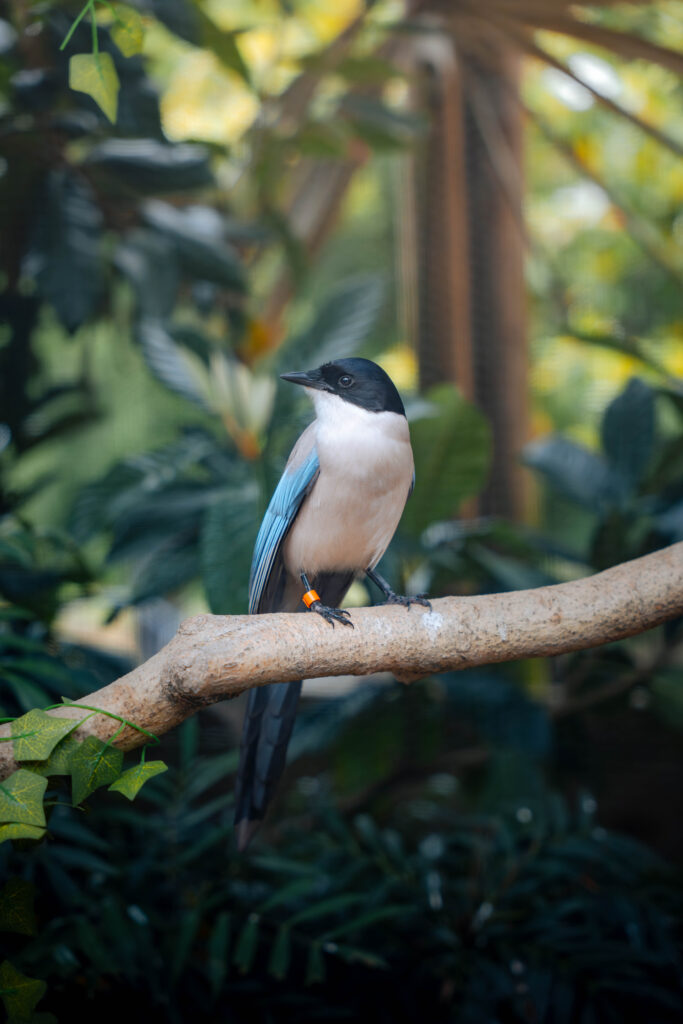
Azure-winged magpies have black feathers on their head, a pale body, and striking blue feathers across their wings and tails.
Range & Habitat
Azure-winged magpies are native to coniferous (pine) and broadleaf forests in China, Korea, Mongolia, Taiwan, Russia, and Japan.
At the Virginia Zoo, azure-winged magpies can be found in the Asia: Trail of the Tiger Aviary. They share a habitat with Temminck’s tragopans.
Behavior
Azure-winged magpies often forage for food in small family groups. During the breeding season, these birds congregate in large flocks.
Diet
Azure-winged magpies are omnivores. They eat nuts, seeds, acorns, fruits, insects, and eggs.
Conservation
Azure-winged magpie populations are considered to be of least concern. However, they are threatened by habitat loss.
Fun Facts
- Azure-winged magpies are in the taxonomic family Corvidae which also includes ravens and crows. Like other corvids, azure-winged magpies are highly intelligent and social.
- Historically, it was believed that azure-winged magpies were also native to Spain and Portugal. While Iberian magpies look very similar, recent genetic analysis shows that they are a distinct species from azure-winged magpies.
Virginia Zoo Animals
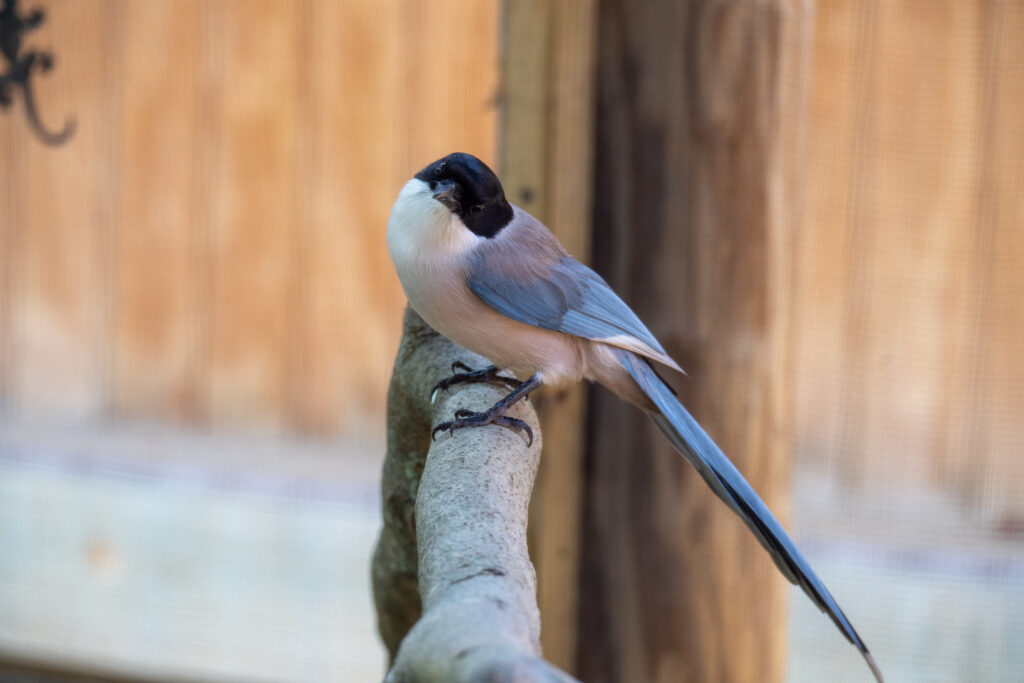
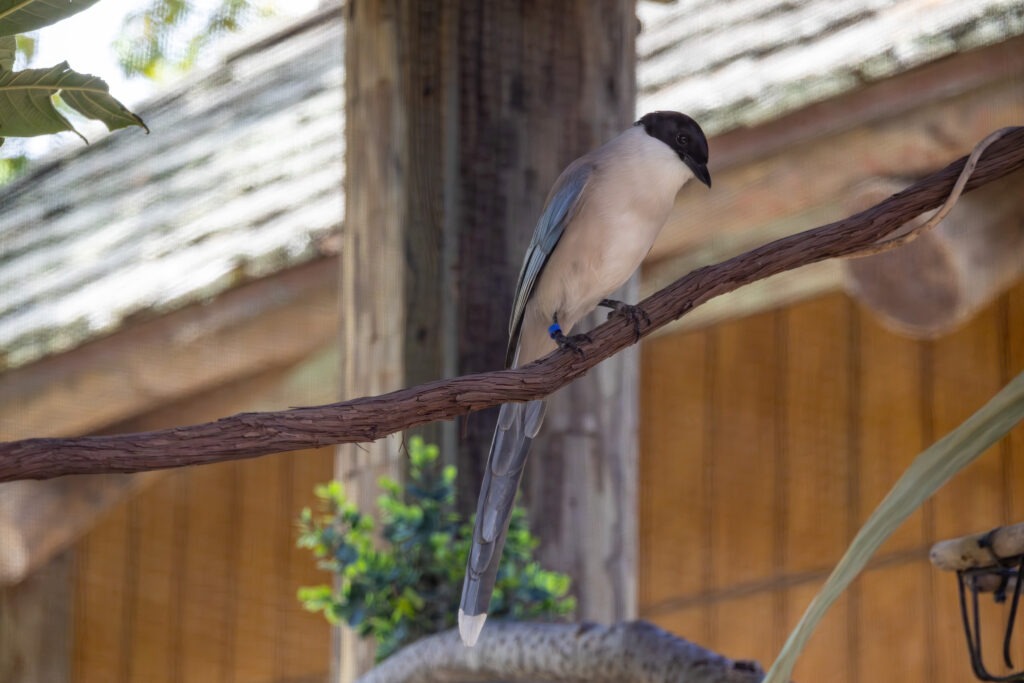
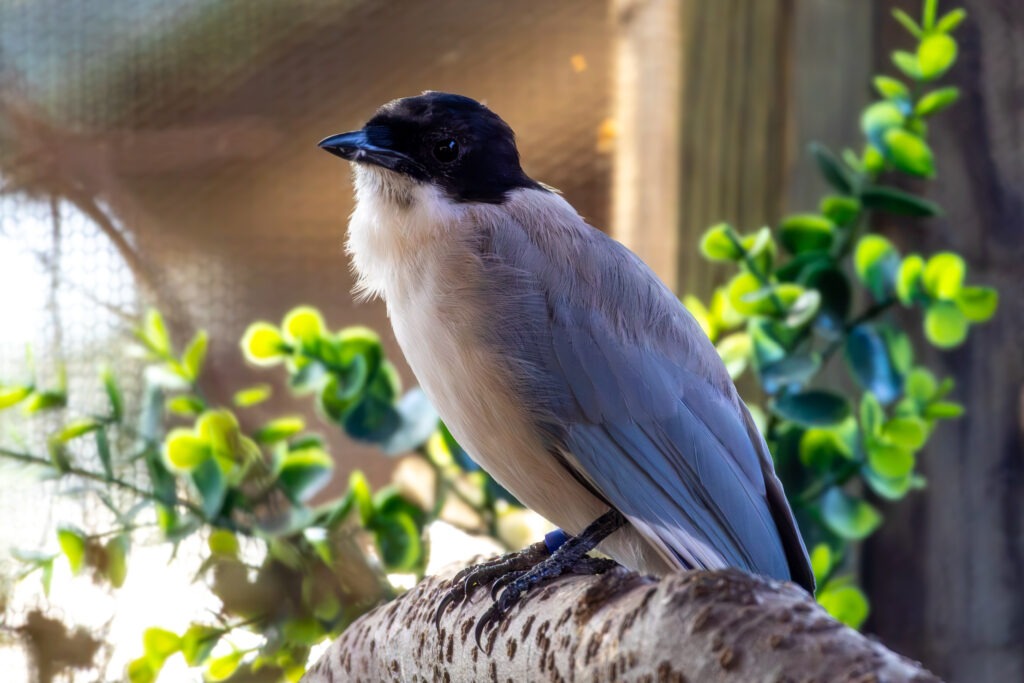
Males: Mango (7/11/2014, orange band) & Shepard (8/27/2018, blue band)
Scientific Name
Cyanopica cyanus
IUCN Conservation Status
Least Concern
Size
12 – 14 inches
Median Life Expectancy
15 years
Shepard
Shepard
Shepard