 Gift
Gift Tickets
 Membership
 Contact
 Donate
 Shop
ShopEgyptian Tortoise
*This page is under renovation and all information may not be up-to-date or complete*
Description
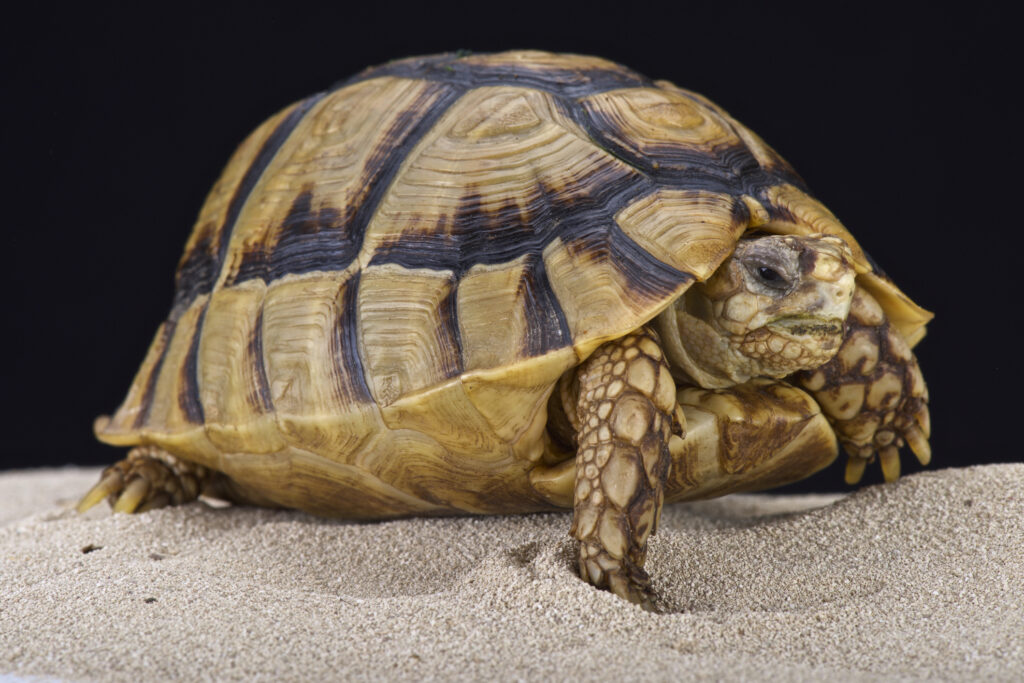
Egyptian tortoises are small tortoised with domed shells. They are a light yellow-beige color which is essential for camouflaging in the desert.
Range & Habitat
Egyptian tortoises are native to a narrow coastal zone in North Africa surrounding the Mediterranean basin. Historically, their populations occurred through Libya, Egypt, and Israel. Today, this species is extinct in most of its original range except for Libya.
At the Virginia Zoo, Egyptian tortoises live behind-the-scenes alongside their fellow Animal Ambassadors, so they can be specially trained to participate in up-close encounters and educational programs.
Behavior
Egyptian tortoises may take over an abandoned rodent burrow to live in.
Female tortoises lay between one and five eggs.
Diet
Egyptian tortoises are herbivores, feeding on leaves, flowers, and grasses.
Conservation
Egyptian tortoises are threatened by habitat loss, overharvesting for the pet trade, and resource competition. Most of the tortoises’ former range has been developed into cities, resorts, and farmland. They also must compete with camels and goats grazing plants and collection of plants by herders.
Fun Facts
- Egyptian tortoises are the smallest tortoise species in the northern hemisphere.
Virginia Zoo Animals
Male: Phineas (hatched: October 9, 2020) & Ferb (hatched: October 9, 2017)
Scientific Name
Testudo kleinmanni
IUCN Conservation Status
Critically Endangered
Size
Length: Up to 5 inches
Weight: 5.5-12.5 ounces
Life Expectancy
Average lifespan 30-50 years