Gift
Gift Tickets
 Membership
 Contact
 Donate
 Shop
ShopVon der Decken’s Hornbill
*This page is under renovation and all information may not be up-to-date or complete*
Description
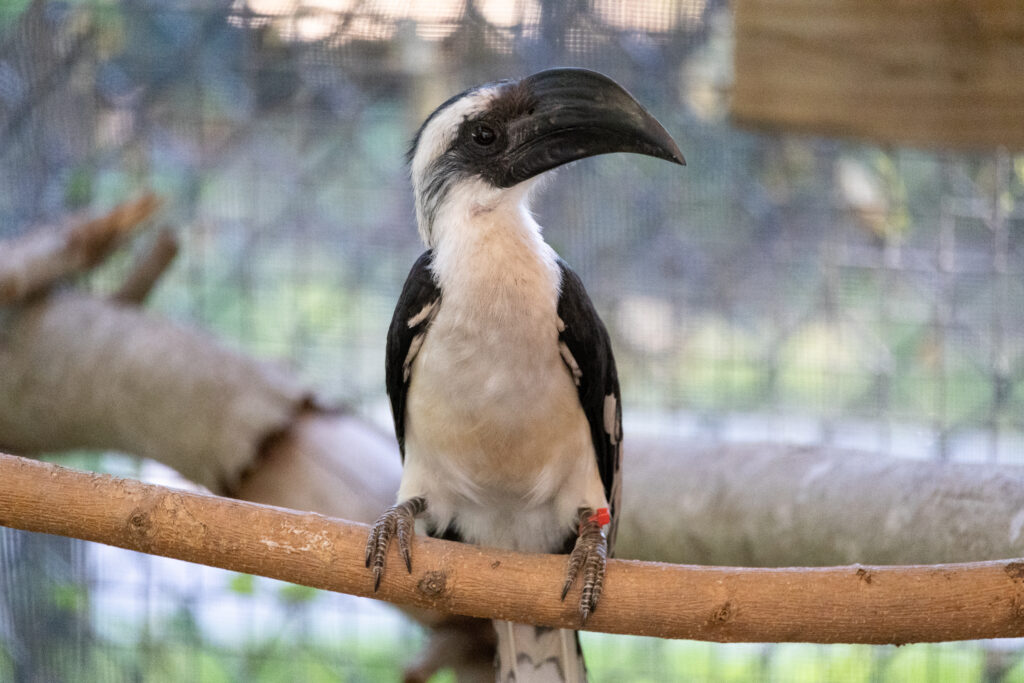
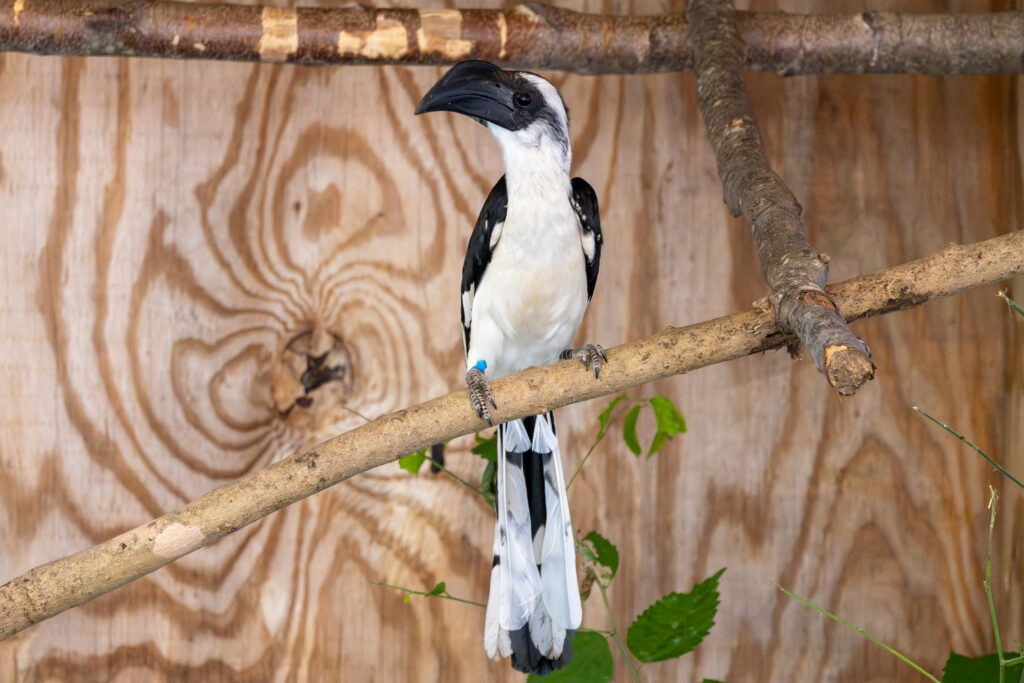
Von der Decken’s hornbills are medium-sized birds with white feathers covering their head, chest, and stomach and black feathers covering their wings. Both males and females have large bills relative to the size of their bodies. Male birds have red-orange bills with a cream-colored tip, while females have black bills.
Range & Habitat
Von der Decken’s hornbills are native to East Africa, including parts of Ethiopia, Somalia, Kenya, and Tanzania. Their preferred habitats are dry, arid scrublands, savannas, and open bush habitats.
Behavior
Von der Decken’s hornbills are diurnal, foraging for food on the ground or dropping down on prey from above during the day. This species also has a mutually beneficial relationship wit the dwarf mongoose, Africa’s smallest carnivore. Mongooses flush out prey for the hornbills to eat, while the hornbills warn the mongooses of approaching predators.
Like other hornbill species, Von der Decken’s hornbills nest in tree cavities. When a female is about to lay eggs, she and her mate begin go close up the entrance to their nest with a mixture of mud, feces, and fruit pulp. When the opening is almost too small for the female to fit, she enters the nest and the pair continues to work together to close her in. Throughout the incubation period and for the first three weeks of the chicks’ lives, the male delivers food to his mate through the narrow opening in the nest. After the first three weeks of the chicks’ lives, the female breaks out of the nest. She and the male continue to bring the chicks food for another few weeks until they are strong enough to break out of the nest themselves.
Diet
Von der Decken’s hornbills are omnivores, but their diet consists mostly of insects, such as grasshoppers, locusts, beetles, termites, and ants. These birds will also eat snails, mice, nestling birds, lizards, tree frogs, berries, and seeds.
Conservation
This species is currently listed as being of Least Concern by the International Union for the Conservation of Nature (IUCN). Collection for the pet trade threatens Von der Decken’s hornbills in the wild.
Fun Facts
- Von der Decken’s hornbills are named for German explorer Baron Karl Klaus von der Decken III.
Virginia Zoo Animals
Females: Iggy and Isla
Scientific Name
Tockus deckeni
IUCN Conservation Status
Least Concern
Size
Length: 17-20 inches
Weight: 4-6 oz.
Life Expectancy
10-20 years